In a nutshell
- 🔬 Why doughnuts go stale: Staling is driven by starch retrogradation, expelling moisture and firming the crumb; a light coat of hot sugar syrup rehydrates and binds water to restore softness.
- 🧪 Step-by-step fix: Make a 1:1 simple syrup (caster sugar:water), brush or quick-dip, rest 3–5 minutes, then reheat—oven 150°C for 3–5 mins, air fryer 140°C for 2–3 mins, microwave 8–12 secs; avoid using on mouldy doughnuts.
- ⚖️ Dial in ratios and temps: Use 1:2 for very dry crumbs, 1:1 for most rings, 2:1 for rich brioche; keep syrup at 30–40°C for easy spread, and aim to moisten not soak to prevent a collapsed crumb.
- 🌿 Flavour upgrades: Infuse syrup with vanilla, lemon zest, espresso, cinnamon, or a dash of rum; a second ultra-light brush post-reheat adds a bakery-fresh gloss without heaviness.
- ♻️ Waste-savvy tips: Turn past-prime doughnuts into bread-and-butter pudding or French toast; freeze fresh and refresh with syrup later—an easy, low-cost way to cut food waste and revive pleasure.
Yesterday’s box of office treats often becomes today’s disappointment: stiff, dry, and resigned to the bin. Yet there is an elegant fix hiding in your cupboard. A quick bath in hot sugar syrup can coax stale doughnuts back to a supple, bouncy life, restoring aroma, sheen, and crumb. The method isn’t wizardry; it’s gentle food science, reintroducing moisture while locking it in with dissolved sugars. The result is a doughnut that tastes freshly bought, not cloyingly wet or oddly chewy. With the right ratio, temperature, and a brief reheat, you can save money, cut waste, and enjoy a café-quality bite without turning on the deep fryer.
Why Doughnuts Go Stale: The Science of Starch and Moisture
Staling is driven by starch retrogradation: once the doughnut cools after frying, starch molecules reorganise and expel water, firming the crumb. The once-tender interior becomes tight, while the exterior loses gloss as glazes dry. Fat helps, but it can’t halt moisture migration in a draughty kitchen or an open box. Add time and fluctuating humidity, and that luxurious softness ebbs away. Crucially, staling is not spoilage; it’s a physical change that can be nudged back with heat and moisture. That is where simple syrup earns its keep.
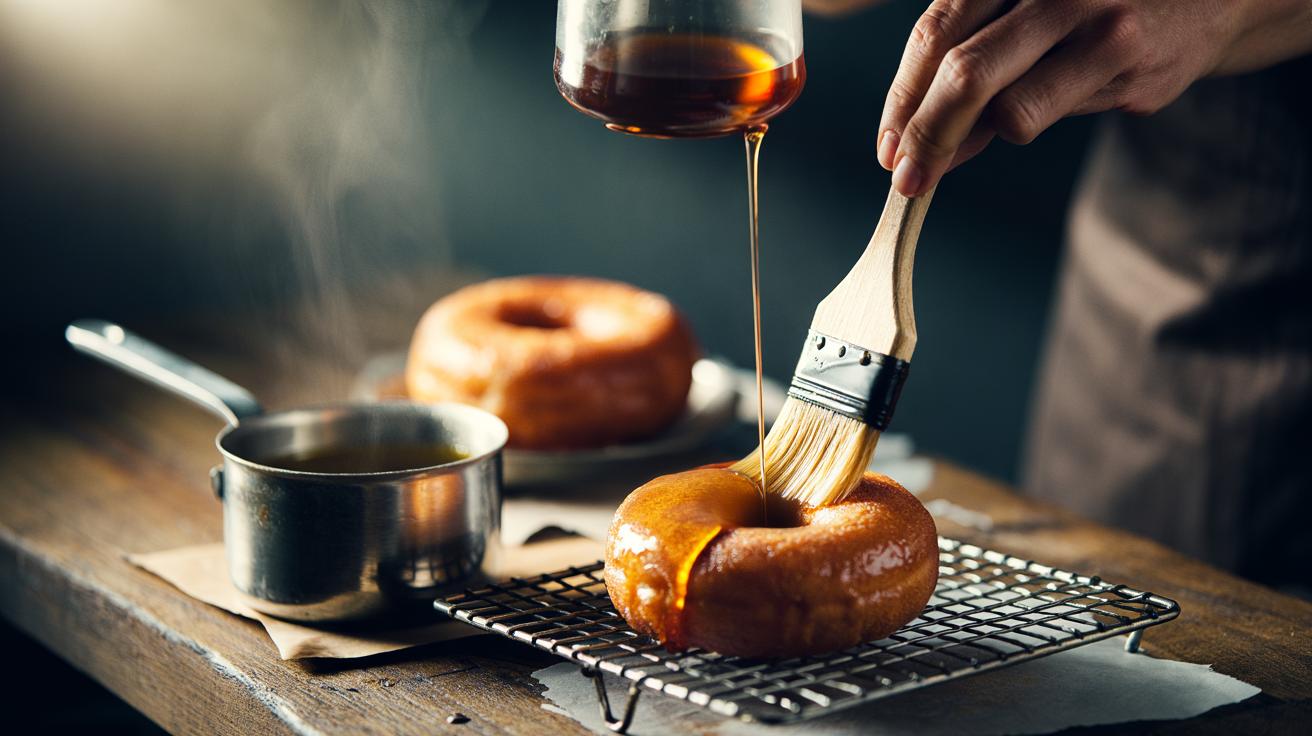
When you brush or lightly dip a doughnut in warm syrup, you do two things at once: rehydrate the crumb and introduce dissolved sugar that binds water, slowing its escape. A brief, controlled reheat loosens starch structures so the crumb relaxes again. The trick is avoiding sogginess; you want a whisper of syrup, not a soak. Think of syrup as a moisture courier that also acts as a protective glaze, preserving softness for a few extra hours.
The Sugar-and-Hot-Water Method, Step by Step
Start with a 1:1 simple syrup by weight: 100 g caster sugar to 100 g water. Warm in a small pan, stirring until clear; a gentle simmer is enough. Let it cool to about 40–50°C for brushing (hot to the touch, not scalding). For ring doughnuts, brush all sides with a thin sheen; for filled ones, dip the cut or underside for one second, then drain on a rack. Leave for 3–5 minutes to settle. Apply sparingly: the aim is to rehydrate the crumb and refresh the crust, not to flood it.
Reheat to wake the texture. Oven: 150°C for 3–5 minutes. Air fryer: 140°C for 2–3 minutes. Microwave (fast but softer): 8–12 seconds per doughnut. The syrup anchors moisture during heating, so the interior turns plush while the surface regains a light gloss. If you love a faintly crisp edge, add 30 seconds more in the oven. Never use this trick on mouldy doughnuts; visible mould or off smells mean it’s time to bin them. For day-old but safe doughnuts, it works wonders.
Ratios, Temperatures, and Textures: Getting It Just Right
The right syrup depends on how dry the doughnut is and how sweet you like the finish. A lighter syrup penetrates quickly with subtle sweetness; a richer one delivers gloss and a delicate shell. Keep the syrup warm for easy brushing, and always drain on a rack. Aim to moisten, not soak; excess syrup collapses the crumb.
| Syrup Ratio (Sugar:Water) | Best For | Application | Typical Result | Note |
|---|---|---|---|---|
| 1:2 (Light) | Very dry, delicate crumbs | Brush generously | Softer interior, mild sweetness | Lower risk of stickiness |
| 1:1 (Standard) | Most glazed or plain rings | Brush or quick dip | Balanced moisture, light sheen | House default |
| 2:1 (Rich) | Brioche-style, large doughnuts | Thin brush only | High gloss, tender crumb | Easy to overdo—go light |
For temperature, keep syrup at roughly 30–40°C so it spreads smoothly without steaming the surface. After brushing, rest for a few minutes, then reheat. Oven times are safer for a lightly crisp exterior; microwave yields a pillowy bite. If the doughnut looks shiny but leaks syrup, you have applied too much—dab with kitchen paper and extend the oven refresh by one minute. A second ultra-light brush after reheating can add a bakery-fresh gloss without weighing the crumb down.
Beyond Revival: Flavour Twists and Waste-Saving Ideas
Once you master the base method, upgrade the syrup. Stir in vanilla, a strip of lemon zest, a dash of espresso, or a pinch of cinnamon. For a grown-up note, add a drop of rum or almond extract. Brush, reheat, and finish with a whisper of caster sugar or cocoa. For filled doughnuts, heat a teaspoon of jam in the syrup to revive both crumb and filling. A flavoured syrup can turn day-old doughnuts into a dessert you’d serve proudly after supper.
If the doughnuts are beyond rescue but safe, cube them for a doughnut bread-and-butter pudding, trifles, or French toast batter. Freeze surplus doughnuts the day you buy them; thaw at room temperature, then refresh with the standard syrup for near-bakery results. This simple technique trims food waste and stretches your treat budget without sacrificing pleasure. The little pot of syrup in your fridge (it keeps for two weeks) is a tiny insurance policy against sad pastry moments.
The sugar-and-hot-water trick isn’t just a hack; it’s a neat use of food chemistry to reverse staling and protect against rapid dryness. With a 1:1 simple syrup, a light hand, and a brief reheat, yesterday’s doughnut regains bounce, aroma, and shine. Add flavour infusions to suit the season, or keep it plain and classic. Once you’ve seen how quickly softness returns, throwing doughnuts away will feel unnecessary. Which syrup ratio and reheating method will you try first, and what flavour twist would you add to make your revived doughnuts sing?
Did you like it?4.6/5 (29)