In a nutshell
- 🍰 Cakes stale after cutting as moisture migrates to drier air; increased surface area and starch retrogradation firm the crumb—controlling the water activity gradient is key.
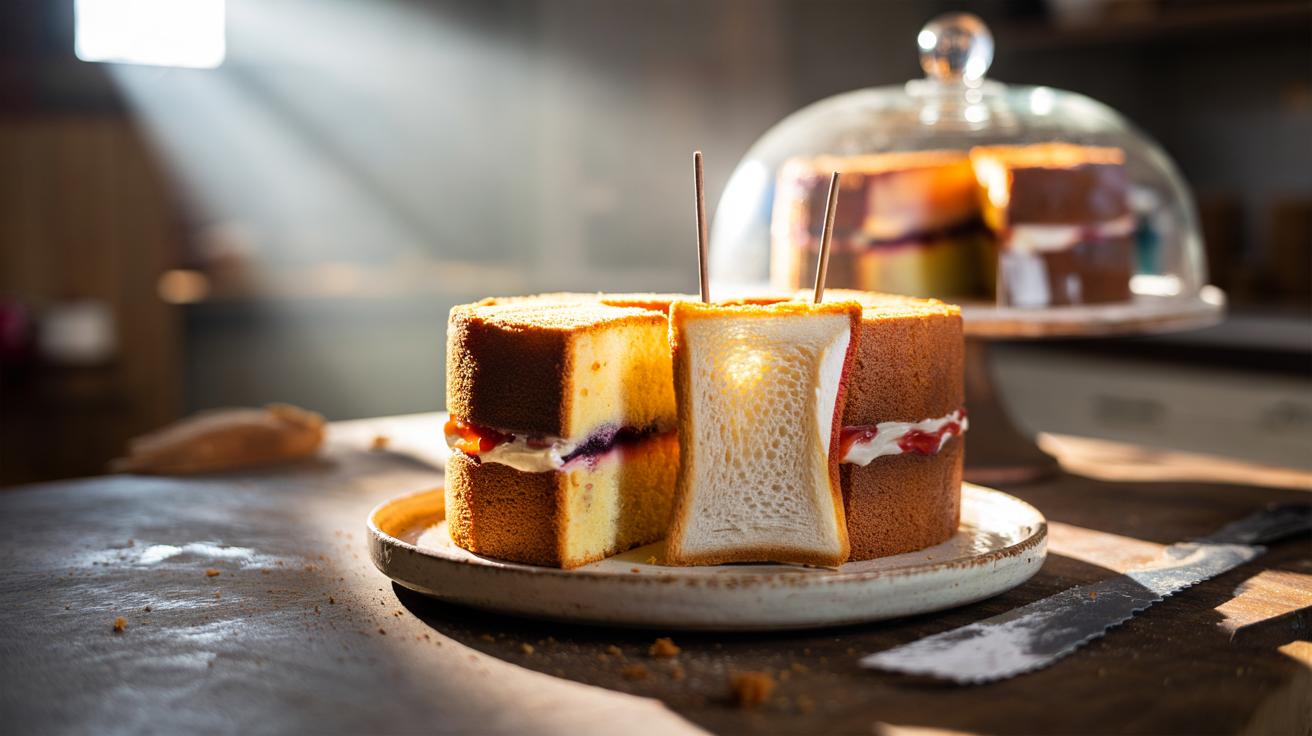
- 🍞 A bread slice pressed to the cut edge acts as a “sacrificial moisture donor”, creating a humid microclimate that slows evaporation and keeps the crumb supple; swap the slice every 24 hours.
- 🛠️ Best practice: use neutral white bread, ensure full contact, secure lightly (cocktail sticks), then loosely cover under a dome or wrap; store cool at 18–20°C away from heat and sun.
- ⚠️ Limitations: for perishable fillings (cream, custard) refrigeration is non‑negotiable; avoid wetting fondant, and handle ultra-light sponges gently to prevent compression or stickiness.
- 📦 Smart alternatives: seal the cut face with buttercream, a thin apricot glaze, cling film, a cake cloche, or beeswax wraps; choose based on cake type and freshness window.
Left with half a birthday cake and worried it will go stale by morning? There’s a simple kitchen hack that bakers swear by: press a slice of bread against the exposed edge. It looks odd, yet it works. By acting as a moisture buffer, the bread slows the cake’s tendency to dry out, buying you extra time to enjoy a soft crumb and lively flavour. The science is straightforward, the method low-effort, and the results surprisingly consistent across classic sponges and buttercream-layered bakes. Think of the bread as a tiny, disposable humidity shield. Here’s how and why this trick keeps your cake tasting fresh for days longer—plus when to use it, and when to choose a different strategy.
Why Cakes Dry Out After Cutting
Once a cake is sliced, its tender crumb is suddenly exposed to air, setting off a chain of changes. Moisture migrates from the cake’s interior toward the drier environment, while starch retrogradation causes the structure to firm. Humidity in your kitchen matters, but even in damp air, a cut surface loses water quickly thanks to its expanded surface area. Icing doesn’t fully protect that raw edge either; buttercreams and ganaches help, yet the exposed sponge remains vulnerable. The result is predictable: the cake feels firmer, tastes duller, and loses that just-baked plushness.
Under the bonnet, it’s a story of water activity and vapour gradients. The cake’s surface tries to reach equilibrium with its surroundings. Without a barrier, evaporation accelerates, and the crumb turns leathery. Sugar and fat slow the process but don’t stop it. The key to freshness is controlling that gradient—reducing the difference between the cake’s moisture and the air’s dryness—so the cake surrenders less water to the atmosphere in the crucial first 24 to 48 hours after cutting.
The Bread Slice Trick Explained
The bread trick tackles the gradient directly. Pressed gently against the cut edge, a slice of plain white bread becomes a “sacrificial moisture donor” and a physical shield. The bread’s pores hold and release water, creating a microclimate that reduces evaporation from the cake and keeps the surface supple. It’s simple physics: the bread buffers humidity where the cake needs it most. Use neutral-tasting bread so no savoury notes seep into your dessert, and secure it with cocktail sticks or a loose wrap so it stays flush with the sponge without crushing decoration.
This hack won’t replace good storage habits, but it works brilliantly alongside them. Cover the cake loosely with a dome, cloche, or cling film so air can’t circulate freely. Replace the bread slice every 24 hours if keeping the cake longer. Remember: the bread delays staling; it doesn’t guarantee safety for perishable fillings. Fresh cream, custard, or mascarpone layers still belong in the fridge, where a bread slice can assist the cut face while cold slows microbial growth.
| Cake Type | Bread Trick Useful? | Storage Tip | Room-Temp Window |
|---|---|---|---|
| Victoria sponge with buttercream/jam | Yes | Cover, add bread to cut edge | 1–2 days |
| Chocolate cake with ganache | Yes | Dome or box; replace bread daily | 2–3 days |
| Fresh cream cake | Limited | Refrigerate; bread only for cut side | Keep chilled |
| Fondant-covered cake | Sometimes | Bread at cut; avoid wetting fondant | 3–4 days |
Step-By-Step: How to Use Bread to Keep Cake Fresh
Start with a clean, neutral slice—plain white bread works best. Place it directly against the exposed crumb so there’s full contact across the cut surface. Use two cocktail sticks to pin the slice in place if the cake is tall, taking care not to pierce decoration. Good contact is everything; gaps allow air to wick moisture away from the sponge. Cover the whole cake under a cake dome or an upturned bowl, or wrap loosely in cling film so the bread stays put without squashing icing. Store at a cool room temperature away from sun and radiators.
Swap the bread daily to avoid off aromas and to keep moisture exchange effective. If your kitchen runs dry, tuck a second small piece of bread against another exposed area, but don’t overdo it or the exterior can become tacky. For layered cakes, seal joins with a thin spread of buttercream before adding bread to the cut edge. Tip: lightly brushing the cut with simple syrup enhances softness while the bread preserves it. The trick extends freshness; it doesn’t revive a stale cake.
When Not to Use It and Smarter Storage Alternatives
There are exceptions. If a cake carries strong aromas—coffee loaves, spice-rich bakes—bread can pick up and reflect flavours in ways you might not want. For fondant, moisture can cause stickiness; apply the bread only to the cut crumb, never the sugar paste. Perishable fillings demand refrigeration regardless of any trick. In the fridge, wrap cut faces well and consider a small piece of bread inside the container, not pressed onto delicate decorations. For ultra-light cakes like angel food, use a barely-there touch to avoid compressing the structure.
Alternatives abound. A smear of buttercream over the cut edge acts as an edible seal; a thin layer of cooled apricot glaze on fruit cakes locks in moisture. Cling film pressed directly to the cut face works if decoration permits, while a cake cloche preserves humidity without contact. Beeswax wraps can do the job for loaf-style bakes. Pair these with a cool spot—about 18–20°C—and avoid drafts. Freshness hinges on limiting air flow and moisture loss, not on any single gadget.
Used wisely, the bread-slice method is an elegant answer to a common kitchen problem: it slows evaporation at the point of greatest loss, keeping crumb soft and flavours bright for longer. Applied alongside thoughtful storage—loose covering, cool conditions, timely refrigeration for dairy—it turns leftovers into next-day treats rather than tired relics. It won’t make an old cake new, but it will help a good cake stay good. Which cake in your repertoire will you test first—and what tweaks might you try to perfect your own freshness routine?
Did you like it?4.3/5 (20)