In a nutshell
- ❄️ Cold triggers vasoconstriction, dampens nerve signalling, and reduces baseline muscle tone in the corrugator/procerus, creating a brief smoothing effect.
- 🔍 Helps soften dynamic wrinkles and puffiness/redness, but cannot rebuild collagen or erase static lines—benefits are temporary and cosmetic.
- ✅ Safe use: chill in the fridge (not freezer), apply 10-second presses and light glides for a few minutes, moisturise after, and be cautious if you have rosacea or cold sensitivity.
- 🧴 For lasting results, pair with daily SPF, nightly retinoids, supportive peptides/niacinamide, and habit tweaks that reduce brow-scrunching.
- 🏥 Consider professional routes—botulinum toxin for movement lines, microneedling/resurfacing for dermal support—while keeping the spoon as a low-cost quick fix.
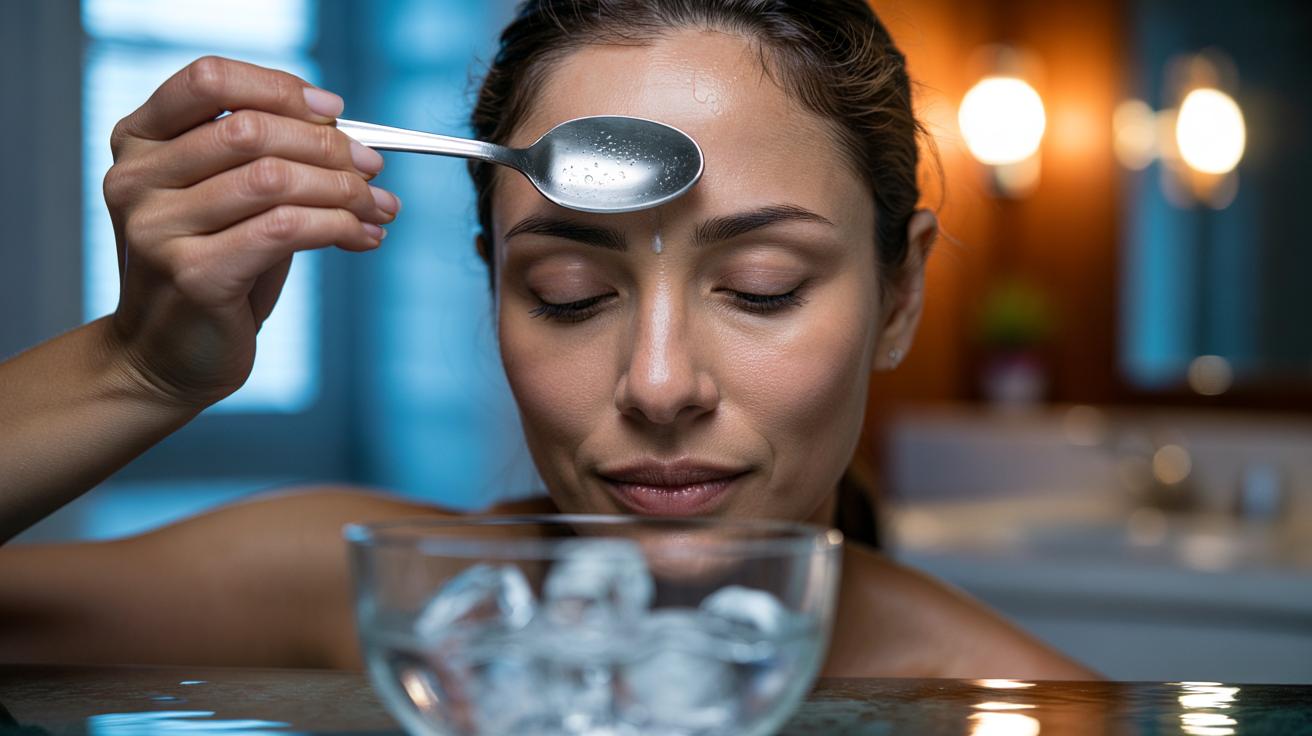
Across bathrooms, backstage benches and social feeds, a humble kitchen utensil is having a chilled moment: the cold teaspoon pressed to the forehead. Fans say it softens frown lines in seconds, a budget-friendly hack that beats puffiness and tension after a long day. The claim that it “stops wrinkles” is a leap, yet there is a plausible physiological story. A brief burst of cold can reduce muscle activity and tamp down swelling, creating a smoother look. The real value lies in short-lived relaxation of the brow’s hard-working muscles, not permanent line erasure. Here’s what the chill actually does, how to try it safely, and where it sits among proven options.
The Physiology Behind a Cold Spoon
When a chilled spoon touches the brow, the skin’s blood vessels constrict in a reflex known as vasoconstriction. This limits fluid movement and can lessen oedema, so shadows and shallow creases look softened. Cold also dampens signals from nociceptors and slows nerve conduction, which the brain interprets as soothing. That momentary calm often translates into less scrunching of the forehead, particularly in the corrugator and procerus muscles that drive frown lines. Short, controlled cooling can nudge these muscles towards relaxation, giving a smoother surface for makeup and photographs.
Cold has another trick: it can reduce the sensitivity of muscle spindles, dialling down baseline muscle tone. A few cycles of chill and release may encourage a gentler resting expression, akin to a micro break for facial tension. The spoon’s curved surface spreads pressure evenly, cutting the risk of hot spots caused by ice cubes. Expect transient gains—minutes to an hour—rather than structural change. Skin temperature and blood flow rebound quickly, and the collagen scaffold that defines static lines remains unchanged by the chill alone.
What a Chill Can and Cannot Do for Wrinkles
A cold spoon can soften the look of dynamic wrinkles—creases that appear when you frown or raise your brows—by easing muscle activity and deflating puffiness. It may also reduce redness for a few minutes by tightening superficial vessels. It does not rebuild collagen, reverse sun damage, or “freeze” lines into submission. Wrinkles that are etched at rest reflect long-term changes: UV exposure, glycation, repeated expression, and thinning dermis. Think of the spoon as a quick reset before a meeting, not a substitute for skincare or clinical treatments. People with cold sensitivity, rosacea, or broken capillaries should use caution and brief contact times.
| What Cold May Do | What It Will Not Do |
|---|---|
| Reduce puffiness via vasoconstriction | Erase static wrinkles or rebuild collagen |
| Temporarily relax forehead muscle tone | Replicate the precision of botulinum toxin |
| Calm redness for a short window | Offer lasting structural change |
| Enhance comfort and reduce tension | Replace daily SPF and skincare |
Framing the spoon as a momentary cosmetic effect keeps expectations honest. Use it to take the edge off a furrowed brow or to help makeup glide over smoother skin. For deeper lines, look to longer-term strategies that target dermal health and habitual movement.
How to Use the Spoon Technique Safely and Effectively
Start clean: wash and dry a teaspoon, then chill it in the fridge for 10–20 minutes. Avoid the freezer; never apply a frozen spoon directly to skin. If your skin is reactive, wrap the back of the spoon in a thin tissue. Press the curved side gently to the centre of the forehead for 10 seconds, then glide outwards along the brow line with light, steady strokes. Repeat two or three passes, lifting rather than dragging. Pair with a water-based moisturiser to reduce friction and retain hydration after cooling.
Time it when tension peaks—after screens, before makeup, or post-exercise. Limit total contact to a few minutes to prevent rebound redness. If you feel pain, numbness, or see whitening of the skin, stop and allow warmth to return. Those with rosacea, eczema, or cold-induced hives should test briefly at the temple first. The goal is a quick reset: calmer muscles, less puff, and a refreshed look that buys you an hour of polish without overpromising.
Beyond the Spoon: Evidence-Based Options for Forehead Lines
The chilled spoon is a tidy trick, but strategy matters for lasting change. Daily SPF 30+ protects collagen from UV-driven breakdown, the single biggest accelerator of forehead creasing. Nightly retinoids can stimulate collagen production and improve texture over months. Supportive actives—peptides, niacinamide, and antioxidants—help with barrier strength and tone. Train your expression: lower screen brightness, adjust monitor height, and set reminders to release the brow. Habit shifts reduce the repetitive contractions that cut lines into the skin.
Professional interventions vary by goal and tolerance. Botulinum toxin targets the muscles that create frown and surprise lines, smoothing movement-driven creases for several months. Microneedling or resurfacing can thicken the dermis and soften etched lines. At-home microcurrent and gua sha offer gentle toning and lymphatic lift for some, provided technique is careful. None of these negate the appeal of a cold spoon; they simply operate at different depths, from muscle to matrix, where structure rather than chill dictates the long-term outcome.
A cold spoon on the forehead earns its place as a neat, low-cost way to relax overworked muscles and blur tension lines for a short spell. Treat it as a cooling intermission, not a cure. Pair the instant perk with daily sunscreen, smart actives, and awareness of facial habits to protect both skin integrity and expression. The art is in knowing when a quick fix is enough and when structure needs targeted support. How will you fold a moment of chill into a longer plan for calmer muscles and healthier-looking forehead lines?
Did you like it?4.6/5 (28)