In a nutshell
- 🔬 Brining shifts moisture twice: first osmosis pulls water out, lowering water activity; later salt diffuses in, alters proteins, boosts fat rendering, and speeds the Maillard reaction for crackling skin.
- 🧂 Use a 6% brine (60 g salt per litre) for 1–4 hours on parts, 6–12 on whole birds; drain well, then air-dry 8–24 hours to form a tacky pellicle before a hot start in the oven or pan.
- 🌬️ Dryness is destiny: keep the skin uncovered in the fridge, avoid excess oil, and hit it with high initial heat so browning outruns steaming; finish at moderate heat to cook through.
- ⚖️ Wet brine vs dry brine: wet is consistent and great for whole birds; dry avoids added water and can dry faster. Non‑negotiables are measured salt, cold conditions, and deliberate drying.
- 🛠️ Troubleshoot crispness: limp skin means moisture or low heat—extend air‑dry, preheat harder, and sauce only at the end; for rubbery bite, render longer. Optional baking powder aids browning; never cover during crisping.
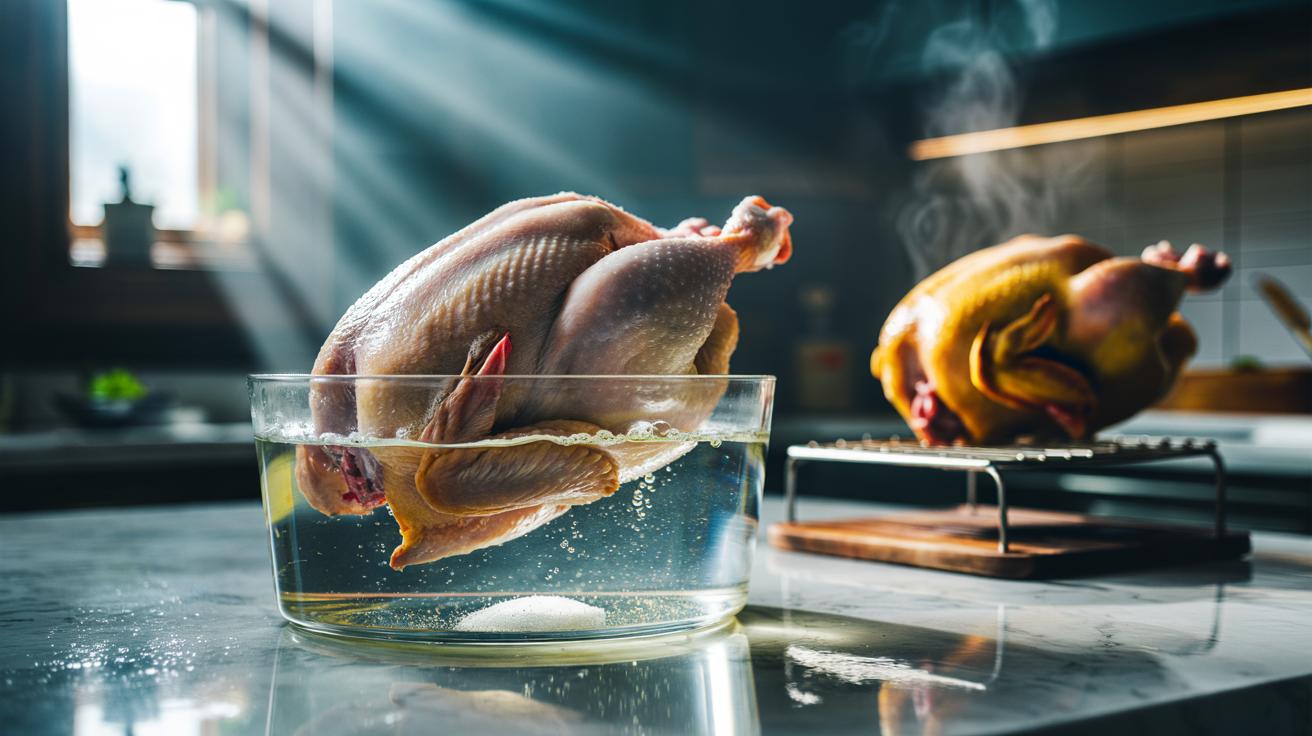
British cooks have long chased that elusive, glassy crunch on roast chicken skin. The simplest route is also the most scientific: a salt water soak. By marinating poultry in a calibrated saline bath, you harness osmosis to manipulate where water sits and how it behaves as heat takes over. At first, the brine draws moisture out, taking some surface proteins with it; later, salt migrates inward, seasoning the meat and changing the skin’s structure. Pair this with a patient air-dry and decisive heat, and you get bronzed, brittle skin without desiccating the flesh. The secret isn’t extra oil—it’s controlled moisture. Here’s how that process works and how to master it in your own kitchen.
Why a Salt Water Soak Pulls Moisture Out, Then Delivers Crispness
When chicken meets a saline solution, the skin’s surface fluid shifts. At first contact, the brine’s higher dissolved-solids content nudges water to move out of the skin via osmotic pressure, carrying soluble proteins and pigments with it. This initial exudation thins the surface film and lowers water activity, laying the groundwork for a drier, more responsive skin. As minutes turn to hours, sodium and chloride ions penetrate, altering protein denaturation thresholds and gently loosening the collagen matrix. That tweak helps fat render more readily under heat, and rendered fat is the ally of crispness.
Meanwhile, salted moisture doesn’t just vanish; it partially re-enters, seasoning muscles beneath the skin. Critically, the skin itself retains less free water at the surface after brining and air-drying. Come roasting or frying, heat can rapidly dehydrate the top layers, allowing the Maillard reaction to progress before steaming sabotages texture. The rhythm is: out first for dryness, in later for seasoning. Manage that rhythm, and the crackle follows.
Method: The Practical Salt Soak for Shatteringly Crisp Skin
Use a 6% brine: dissolve 60 g fine salt per 1 litre cold water. Submerge the chicken fully, ensuring the cavity is flooded for whole birds. Smaller cuts like wings or thighs benefit from 1–3 hours; a whole chicken usually needs 6–12 hours. Always brine in the fridge. After brining, drain thoroughly. Rinsing is optional; a brief rinse reduces surface salinity but can add moisture—if you rinse, pat dry meticulously. Place the chicken on a rack and air-dry, uncovered, in the fridge for 8–24 hours to encourage a tacky, matte “pellicle.”
Before heat, check the skin: it should look dry, not glossy. Lightly oil only the pan or rack; the bird already carries rendered fat potential. Roast hot to start—220°C fan/200°C conventional—then reduce to finish, or sear skin-side down in a dry pan until golden before oven-finishing. High initial energy drives off residual surface water quickly, letting browning outrun steaming. Cold chicken into blazing heat makes the skin erupt into crispness.
| Cut | Salt % (by weight) | Brine Time | Air-Dry Time | Heat Strategy |
|---|---|---|---|---|
| Wings | 6% | 1–2 hours | 8–12 hours | 220°C fan, 25–35 min, turn once |
| Thighs/Legs | 6% | 2–4 hours | 12–24 hours | Pan-sear skin-side down, then 200°C to finish |
| Whole Chicken | 6% | 6–12 hours | 12–24 hours | Start 220°C, drop to 180°C until 74°C core |
Wet Brine Versus Dry Brine: Which Wins for Skin?
Both strategies revolve around salt, but they behave differently. A wet brine standardises penetration, speeds diffusion, and reliably triggers that initial outward moisture movement that primes the skin. It’s forgiving for large birds and unevenly shaped cuts. A dry brine (salt rubbed directly on the bird) avoids added water entirely, which can mean slightly faster skin drying and a cleaner refrigerator setup. The trade-off: dry-brined birds can appear patchy if the salt isn’t evenly distributed, and timing matters more to prevent overly salty spots.
For outright crispness, either can excel if you prioritise the drying phase. Wet brining ensures internal seasoning but demands diligent pat-drying and fridge time to remove surface water. Dry brining simplifies moisture control yet benefits from similar air exposure. Whichever path you choose, the non-negotiables are measured salt, cold conditions, and deliberate drying. If your kitchen is humid, a fan-assisted fridge or convection oven gives dry brines a slight edge; for consistency across whole birds, wet brines often win.
Troubleshooting and Pro Tips for Roast, Pan, and Grill
If the skin stays limp, it’s usually one of three issues: too much surface moisture, insufficient heat, or premature saucing. Remedy by extending the fridge air-dry, preheating harder, and glazing only in the final minutes. A rubbery bite suggests incomplete fat rendering; give the skin more time in contact with hot air or a hot pan, not steam. Never cover the bird during crisping. If salinity runs high, shorten the brine or switch to a 5% solution (50 g per litre) and avoid injected birds, which are pre-salted.
Tech tweaks help. A pinch of baking powder on the skin after drying raises pH and accelerates browning; use sparingly to avoid a soapy note. For spatchcocked birds, expose as much skin as possible to convection. On grills, set a two-zone fire: crisp indirectly first, then finish over direct heat to prevent flare-ups. Above all, let the bird rest briefly to preserve juiciness, then serve promptly—the skin is at its peak crackle in the first minutes. Hot knife, hot plates, short carryover.
The salt water soak works because it manages water, not magic. By pulling moisture out early, then rebalancing salt within the meat, you create a skin that dries fast and browns hard while keeping the flesh seasoned and succulent. Pair a measured 6% brine with a patient air-dry and assertive heat, and you can count on crispness without gimmicks. Think of it as scheduling evaporation and rendering, not leaving them to chance. Armed with the science and a simple plan, what cut will you brine first—and how will you tailor the timing to your oven, your grill, and your taste?
Did you like it?4.6/5 (29)