In a nutshell
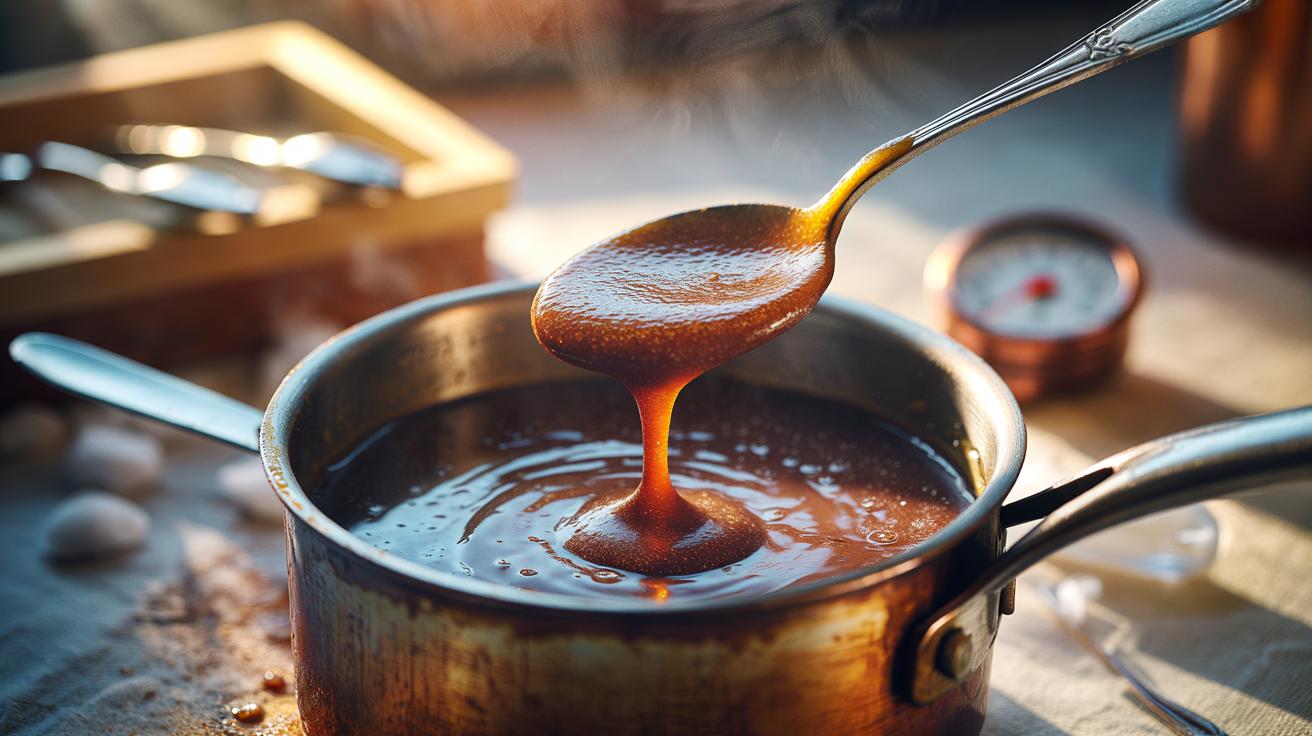
- 🥄 The cold spoon test rapidly signals readiness with a heavy, glossy coat and slow, rounded droplets—an intuitive cue when thermometers fog or fail.
- 🌡️ Hitting the soft-ball stage at 112–116°C (234–241°F) yields fudge that is creamy yet sliceable; thin, fast drips mean undercooked, thick sheeting suggests you’re edging past target.
- 📋 Follow a step-by-step method: chill and dry a metal spoon, dip the back briefly, hold horizontally, read the film, then rechill and retest in short intervals while keeping safety in mind.
- 🔬 Texture depends on controlled crystallisation; viscosity on the spoon mirrors solids concentration. Use interfering agents (glucose or golden syrup, cream of tartar) and cool to 43–45°C before beating for micro-crystals.
- 🛠️ Practical fixes: if you overshoot, add hot water and reboil; account for altitude (≈1°C lower per 300 m) and humidity, use a wide heavy pan, and cross-check with a thermometer to calibrate your eye.
British home cooks have long prized a gleaming pan of fudge with that elusive balance: creamy yet sliceable, dense yet yielding. While an accurate thermometer helps, the old-fashioned cold spoon test remains the most dependable quick-check in a busy kitchen. It tells you—immediately—when your syrup has reached the soft-ball stage, the precise point that locks in smoothness without stickiness. This tactile cue saves batches when steam fogs a dial or batteries die. The beauty is simplicity: a chilled spoon and keen eyes are all you need to nail a perfect set. Below, we unpack how the test works, why it maps to sugar science, and the practical tricks that turn a bubbling pot into impeccable fudge.
What Is the Soft-Ball Stage?
The soft-ball stage is the narrow temperature band—about 112–116°C (234–241°F)—where concentrated sugar syrup forms a malleable ball in cold water and sets fudge for that coveted creamy bite. At this point, water has evaporated enough to create a stable yet pliable structure once the syrup is beaten. Viscosity rises, bubbles become more deliberate, and the syrup clings to surfaces with a satin sheen. Hit this window and you build a matrix that holds fine crystals in suspension, delivering a slice that cuts cleanly but melts on the tongue. Miss it, and you veer into soft and weepy—or firm and crumbly—territory.
Generations learned to read this stage without gadgets, judging syrup behaviour on a spoon or in water. The cold spoon is simply a clean, chilled conductor that cools a thin film fast, translating invisible concentration changes into visible texture. Think of it as a shorthand for solids content: the thicker the coat and slower the drip, the closer you are to fudge-ready density.
| Stage | Temperature | Cold Spoon Cue |
|---|---|---|
| Thread | 106–112°C (223–234°F) | Thin coat; runs off in quick threads |
| Soft-ball | 112–116°C (234–241°F) | Heavy, glossy coat; slow, rounded droplets |
| Firm-ball | 118–120°C (244–248°F) | Thicker sheet; drip nearly stops |
| Hard-ball | 121–130°C (250–266°F) | Clings in a thick sheet; ropes form |
| Soft-crack | 132–143°C (270–290°F) | Film hardens quickly; brittle edges |
| Hard-crack | 149–154°C (300–310°F) | Glassy, shattering coat; no drip |
The Cold Spoon Test: Step-by-Step
Chill a metal dessert spoon in an ice bath for a couple of minutes, then dry it—water droplets dilute the reading. Stir your pot only until the sugar dissolves, then leave it to boil. When the bubbles slow and the surface gloss deepens, dip the back of the cold spoon briefly into the syrup and lift it out, holding it horizontally over the pan. Watch the film: at soft-ball, it coats the spoon in a thick, even layer and forms slow, rounded beads at the rim. The tell-tale sign is a smooth, heavy coat that peels off languidly rather than trickling in thin threads.
If the film is thin and races off, keep boiling. If it sheets and barely drips, you may be tipping into firm-ball. Rinse the spoon, rechill for 20–30 seconds, and test again. Safety first: the syrup is extremely hot; avoid touching the coat. A controlled blow can help you read behaviour—at soft-ball, the film briefly balloons before sagging. Repeat in short intervals to avoid overshooting.
Why Texture Depends on Temperature and Crystals
Fudge’s signature bite comes from controlled crystallisation. Boiling drives off water, creating a supersaturated syrup. As it cools, tiny sucrose crystals should form—many, and very small—to make a creamy structure. The cold spoon test tracks viscosity, which rises predictably with concentration, acting as a practical proxy for solids content. In plain terms: the right thickness on the spoon equals the right sugar concentration in the pan. That’s why a glossy, heavy coat correlates to the soft-ball stage and the ideal base for fine crystals.
Recipe choices also steer crystal size. Butterfat and milk proteins provide a tender matrix; interfering agents such as glucose syrup, golden syrup, or a pinch of cream of tartar disrupt sucrose alignment, discouraging coarse grains. After hitting soft-ball, letting the syrup cool undisturbed to about 43–45°C before beating seeds millions of micro-crystals. The spoon check ensures you start this phase with the correct density, so beating produces velvet rather than sandiness.
Troubleshooting and Practical Tips
If the spoon shows a thin coat and quick drip, keep boiling and test again at short intervals. If it sheets thickly and stops dripping, you may be past soft-ball; rescue by stirring in 1–2 tablespoons of hot water, dissolving fully, then reboiling to target. Trust your spoon, but calibrate your expectations: at altitude, the boiling point drops, so aim about 1°C lower per 300 metres above sea level. Humid days slow evaporation; allow extra time and use a wide, heavy pan to encourage steady reduction without scorching.
Minimise agitation once the sugar dissolves to prevent premature crystals. Skim scum if needed for a clean finish. Even if you prefer the analogue method, a thermometer is useful the first time in a new kitchen; cross-checking teaches your eye exactly how the soft-ball coat should look. After reaching it, let the pan cool undisturbed to 43–45°C, then beat in butter and flavourings until the gloss fades and the mixture thickens. Pour promptly; set without refrigeration for the smoothest crumb.
For many cooks, the cold spoon test brings confidence back to confectionery. It’s quick, thrifty, and rooted in solid food science, translating concentration into a visible, tactile cue. Master that glossy, slow-peeling coat and you’ll hit the soft-ball stage consistently, even without gadgets. Once you do, the rest—cooling, beating, and setting—becomes predictable, producing fudge that slices cleanly and melts like silk. Will you try the spoon test on your next batch and note how the coating’s look and drip rate map to the texture you plate up?
Did you like it?4.4/5 (29)