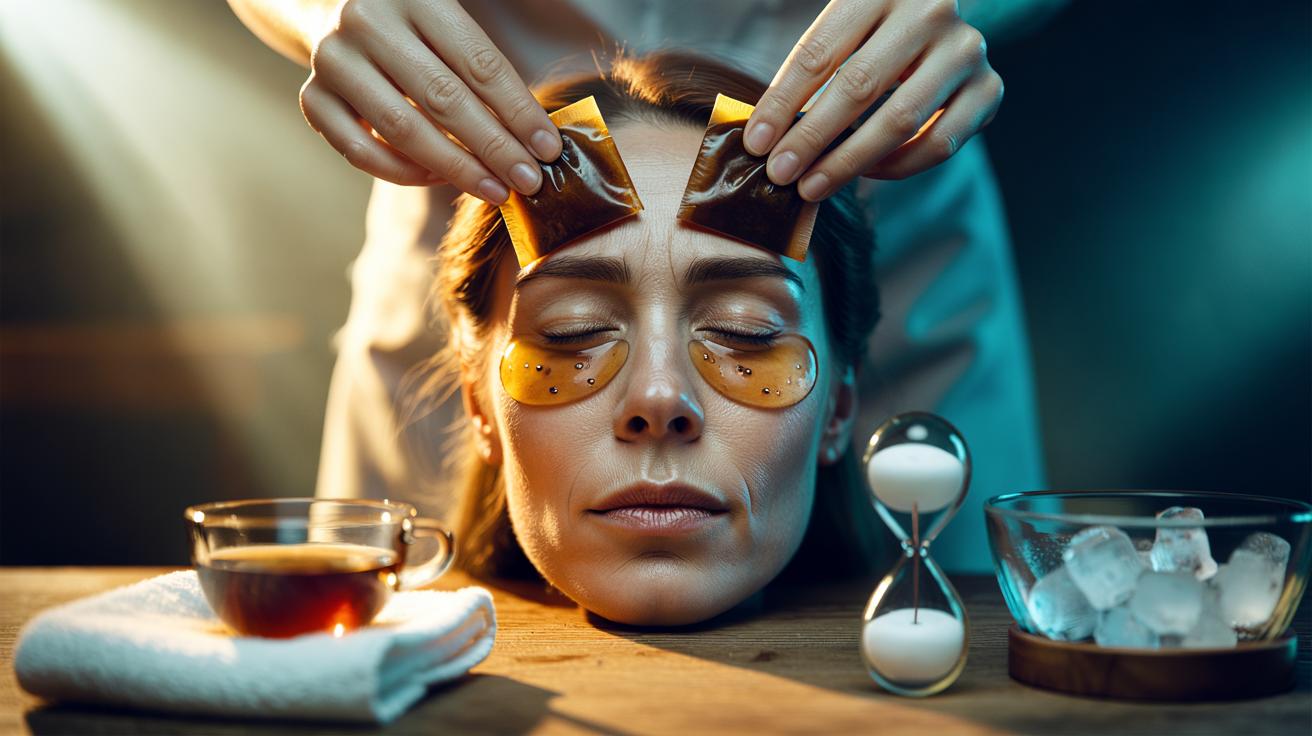
In a nutshell
- 🫖 Used black tea bags can deflate hangover eye bags in about 5 minutes by combining caffeine and cooling for a fast cosmetic refresh.
- ⚗️ Mechanism: caffeine-driven vasoconstriction plus tannins’ astringency and gentle pressure shift fluid; benefits are visible but temporary.
- ❄️ How-to: steep 3–5 minutes, squeeze and chill, apply 5–10 minutes, then pat dry and moisturise; avoid broken skin, remove lenses, and prioritise hygiene.
- ☕ Tea choices: black tea works best (30–60 mg caffeine); green is gentler; decaf and herbal rely on cold and soothing rather than de-puffing.
- ⏱️ Practical tips: pre-chill bags in the fridge, limit total use to ~15 minutes, and pair with hydration, lower salt, and sleep for lasting improvement.
After a heavy night, those swollen half-moons under your eyes can feel like billboards announcing your hangover. A surprisingly effective remedy sits in your kitchen: used black tea bags. Thanks to caffeine, polyphenols, and a cooling effect, this homespun compress can shrink under-eye puffiness quickly. Used black tea bags can visibly reduce hangover-related bags in around five minutes. The trick lies in vasoconstriction—narrowing blood vessels—combined with the gentle astringency of tea’s tannins that tighten skin’s surface. Add a chill from the fridge and you have a swift, low-cost fix that slots neatly between your shower and the first coffee of the day.
Why Black Tea Bags De-Puff Eyes So Quickly
The hero compound is caffeine, a mild adenosine-receptor antagonist that prompts vasoconstriction. When blood vessels around the thin under-eye skin constrict, visible swelling softens and dark tones look less pronounced. Tannins—particularly theaflavins and thearubigins in black tea—add an astringent effect, lightly tightening the surface so puffiness appears flatter. Cool temperature enhances both mechanisms: cold limits fluid leakage from capillaries and calms inflammatory mediators sparked by alcohol-induced dehydration and poor sleep. The speed comes from combining caffeine’s vessel-narrowing with the immediate impact of cold.
There’s also a gentle pressure effect: a moist bag resting on the orbital area nudges fluid back toward normal lymphatic channels. While the tea’s compounds don’t need to fully penetrate the skin to work, they interact with superficial microcirculation to reduce the look of edema. Expect a temporary cosmetic boost—ideal for video calls or the commute—but not a cure for chronic under-eye concerns such as herniated fat pads or pigment. Think instant refresh, not permanent correction.
Step-by-Step: Five-Minute Tea Bag Compress
Steep two standard black tea bags in hot water for 3–5 minutes, then squeeze gently and chill them in the fridge for 10 minutes or in ice water for two. Recline, close your eyes, and place one bag over each under-eye area, ensuring they’re cool, not icy. Apply for 5 minutes for a fast fix, or up to 10 minutes if you have time. Remove, pat dry with a clean towel, and follow with a light, fragrance-free eye cream to lock in hydration without adding puff.
Keep it hygienic: wash hands, avoid placing bags directly on broken skin, and discard after one use. If you’re sensitive to fragrance additives in certain teas, choose plain, unflavoured bags. Contact lens wearers should remove lenses first. Do not rub or tug at the delicate under-eye area. If you’re prone to eye infections or have blepharitis, stick to sterile, pharmacy-grade compresses. The method is safe for most people, but stop if you feel stinging or see redness.
What Science Says: Caffeine, Tannins, and Skin
Caffeine in tea (roughly 30–60 mg per brewed bag) delivers two relevant actions: it narrows superficial vessels and slightly increases intracellular cAMP via phosphodiesterase inhibition, which can modulate edema. Even limited percutaneous uptake around the eye may influence the microvasculature enough for a visible cosmetic change. The cooling temperature compounds the effect by slowing capillary flow and dampening inflammatory signals from late-night alcohol, salt-heavy snacks, and fragmented sleep.
Black tea’s tannins act as astringents, creating a gentle tightening that makes swelling less obvious. Polyphenols also have antioxidant properties, helpful when oxidative stress is high after drinking. The under-eye “deflate” you notice is mostly vascular and fluid-shift driven, not structural. Expect improvements in the look of puffiness and slight darkness tied to congestion; deep pigment or fat prolapse will be unchanged. For ongoing concerns, pair the trick with hydration, reduced salt, and consistent sleep to address recurring triggers.
Choosing the Right Tea and Timing
Most households stock black tea, which is ideal due to its higher caffeine and robust tannin profile. Green tea works in a pinch, trading some caffeine for soothing catechins. Herbal options lack caffeine but can calm irritation. For speed, black tea plus cold wins. Prepare your compress while you brush your teeth; by the time you’re towelling off, the bags are chilled and ready.
| Tea Type | Approx. Caffeine per Bag | Steep Time (for use) | Best For | Notes |
|---|---|---|---|---|
| Black | 30–60 mg | 3–5 min | Fast de-puffing | Top choice for hangover bags; strong tannins. |
| Green | 20–35 mg | 2–3 min | Sensitivity-prone skin | Slightly gentler; still effective when chilled. |
| Decaf Black | <5 mg | 3–5 min | Cooling/soothing | Less caffeine-driven effect; rely on cold and tannins. |
| Herbal (Chamomile) | 0 mg | 3–5 min | Redness relief | No caffeine; calming but slower de-puffing. |
Time your compress for five minutes, then reassess in the mirror. If puffiness lingers, a second round can help, but limit total application to about 15 minutes to avoid overcooling. Keep a couple of pre-steeped bags in the fridge for busy workweeks. Consistency magnifies the benefits when nights run late and mornings run early.
Used black tea bags won’t rewrite your biology, but they will buy you time—a quick, affordable trick that makes you look more awake while you rehydrate and recover. The combination of caffeine, tannins, and cold targets the very mechanisms that inflate hangover bags. As a newsroom habit or commuter hack, it earns a permanent place in the bathroom cabinet. Will you assemble a mini “rescue kit” in your fridge this week—two tea bags, a clean towel, and five quiet minutes—to see how much lighter your eyes can feel after a late night?
Did you like it?4.6/5 (20)