In a nutshell
- 🧪 Lactic acid in yogurt offers gentle exfoliation thanks to its larger molecule and natural buffering, acting as a humectant and operating near skin-friendly pH ~4–4.6.
- 🌾 Superfine rice flour provides soft mechanical polish without scratching, adds slip, and lightly absorbs oil for a smooth, velvety finish.
- 🥣 Mix 1 tsp rice flour with 1–2 tsp yogurt (optional honey), massage for 20–30 seconds, leave 2–5 minutes, then rinse; follow with moisturiser and daytime SPF.
- 👩⚕️ Best for normal, combination, and mildly oily skin; dry/mature can use a yogurt-heavy ratio. Patch test, avoid broken or irritated skin, and don’t pair with strong acids or retinoids in the same routine.
- 🔬 Expect a low-strength, short-contact exfoliant: immediate smoothness, gradual brightness over weeks; use 1–2 times weekly and prioritise consistency over intensity.
The most effective beauty tricks sometimes arrive from the cupboard, not the salon. Blend finely milled rice flour with plain yogurt and you get a sensorial scrub that leaves skin feeling baby-soft, polished yet calm. The quiet hero is lactic acid, a naturally occurring alpha hydroxy acid in yogurt that loosens dull surface cells while drawing in water. Rice flour adds a measured, cushiony buff that avoids the grit of harsher scrubs. Used with a light touch and a short contact time, this duo can reset texture without riling the skin barrier. Here’s how it works, how to mix it, and how to tailor the routine for your skin.
Why Lactic Acid from Yogurt Works Gently
Yogurt contains lactic acid, an AHA with a larger molecular size than glycolic acid, so it travels more slowly and acts more softly. It targets the “glue” between dead cells, encouraging orderly shedding of the stratum corneum. At low levels, it also behaves as a humectant, attracting moisture and leaving the surface supple. Proteins and fats in yogurt help buffer the acid, tempering the sting many associate with peels. The result is subtle chemical exfoliation that reinforces, rather than strips, the skin’s natural balance.
The skin-friendly action has another benefit: pH. Plain yogurt typically sits around pH 4–4.6, close to the skin’s own acidic mantle. That means the exfoliating nudge is effective without destabilising barrier lipids. Expect smoothness, a touch more clarity, and better slip for makeup. Think refinement, not drastic overhaul; you’re coaxing the complexion to behave as it does on its best days.
Rice Flour’s Physical Polish Without the Scratch
Rice flour contributes a fine, almost silky grain that gives mechanical exfoliation without the jagged edges of nut shells or salt. Its starch content adds glide, reducing friction as you massage. That matters because overzealous scrubbing can trigger redness or micro-irritation. Choose superfine or “rice powder” over coarser blends, and always keep the paste wet with yogurt so the particles float across the skin rather than drag. Gentle pressure is the rule: think featherlight circles, not scouring.
There’s a secondary perk for shine-prone faces. Rice flour can lightly absorb excess oil, leaving a velvety finish post-rinse. It also pairs neatly with lactic acid’s water-binding effect, creating the classic “polished yet plush” feel. Used once or twice a week, it nudges away rough patches on the chin or around the nose without inviting flakiness. Less is more: the goal is refinement you can repeat, not a one-off blitz that leaves skin sulking.
How to Mix the Scrub and Use It Safely
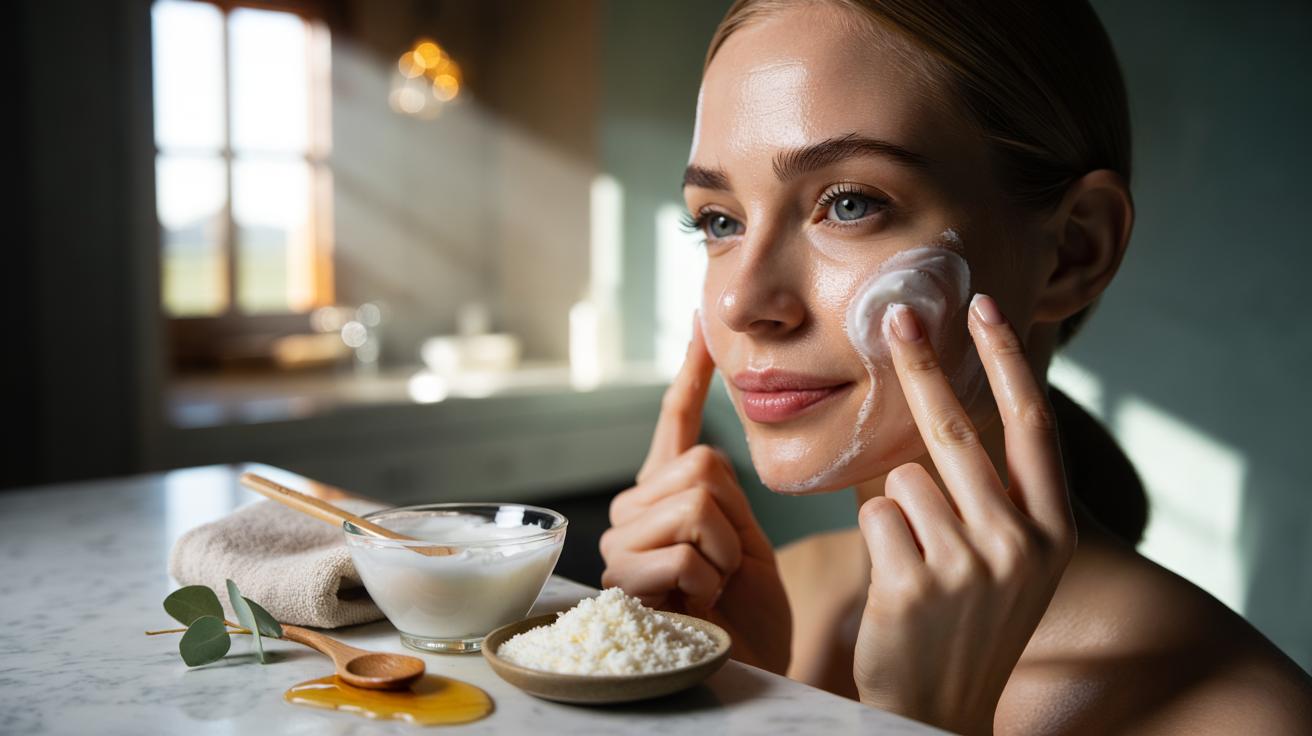
Start with 1 level teaspoon of rice flour and 1–2 teaspoons of plain, unsweetened yogurt (Greek works if you prefer a thicker paste). Optional: ½ teaspoon honey for extra slip. Stir until smooth. After cleansing, apply a thin layer to damp skin. Massage with two fingers for 20–30 seconds, then let it sit like a mini mask for 2–5 minutes so lactic acid can work. Rinse with lukewarm water and pat dry. If your skin is sensitive, skip the massage and use it as a short-contact mask.
| Component | Purpose | Amount | Notes |
|---|---|---|---|
| Rice flour | Gentle polish | 1 tsp | Choose superfine; keep paste wet |
| Plain yogurt | Lactic acid + hydration | 1–2 tsp | Higher amount = softer scrub |
| Contact time | Chemical action | 2–5 mins | Shorter for sensitive skin |
| Frequency | Maintenance | 1–2x weekly | Adjust to tolerance |
Always patch test behind the ear or along the jaw for 24 hours. Avoid broken skin, active eczema, or fresh sunburn. After rinsing, apply a fragrance-free moisturiser and finish with SPF during the day. Do not combine with potent acids or retinoids in the same routine.
Who Benefits, Who Should Skip, and Smart Pairings
Normal, combination, and mildly oily skins often enjoy the balanced result: fewer rough spots, a touch less dullness, a smoother base for foundation. Dry or mature skin can use a yogurt-heavy ratio and follow with a ceramide or squalane-rich moisturiser. If you’re on prescription retinoids, have rosacea flares, or are mid-peel, press pause until the skin is calm. Listen to your skin’s feedback—tingle that fades is fine; outright sting is your cue to rinse.
For pairings, think supportive, not competitive. Post-scrub, layer hydrating toners, panthenol, or niacinamide (low strength) to bolster the barrier. At night, keep it simple: moisturiser only. In the morning, sunscreen is non-negotiable because exfoliation increases photosensitivity. Skip gritty scrubs, strong vitamin C, or other AHAs/BHAs on the same day. The elegance of this method lies in its restraint—just enough chemistry, just enough polish.
Science Bites: pH, Concentration, and Expectation Setting
Plain yogurt’s pH hovers around 4–4.6, which is within the effective window for lactic acid while staying friendly to the acid mantle. The actual acid concentration in yogurt is low, so think of this routine as a short-contact, low-strength exfoliant with bonus hydration. The rice flour does not significantly alter pH; it simply moderates pressure and adds slip. This is why the result feels soft and springy rather than tight or squeaky-clean.
Expect immediate tactile smoothness from loosened surface cells and increased water binding in the outer layer. Visible brightness builds with consistency over a few weeks, not overnight. This scrub won’t replace professional peels for stubborn texture or marked pigmentation, but it can keep everyday dullness in check. A sensible cadence—once or twice weekly—respects the skin’s renewal rhythm while maintaining that coveted freshly-laundered finish. Patience, not force, delivers the most reliable glow.
Used thoughtfully, the rice flour and yogurt scrub is a thrifty, tactile ritual that coaxes clarity without commotion. The lactic acid smooths while hydrating, the rice flour buffs without bite, and your moisturiser locks in the calm. The measure of success isn’t a tingle, it’s how comfortable your skin feels an hour later. Ready to try it? What ratio, contact time, and aftercare will you test first to tailor this gentle polish to your skin’s personality?
Did you like it?4.5/5 (29)