In a nutshell
- 🍌🍯 The banana–honey mask reduces breakage often mistaken for shedding by boosting strand elasticity and scalp comfort; banana adds potassium, honey acts as a humectant.
- 🔋 Potassium supports cellular fluid balance and membrane potential, encouraging healthy microcirculation around follicles and helping stabilise the growth environment.
- 🥣 Recipe and use: 1 ripe banana + 1–2 tbsp honey (thin with warm water), apply to damp hair, massage 2–3 minutes, leave 15–25 minutes, rinse well; repeat 1–2 times weekly for 4–6 weeks.
- ⚠️ Safety first: do a patch test, avoid if allergic to bee products; discuss dietary potassium with your GP if you have kidney issues or take potassium‑sparing meds; it’s not a cure for medical hair loss.
- 🍽️ Holistic support: pair with a diet rich in potassium, protein, and iron; stay hydrated, manage stress, use a wide‑tooth comb, limit heat, and sleep on a smooth pillowcase.
Hair shedding can rattle anyone’s confidence, yet the solution needn’t be complicated or costly. A simple blend of banana and honey has earned praise for calming the scalp, improving strand resilience, and supporting the conditions needed for steady growth. The quiet star is potassium, abundant in bananas, which helps balance cellular fluids and supports healthy blood flow—both central to follicle function. Honey brings moisture-locking and soothing qualities that reduce breakage from dryness. This is not a miracle cure, but a practical, kitchen‑cupboard ritual that reinforces what hair needs to stay on your head rather than on your brush. Below, we unpack the science, show you how to mix and apply the mask, and share smart safety and nutrition notes to make the most of every spoonful and mash.
Why Potassium Matters for Hair Follicles
Every hair follicle is a tiny, energy-hungry organ that depends on ion balance to grow well. Potassium helps regulate membrane potential in cells, guiding nutrient exchange and fluid balance. That matters on the scalp, where follicles cycle through growth phases and rely on a steady supply of oxygen and micronutrients. Research has implicated potassium channels in follicle signalling, while good dietary potassium supports vascular tone, encouraging healthy microcirculation around roots. The upshot: a well-fed ionic environment helps reduce “stress shedding” triggered by dryness, tight scalps, or styling strain.
Of course, a banana mask won’t deliver potassium deep into the bloodstream; that’s the job of your diet. Yet topically, a banana’s natural sugars, pectins, and minerals can boost slip and hydration, reducing mechanical breakage that masquerades as shedding. Think of potassium as a foundational ally: it steadies the follicle’s internal electrics while a moisturised scalp keeps strands supple during daily combing and washing.
Banana and Honey: A Functional Pair
Banana supplies potassium plus vitamin B6 and softening fibres that help coat the cuticle. Honey acts as a humectant, drawing in ambient moisture to keep strands flexible, and offers gentle antimicrobial action that can ease a fussy scalp. Together, they form a light occlusive layer that limits moisture loss, improves slip, and reduces friction—key to minimising breakage that often gets misread as “excess shedding.” By improving the scalp environment and strand elasticity, this duo supports the conditions in which hair is more likely to stay anchored and break less.
Used consistently, the blend can complement a balanced diet and careful styling routine. It is especially helpful in dry, centrally heated homes or during seasonal shifts when scalp tightness and snap-prone ends peak. To clarify their roles at a glance, here’s a quick reference:
| Component | Key Nutrients/Traits | Role for Hair/Scalp | Practical Notes |
|---|---|---|---|
| Banana | Potassium, B6, pectins | Supports fluid balance; softens cuticle; improves slip | Mash until silky; sieve to avoid bits |
| Honey | Humectant, antioxidants | Attracts moisture; soothes scalp; reduces friction | Thin with warm water for easy spread |
| Optional yoghurt | Protein, lactic acid | Light conditioning; smoother feel | Use plain, unsweetened |
How to Make and Use a Banana–Honey Scalp Mask
Ingredients: 1 very ripe banana, 1–2 tbsp honey, 1–2 tsp warm water. Optional: 1 tbsp plain yoghurt or 1 tsp light oil (e.g., olive or almond) for extra slip. Choose overripe bananas for a smoother texture and better mashability.
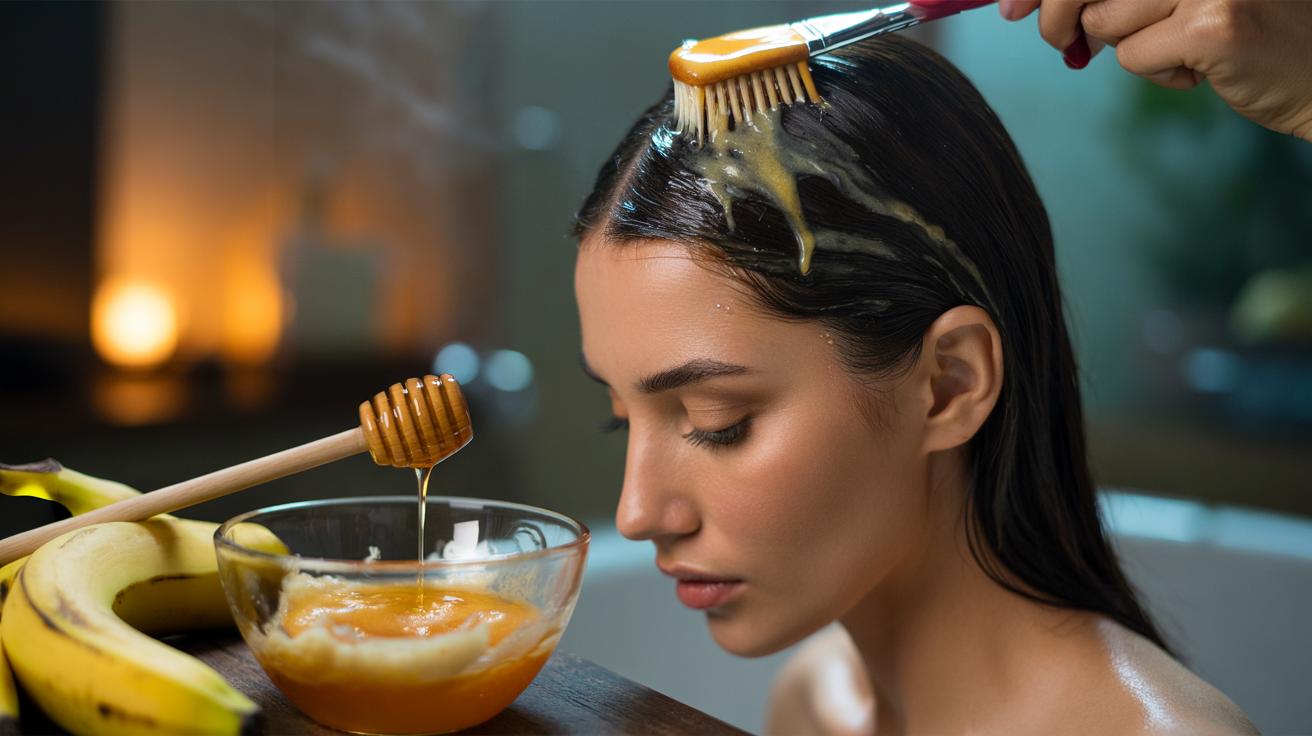
Method: Blend or mash the banana to a fine puree; pass through a sieve for a lump‑free finish. Stir in honey and just enough warm water to reach yoghurt-like consistency. On damp, detangled hair, part in sections and apply from scalp to mid‑lengths, focusing on dry areas. Massage gently for 2–3 minutes to encourage circulation without tugging.
Leave on for 15–25 minutes under a shower cap. Rinse thoroughly with lukewarm water, then use a mild shampoo if needed. Condition as usual. Repeat 1–2 times weekly for four to six weeks. Always do a patch test first, and avoid vigorous combing while the mask is in—wet hair is at its most vulnerable.
Diet, Lifestyle, and Safety Notes
For sustained results, pair the mask with dietary sources of potassium—bananas, potatoes, beans, leafy greens—and adequate protein and iron. Hydration and stress management also influence shedding patterns, as does gentle handling: use a wide‑tooth comb, reduce high heat, and sleep on a smooth pillowcase. Consistent, low‑stress care often trims shedding more effectively than sporadic “miracle” fixes.
Safety: If you have kidney disease or are on potassium‑sparing medicines, discuss dietary potassium with your GP. Avoid honey on broken or irritated skin, and skip if you have known sensitivities to pollen or bee products. Persistent, sudden, or patchy shedding warrants medical assessment to rule out thyroid issues, iron deficiency, or specific alopecias. The banana–honey mask is a supportive cosmetic step—useful for breakage‑related loss and scalp comfort—rather than a stand‑alone cure.
Used with care, a banana and honey treatment offers a modest, evidence‑informed way to reinforce the scalp environment and reduce breakage that looks like shedding. It’s affordable, quick to prepare, and gentle enough for most hair types, especially when your strands feel dry or brittle. Give it a month of steady, once‑ or twice‑weekly sessions and monitor how much hair you’re seeing in the shower drain and on your brush. What tweaks—dietary, styling, or mask add‑ins—will you experiment with to help your hair shed less and stay stronger for the long term?
Did you like it?4.4/5 (22)