In a nutshell
- 🧪 Why it’s streak-free: Ethanol’s volatility and low surface tension lift oils and evaporate fast, leaving no residue; combine with distilled water and a clean microfibre cloth to prevent mineral marks and lint.
- 🧴 DIY recipe and method: Mix 2 parts vodka with 1 part distilled water, add a teaspoon of vinegar per 250 ml and an optional drop of dish soap; mist lightly, wipe in S-strokes, then buff dry—spray the cloth for edges and electronics.
- 🚿 Bathroom science: Alcohol dissolves lipids while vinegar tackles minerals; for fog control, a whisper of surfactant helps but true anti-fog needs specialist products; wash microfibre without fabric softener to avoid smears.
- ⚠️ Safety and compatibility: Alcohol is flammable—keep away from heat and live devices; test on plastics, painted frames, and coatings; use lens-safe cleaners for spectacles unless approved for alcohol.
- 💷 Cost and alternatives: Budget vodka is effective for routine shine; isopropyl alcohol (70%) hits heavy grease; vinegar-water beats limescale but may smear oils; commercial glass cleaners offer convenience with added fragrance.
Household wisdom often hides in plain sight: a bottle of vodka can double as a remarkably effective glass cleaner. The secret lies in the way alcohol behaves on smooth surfaces, cutting through fingerprints and evaporating so quickly it leaves nothing behind to smear. For busy bathrooms and kitchen splashbacks, a vodka spray is a nimble alternative to heavy-fragranced formulas, and it’s easy to mix at home. Because alcohol carries away oils while vanishing without residue, it can deliver that brittle, crystal-clear shine we crave on mirrors and lenses. Here’s how it works, the best method to mix and use it, and what to consider for safety, costs, and alternatives.
Why Alcohol Evaporates Streak-Free
Alcohol’s cleaning talent begins with volatility—it evaporates at a lower temperature than water and doesn’t leave behind dissolved minerals or surfactants that create marks. Ethanol in vodka bonds well with oily residues from skin and cosmetics, lifting them into solution. As the thin film flashes off, there’s little to deposit back onto the glass. This fast evaporation is crucial: droplets don’t linger long enough to dry into tide marks or gather fluff from cloths. Because alcohol also reduces surface tension, it spreads more evenly, preventing beading and patchy drying that commonly produce streaks.
Water quality matters. Tap water can carry calcium and magnesium ions that crystallise as limescale, which shows up as dulling streaks once the liquid dries. Using distilled water or filtered water minimises such residues. The cloth matters, too. A clean, lint-free microfibre cloth provides tiny hooking fibres that lift particles rather than push them around. Combine fast-evaporating alcohol, mineral-free water, and a proper cloth, and streaks simply have nowhere to form. That’s the simple physics behind the seemingly magical, crystal-clear finish.
The Vodka Spray Recipe and Method
For a reliable home mix, start with budget, unflavoured vodka (typically 40% ethanol). In a clean spray bottle, combine 2 parts vodka with 1 part distilled water. Add 1 teaspoon of white vinegar per 250 ml if your mirrors suffer from hard-water haze, and—optionally—one drop of unscented dish soap to help break stubborn fingerprints. Label the bottle clearly and keep it away from heat: alcohol is highly flammable. This blend balances cutting power and fast evaporation, while keeping the scent mild. Shake before use to disperse any tiny amount of surfactant.
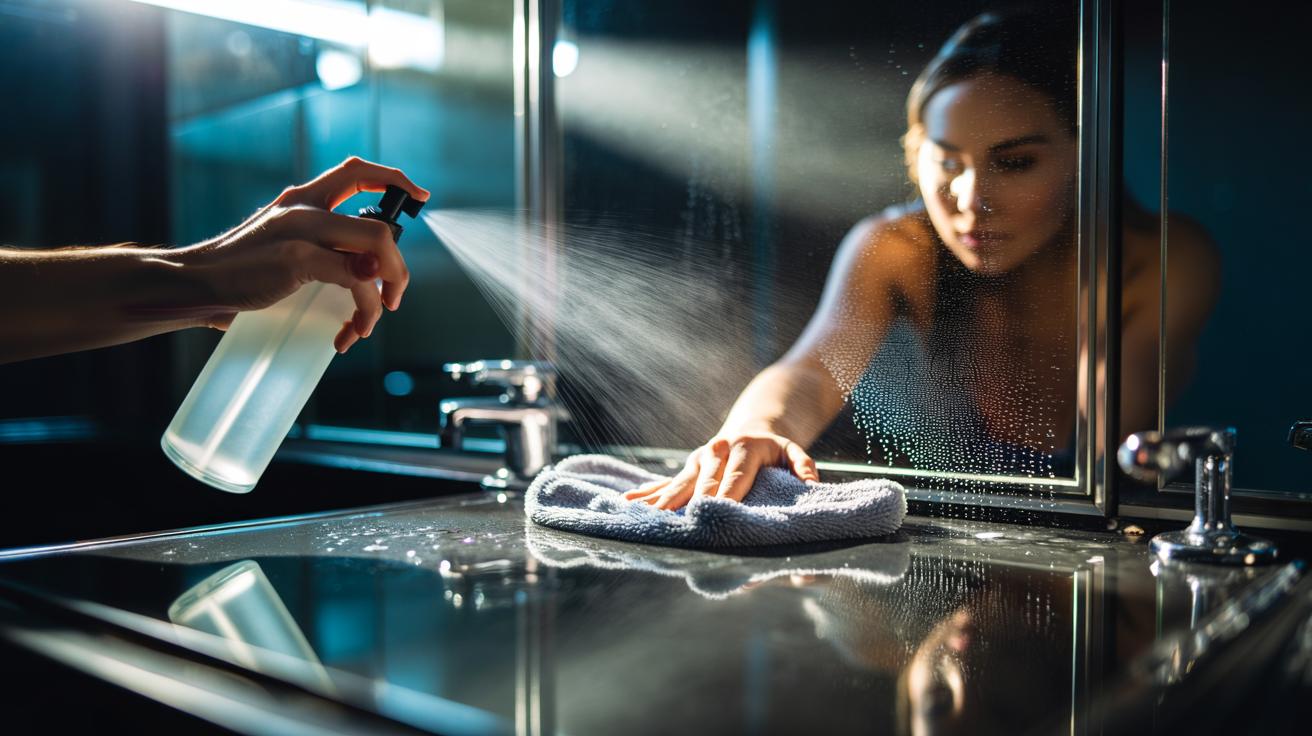
To clean, lightly mist the glass (less is more) and wipe in overlapping S-shaped strokes with a clean microfibre, turning the cloth as it loads. Finish with a brisk buff using a dry corner for a showroom shine. Spray the cloth rather than the surface for frames, edges, and electronics to avoid seepage into seams. Avoid wood, lacquer, and any surface that might be sensitive to alcohol. On heavy grease, pre-wipe with warm water, then polish with the vodka mix.
Science in the Bathroom: Tackling Fogging and Smears
Persistent bathroom smears usually have two culprits: lipids from hands and aerosols, and minerals from splashes. Ethanol dissolves the lipids, while the diluted vinegar in the mix chelates minerals, reducing chalky films. Microfibre’s split fibres grab the loosened grime rather than spreading it thinly—this is why technique is as vital as formula. If a mirror stays smeary, the cloth is often saturated or contaminated with fabric softener, which leaves silicone residues that streak. Wash microfibre separately, no conditioner, and air-dry to maintain its grabby texture.
What about fog? True anti-fogging needs a controlled, ultra-thin film that stops droplets forming, typically a specialist surfactant system. A straight vodka spray cleans brilliantly but doesn’t prevent condensation for long. If fog reduction is your goal, leave out vinegar and add a literal drop of dish soap, then buff extensively. A whisper-thin surfactant layer can delay misting, but overdo it and you’ll see smears. For shaving mirrors or spectacles, products specifically labelled anti-fog remain the most consistent option.
Safety, Cost, and Alternatives
Alcohol is flammable; keep mixtures away from open flames, pilot lights, and hot styling tools. Never spray onto powered screens or inside cameras; apply to a cloth and consult manufacturer guidance for coated lenses or displays. Most household glass tolerates alcohol, but painted frames, varnishes, and certain plastics may dull. For eyeglasses and coated optics, use lens-safe cleaners unless your optician confirms alcohol is acceptable. Cost-wise, budget vodka is competitive for small batches; for frequent cleaning, isopropyl alcohol (IPA, 70%) offers higher solvent power per pound, while commercial glass cleaners add fragrances and anti-redeposition agents.
Choose according to sensitivity and workload. Vodka mixes are mild, pleasant-smelling, and low in residue. IPA is a robust degreaser but can be harsher on plastics. Vinegar-water excels on limescale but can leave a tang and may smudge oils without a dash of surfactant. Your best friend remains a clean, high-quality microfibre and a light touch. Keep separate cloths for glass to avoid cross-contamination from polishes or fabric softeners.
| Cleaner | Main Ingredients | Best For | Watch Outs |
|---|---|---|---|
| Vodka Spray | Ethanol, distilled water, optional vinegar/soap | Daily mirror and glass shine | Flammable; test on plastics/finishes |
| Isopropyl Alcohol (70%) | IPA, water | Heavy fingerprints, grease | Harsher on some plastics/coatings |
| Vinegar-Water | Acetic acid, water | Limescale haze | Can smear oils without surfactant |
| Commercial Glass Cleaner | Solvents, surfactants, fragrance | All-round convenience | Fragrance residue; additives |
As a clever household crossover, a simple vodka spray proves that chemistry beats elbow grease: a volatile solvent, a clean cloth, and minimal additives deliver a pristine, streak-free gleam. Use light mists, distilled water, and fresh microfibre, and the clarity speaks for itself. Whether you opt for vodka, IPA, or a shop-bought bottle, the winning habit is a consistent method: wipe, flip, and buff. Next time your mirror blooms with fingerprints, will you mix your own sparkling solution—or test a different recipe to see which one truly earns a place under your sink?
Did you like it?4.5/5 (20)