In a nutshell
- 🧪 The acidity of vinegar (acetic acid) dissolves limescale and loosens oily films, delivering a streak-free shine without heavy detergents.
- 🥤 Optimal mixes: 1:2 vinegar : distilled water for maintenance, 1:1 for hard-water spots; optional up to 10% isopropyl alcohol for faster drying.
- 🧼 Method matters: use a light mist, short dwell, wipe with a clean microfibre cloth in S-patterns, or squeegee top-to-bottom; avoid hot, sunny glass.
- ⚠️ Safety first: don’t use on natural stone or unsealed grout, keep off electronics, and never mix vinegar with bleach; ventilate and label bottles.
- 🌿 Eco and value: low VOC impact, minimal packaging, and budget-friendly performance that rivals branded glass cleaners.
There’s a reason a humble bottle of clear liquid sits under so many British sinks. A simple spray of vinegar can cut through weeks of city grime, coastal salt, and sticky fingerprints, leaving glass startlingly clear. The secret is in its acidity, which dissolves minerals and loosens oily films that cause dullness and streaks. Used with distilled water and a clean microfibre cloth, this low-cost staple competes with premium glass cleaners while reducing waste and fragrance irritants. Skip the blazing midday sun and you’ll dodge streaks before they start. If you’ve wrestled with hard-water spotting, hazy patio doors, or smears after a DIY wash, the right vinegar mix can deliver crisp, magazine-worthy panes without fuss.
Why Acidity Breaks Down Window Residue
White vinegar is a dilute solution of acetic acid (typically 5%), with a pH around 2.4–3. That level of acidity excels at dissolving alkaline deposits such as limescale and the calcium soaps left by hard water. It also helps to loosen road film and kitchen aerosols by protonating fatty residues, making them easier to lift with a cloth. This is a gentle chemical nudge, not a harsh strip—ideal for household glass. Because acetic acid evaporates cleanly, it tends to leave fewer surfactant traces than many detergents, which is why a well-mixed spray can dry to a streak-free finish.
Grime on windows is rarely one thing; it’s a cocktail of minerals, soot, pollen, and oils. The acid tackles the mineral component, while the water component transports loosened dirt into your cloth. A small addition of isopropyl alcohol can speed drying in damp weather, though it isn’t essential. Think of vinegar as a targeted de-scaler that also weakens filmy bonds, allowing mechanical action—your wipe and buff—to do the rest. Used correctly, it restores optical clarity without leaving dulling films.
Mixing the Perfect Vinegar Spray
For maintenance cleans, mix 1 part white vinegar to 2 parts distilled water. For heavy grime or chalky hard-water marks, go 1:1. Distilled water is key; it prevents new mineral spotting as the glass dries. If you prefer quicker flash-off in winter, add up to 10% isopropyl alcohol (by volume) for faster evaporation, keeping rooms ventilated. Use distilled water whenever possible to minimise streaking and spots. Avoid coloured vinegars; they can leave tints or sugars that smear.
Essential oils smell pleasant but can leave film; if you must, stick to a single drop per 250 ml. Mix in a clean spray bottle, label it, and store it capped. Never combine vinegar with bleach-based products—mixing acids and hypochlorite releases hazardous gas. Shake gently before use, then spray a light, even mist rather than soaking the pane. That gives the acid time to act without overwhelming your cloth.
| Scenario | Vinegar : Water | Additive | Contact Time |
|---|---|---|---|
| Weekly maintenance | 1 : 2 | None | 20–30 seconds |
| Hard-water spots | 1 : 1 | None | 60–90 seconds |
| Cold, damp weather | 1 : 2 | Up to 10% isopropyl alcohol | 20–30 seconds |
| Greasy kitchen film | 1 : 1 | Warm solution | 60 seconds |
Step-by-Step Method for a Streak-Free Shine
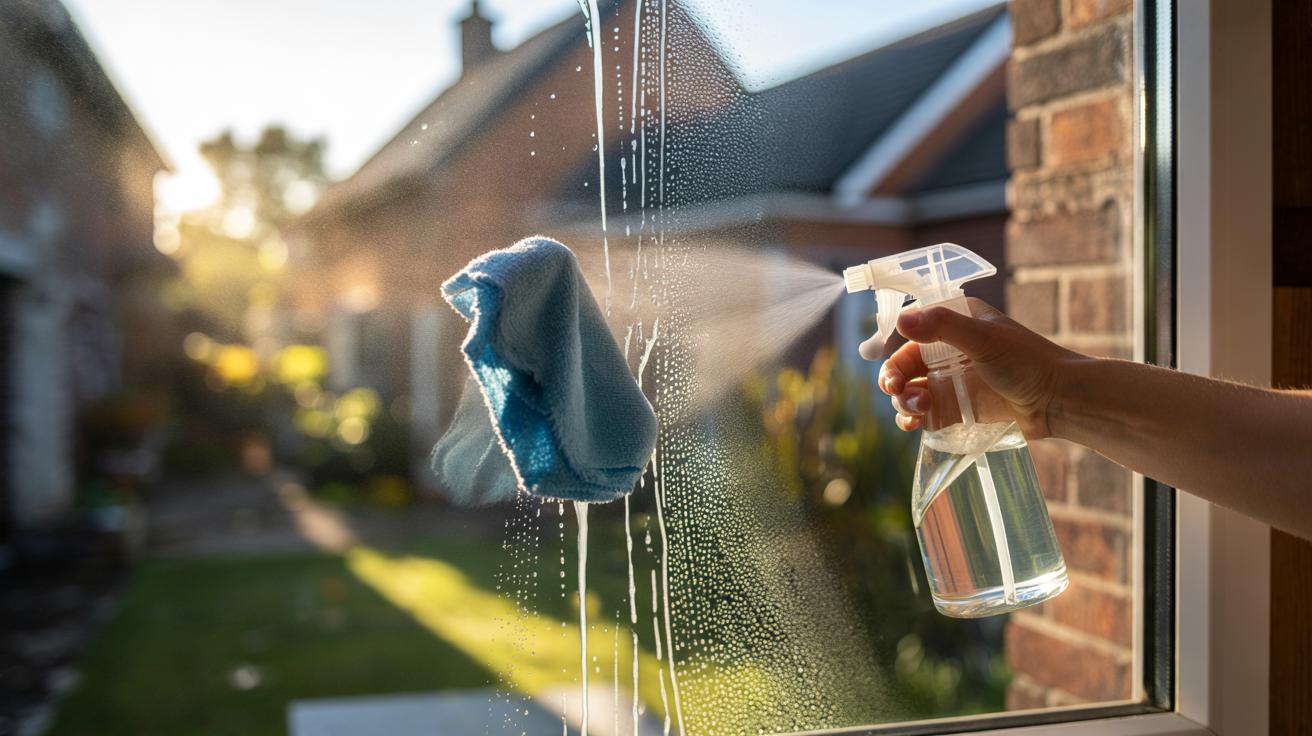
Start by dusting frames and sills so loose grit doesn’t migrate across the glass. Spray a fine mist onto the pane, working top to bottom. Let it sit briefly—just enough for the acid to soften deposits. Wipe using a clean microfibre cloth in overlapping S-patterns, flipping to a dry side as it loads with soil. Change cloths before they become damp and dirty—saturated fibres cause streaks. For picture windows, a squeegee speeds things up: pull in firm vertical passes, wiping the blade edge after each stroke.
Detail the edges and corners with a folded dry microfibre, where drips like to linger. If any shadowing remains, a quick buff with a second dry cloth restores the crisp finish. Avoid direct sunlight or hot glass; fast evaporation strands residue before you can wipe it away. For exterior panes, rinse away grit first to avoid scratching, then repeat the same light-mist, short-dwell routine for a spotless result.
Safety Notes, Surfaces to Avoid, and Pro Tips
Vinegar is safe for most household glass, but avoid long contact with natural stone (marble, limestone, travertine) and unsealed grout; the acid can etch. Keep clear of waxed timber, and test around tinted films or low-E coatings as manufacturer guidance varies. Do not spray vinegar onto electronics or smart screens—use a screen-safe cleaner instead. If your frames are bare aluminium or brass, wipe any overspray promptly to prevent tarnish. Ventilate when adding alcohol and keep mixtures labelled and out of children’s reach.
For nicotine film or diesel haze, pre-wipe with a slightly stronger 1:1 mix, then finish with a 1:2 pass for polish. Use distilled water in hard-water areas to stop fresh spotting. A rubber-edged squeegee minimises lint; a dense, plush microfibre provides the final gleam. Less is more—light mist, short dwell, clean cloth, immediate dry buff. Environmentally, vinegar offers low VOC impact and minimal packaging, delivering clear views with a fraction of the cost and chemical load of many branded sprays.
A well-made vinegar spray is a small domestic revolution: cheap, reliable, and refreshingly unfussy. By leaning on acetic acid to neutralise mineral films and loosen oils, it simplifies window care to a quick mist and measured wipe, no perfumed haze required. Keep the mix sensible, the cloths clean, and the glass cool, and you’ll be rewarded with that sought-after streak-free snap. Reserve the heavy duty cleaners for rare emergencies; most glass simply needs smart acidity and good technique. What’s your biggest window-cleaning headache at home—hard-water marks, kitchen film, or fast-drying panes—and how would you like to see it solved next?
Did you like it?4.6/5 (23)