In a nutshell
- 🧂 Salt wicks wine fast: Hygroscopic crystals use osmosis and capillary action to pull liquid and pigments (tannins, anthocyanins) to the surface before they bind to fibres.
- ⏱️ Act within 60 seconds: Blot (don’t rub), mound on coarse salt, let it crust, then vacuum/scoop; finish with a light cold-water or diluted vinegar mist on synthetics and blot dry.
- 🧪 Choose the right absorbent: Coarse kosher or sea salt excels; alternatives include baking soda, unscented silica-gel cat litter, or cornflour—always spot-test and use wool-safe detergents on wool.
- 🚫 Avoid stain-setters: No rubbing, hot water, steam, excess moisture, coloured cloths, oxygen bleach on wool/silk, or the “white wine fixes red wine” myth.
- 📌 Finish smart: Dry under pressure with kitchen roll to prevent re-wicking; if browning rings appear (cellulosic browning) or stains persist, call a professional cleaner.
Red wine and rugs share a tragic chemistry: one exuberant toast, one slosh, and a prized floor covering is at risk. In British homes where entertaining often happens over plush pile, a simple kitchen staple can be a saviour. Reach for salt before the stain sets and you gain precious seconds as crystals draw pigment-laden liquid to the surface. Speed is the decisive factor. By exploiting salt’s hygroscopic pull and the capillary spaces between grains, you can interrupt the bonding between red wine’s anthocyanins and rug fibres. Here’s how the trick works, how to deploy it safely, and what to avoid if you want your living room to look the same in the morning as it did before the cork popped.
The Science Behind Salt and Red Wine
Red wine stains become stubborn because tannins and anthocyanins bind to natural fibres—especially wool—through hydrogen bonding and hydrophobic interactions. When sprinkled immediately, sodium chloride crystals create a local concentration gradient. Water in the wine migrates from the rug into the drier salt via osmosis and capillary action between grains, carrying dissolved pigments with it. That rapid wicking keeps colour at the surface rather than deep in the pile. The goal is not to scrub but to lift, turning a potentially permanent mark into a manageable residue that vacuums away once dry.
Salt’s angular crystals provide abundant surface area for adsorption—a cling at the surface—alongside absorption into crystal gaps. The effect is magnified by coarse grains, which create microchannels for faster drainage. Temperature matters, too. Heat accelerates bonding and can “cook” colour in place, while cool conditions slow reactions. A small splash of cold water can keep stains mobile, but only after the salt has started pulling liquid upwards. Act within 60 seconds for the best odds, because once wine dries, the chemistry favours permanence.
Immediate Steps to Save a Rug
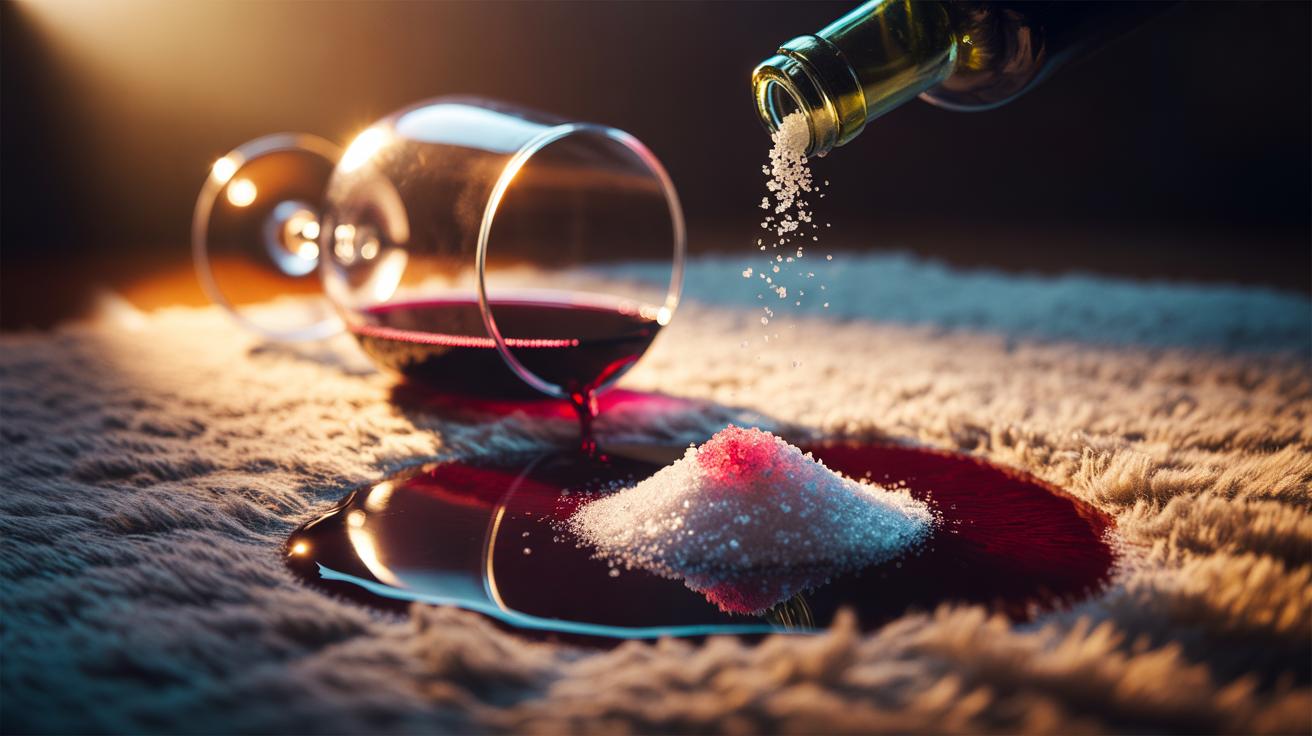
First, blot—do not rub—the fresh spill with white, lint-free towels to remove free liquid. Then cover the damp area with a generous layer of plain table or kosher salt (coarse is ideal), creating a faint mound. The salt should visibly begin to pink as it wicks wine. Leave it undisturbed until the crystals look saturated and crusty. Add a second sprinkling if the rug was soaked. Hands off until the salt has done the heavy lifting. This prevents pigment from being pushed deeper into backing and underlay.
| Step | Action | Why it works | Time guide |
|---|---|---|---|
| 1 | Blot with white towels | Removes free liquid without spreading dye | 15–30 seconds |
| 2 | Apply generous salt layer | Creates osmotic pull and capillary wicking | Within 1 minute |
| 3 | Let salt crust | Holds pigment at the surface as it dries | 10–30 minutes |
| 4 | Vacuum or scoop | Removes dyed crystals cleanly | When fully dry |
| 5 | Spot-rinse, then blot | Clears remaining tint without saturation | As needed |
If a faint blush lingers, mist with cold water or a 1:1 mix of cold water and white vinegar (on synthetic fibres), then blot again. For wool, test first and use minimal moisture. Finally, place kitchen roll under and over the spot, weigh it down with a book, and let it dry flat. Drying under pressure prevents wicking back to the surface, a common reason stains reappear the next day.
Choosing the Right Salt and Alternatives
Plain table salt works, but coarse kosher salt or non-iodised sea salt often performs better because larger crystals build room for faster capillaric flow. Avoid coloured or smoked salts, which can transfer their own tint. Iodised versus non-iodised makes negligible difference in practice; grain size matters more. Keep a small jar by your bar cart for emergencies. A fast sprinkle beats any after-the-fact miracle spray. On high-value wool or silk, keep grains off delicate fringes where abrasion could fuzz fibres.
Out of salt? Use baking soda for gentle lifting and odour control, or silica-gel cat litter (unscented) for powerful absorption—sprinkle lightly to avoid residue. Cornflour can help on viscose and cotton. For a rinse, synthetic carpets tolerate a cool water–vinegar solution; wool prefers specialist wool-safe detergents at low dilution. Always test on an inconspicuous patch. If the spill is old or large, photograph the area, note the wine type (heavy-tannin Bordeaux differs from light Pinot), and consider a professional cleaner with dye-stabilising agents.
What Not to Do When a Spill Strikes
Never rub. Friction drives dye into the pile and can fuzz natural fibres. Skip hot water and steam, which set stains by accelerating dye-fibre bonding. Avoid coloured cloths and patterned paper towels; their dyes can migrate under moisture and pressure. Don’t douse the area—excess water spreads wine laterally and down into underlay, making wicking inevitable. Club soda is not magic; without prompt extraction, it leaves sugar and minerals behind. The popular “white wine on red wine” trick is a myth that adds acidity and volume without true lifting power.
Don’t leave salt sitting for hours on a damp wool rug; as humidity lingers, crystals can harden and abrade. Vacuum or spoon away once dry and follow with light blotting. Avoid oxygen bleaches on wool and silk, and be wary of enzyme cleaners that can attack protein-based fibres. If a brownish ring appears after drying, that’s cellulosic browning from backing materials—call a professional. When in doubt, minimal moisture and gentle extraction beat aggressive chemistry.
Salt’s speed and simplicity make it the first line of defence against red wine mishaps, transforming panic into a methodical rescue. By understanding the interplay of hygroscopy, grain size, and fibre chemistry, you can stop colour in its tracks and prevent permanent marks. Keep towels, salt, and a cool-head plan within reach the next time you pour. If a stain outsmarts you, document it and seek expert help before it sets hard. What will you keep in your household “first aid” kit so your rug survives the next celebratory spill?
Did you like it?4.5/5 (29)