In a nutshell
- ⚡ The humble rubber glove harnesses static electricity via the triboelectric effect, making hair lift and clump so it can be removed in a single satisfying swipe.
- 🧤 Technique matters: use short, brisk strokes, work against then with the nap, keep the glove dry, and choose latex or nitrile (nitrile for allergy-safe use) to maximise charge and control.
- 🧶 Results vary by surface: low- and mid-pile synthetics clear fastest, dense wool needs smaller sections, and humidity reduces static—so generate more friction on damp days.
- 🧹 Use it as a precision pre-clean: the glove corrals strands for easy pickup, then a HEPA vacuum finishes embedded dander; test delicate rugs and avoid heavily soiled, oily fibres.
- 🧼 Care and safety: rinse and air-dry gloves, avoid softeners that kill static, replace when worn, prefer nitrile if sensitive to latex, and discharge before handling electronics in ultra-dry rooms.
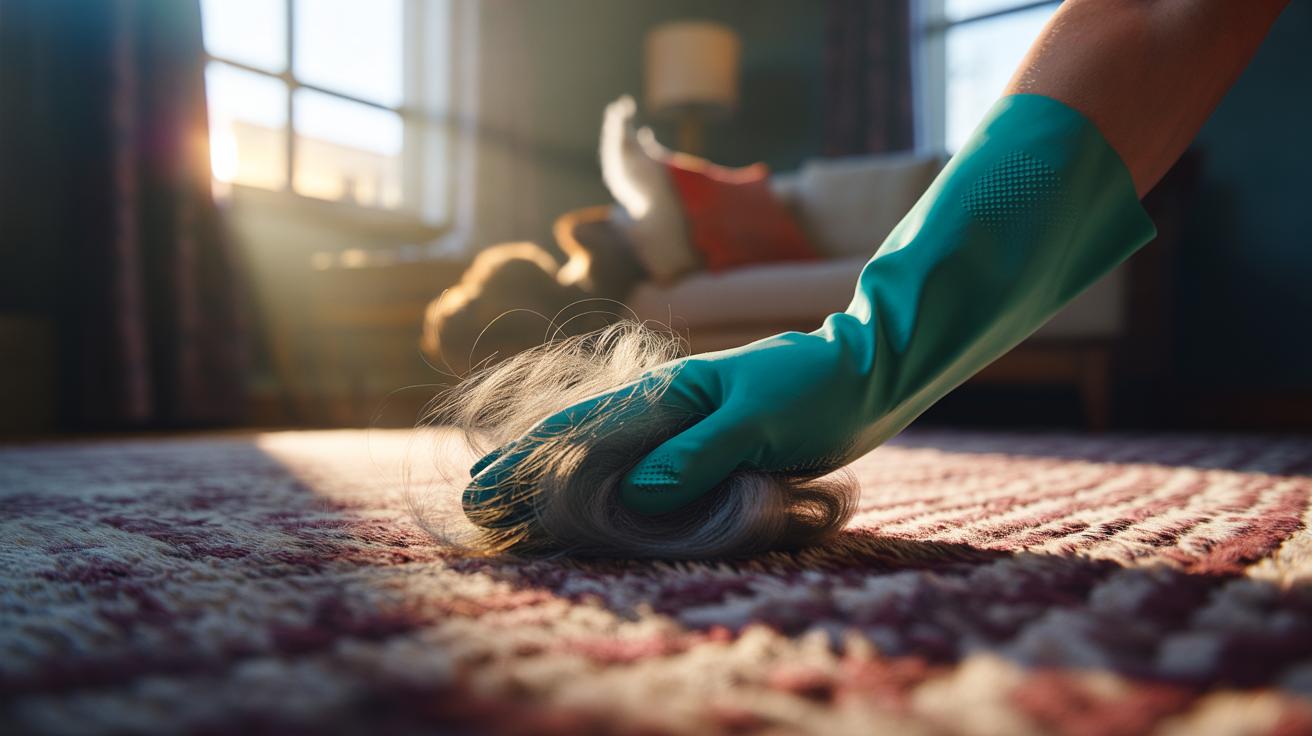
Every pet owner in Britain knows the scene: a freshly vacuumed carpet that still glints with stubborn strands. Enter the humble rubber glove, a low-cost tool that turns static electricity into a carpet-clearing advantage. With a quick tug over the fibres, the glove builds charge, and hair leaps into clumps that lift away with ease. In the time it takes to make a cup of tea, you can swipe a room into order. This isn’t a gimmick; it’s physics applied to everyday mess. Here’s how static pulls strands in one satisfying swipe—and how to make the trick work on your floor.
Why Static Electricity Lifts Carpet Hair
Rubber sits high on the triboelectric scale, so when a rubber glove rubs across carpet fibres, electrons transfer and a charge imbalance builds. The carpet and the glove end up with opposite charges, and hair—being a light, insulating material—responds strongly to that electric field. The effect is immediate: strands rise, drift, and cling to the palm and fingers. The differential charge creates an invisible “magnet” for hair, concentrating loose fibres into tidy rolls that can be pinched up or vacuumed in one pass.
Carpet pile height and fibre chemistry shape the result. Low- and mid-pile synthetics release hair rapidly because the fibres don’t trap it as deeply, while dense wool grips more tightly yet still succumbs to a charged sweep. Humidity matters: moisture drains charge, softening the effect. On dry winter days the glove performs spectacularly; on damp afternoons, shorter strokes and extra friction restore the sparkle. The science is simple, but the technique refines the payoff.
How to Use a Rubber Glove for Best Results
Start with a clean, dry glove—latex or nitrile both work, though nitrile suits those avoiding allergens. Slip it on snugly so your palm contours can make full contact. Rake your hand over the carpet in 20–30 cm strokes, pressing lightly to build friction without flattening the pile. Short, brisk movements generate stronger static than long, languid passes. When hair gathers into ropes, lift and bin it, or pause to vacuum the clumps so they don’t redistribute.
Adjust angles to follow the nap: go “against the grain” to lift, then “with” it to gather. If the room feels clammy, warm the glove by rubbing palms together before starting; the extra friction nudges charge into play. A light mist on the glove can help roll hair into pellets, but keep it minimal because too much moisture kills static. For stairs, use fingers as a narrow comb; for edges and skirtings, pinch the glove edge to target crevices.
Gloves, Carpets, and What Works Best
Not all gloves, nor all carpets, are equal. A textured rubber glove—the kind used for washing-up—adds micro-grip that helps shepherd strands once static pulls them free. Nitrile mechanics gloves are durable and kinder to sensitive skin, with slightly less tack but excellent charge generation. Choose a glove that flexes with your hand so you maintain consistent contact. On carpet, looped and low-pile synthetics respond fastest; plush piles demand more passes but repay patience with dramatic clumping.
Room conditions steer outcomes. Dry, temperate air supercharges results; high humidity dampens them. When the air is moist, work smaller sections and refresh friction frequently. Pair the glove with a quick vacuum finale: the glove corrals the hair, the vacuum removes the lot. Use the table below to match glove texture and technique to your floor for reliable, fast wins.
| Carpet Type | Glove Texture | Technique Tip | Expected Efficiency |
|---|---|---|---|
| Low-pile nylon | Lightly textured | Fast, short strokes against the nap | High |
| Medium-pile polyester | Ribbed or patterned | Alternate angles every few strokes | High |
| Wool (dense) | Textured nitrile | Increase pressure slightly; smaller sections | Medium |
| Shag/deep pile | Heavy texture | Lift fibres with fingers, then gather | Medium–Low |
Limits, Care, and Safety
The glove trick excels at surface and near-surface strands but won’t replace a HEPA vacuum for embedded dander or allergens. Heavily soiled or oily fibres reduce traction, so pre-treat stains before you sweep. Think of the glove as a precision tool for quick refreshes and stubborn patches, especially on stairs, car mats, and traffic lanes where vacuums miss. Very delicate antique rugs or silk blends deserve caution; test an inconspicuous corner to ensure no snagging.
Rinse the glove after use to remove oils and hair, then air-dry thoroughly—dry rubber holds charge better next time. Avoid fabric softeners or silicon sprays that cut static. Replace gloves when the surface goes smooth or cracked. For sensitive users, pick nitrile to dodge latex allergies. Minor static nips can happen in ultra-dry rooms; touch a metal tap to discharge before handling electronics. Store gloves away from heat and sunlight to preserve elasticity and grip.
For pet homes, the rubber glove is a small revelation: simple, swift, and oddly satisfying. It harnesses static electricity to yank hair that vacuums leave behind, then hands the baton back to your hoover for the clean finish. In the balance of cost, speed, and effectiveness, it punches well above its weight. Keep one under the sink, and you’ll never dread surprise visitors or moulting season. Where could this trick save you the most time—stairs, car boot, or that stubborn rug in the lounge?
Did you like it?4.4/5 (21)