In a nutshell
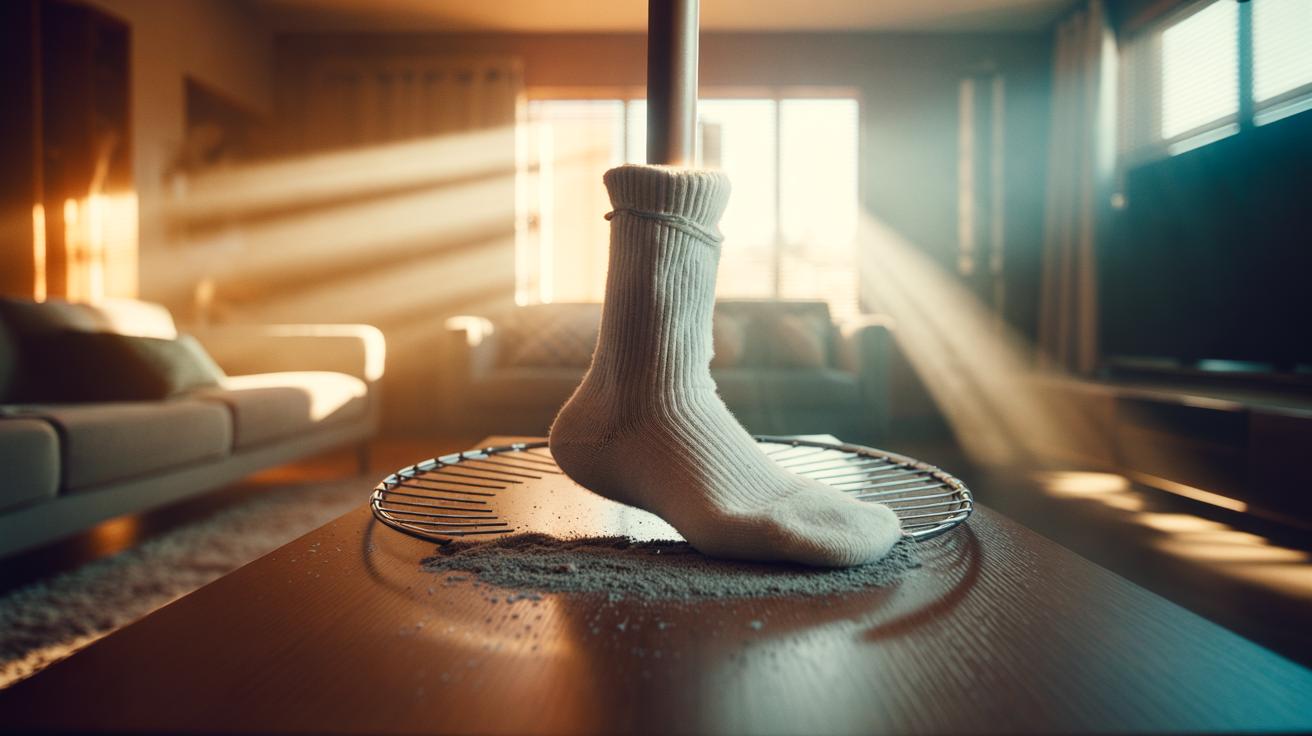
- 🧦 Old sock + pole trick encloses the fan blade like a pocket to trap dust, preventing fallout and letting you clean from the floor without ladders.
- ⚡ How fabric grabs dust: friction builds a light electrostatic charge and fabric loops capture fine particles; use the sock slightly damp (not wet) to bind dust safely.
- 🛠️ DIY in five minutes: bend a coat hanger into a U, tape it to a broom or roller pole, pull a sock over it, test the fit, then glide along each blade slowly.
- 🧵 Best fabrics and care: cotton for greasy kitchens, microfibre for fine dust, wool for dry rooms; shake, wash at 40°C without softener, dry fully, and label socks to avoid cross-contamination.
- 🌿 Cleaner, safer, cheaper: reduces mess, protects finishes, cuts disposables, and improves indoor air when done monthly; finish by vacuuming the motor housing and rod.
Every home has a forgotten sock, and every ceiling fan gathers a winter’s worth of grey fluff. Put the two together with a simple pole and you’ve got a cleaner’s shortcut that keeps lounges, bedrooms, and kitchens dust-free without sprinkling grime onto your sofa. The trick is to slide a sock over a shaped attachment on a broom handle, envelop the blade, and pull the dust into the fabric. Because the sock acts like a pocket, it traps particles rather than flicking them into the air. Switch the fan off, let the blades stop completely, and you’ll work cleanly from the floor—no wobbling on ladders.
Why an Old Sock Beats a Feather Duster
Feather dusters and dry cloths look elegant, but they push dust around and shed fine fibres that drift back onto your furniture. An old sock, by contrast, hugs the surface of a fan blade and creates a soft seal. As you pull, the fabric scoops debris inward, preventing the plume of fallout that follows a careless swipe. The result is a controlled clean with virtually no mess below. Use a long handle and you’ll stay grounded, preserving your balance and your back while reaching high fittings with confidence.
There’s also a practical bonus: socks are thick, stretchy, and washable. The ribbed cuff grips a makeshift frame on a pole, and the toe end forms a deep pocket. Compared with paper towels or disposable sleeves, a sock can be rinsed, reloaded, and reused dozens of times. It’s inexpensive, effective, and better for the environment. Keep a dedicated cleaning sock in your utility drawer and you’ll never scramble for specialist tools again.
How Fabric Actually Grabs Dust on Ceiling Fans
Dust sticks because of a mix of physics and texture. As fabric slides across a blade, friction creates a faint electrostatic charge, especially with microfibre. That charge attracts fine particles, while the loops and micro-loops of the knit provide thousands of tiny hooks that trap fluff, hair, and pollen. Add a light mist of water or diluted vinegar and capillary action helps capture the ultrafine haze that otherwise hangs in the air. Moist—not wet—fabric binds dust without streaking the paint or throwing droplets.
Material matters. Old cotton sports socks work well because they’re absorbent and slightly rough. Microfibre grips best on very fine dust due to its split fibres and higher surface area. Woollens can be superb in dry rooms, where their natural lanolin reduces static cling to your fan while locking it in the fibres. The secret is contact plus containment: enclose the blade with the sock so particles have nowhere to escape as you withdraw.
Build the Sock-and-Pole Attachment in Five Minutes
You need a broom handle or paint roller pole, a wire coat hanger, strong tape, and a clean, thick sock. Bend the hanger into a wide U, keeping the neck as a straight stem. Tape the stem firmly to the end of the pole so the U faces forward like a goal post. Pull the sock over the U to create a snug pocket; the toe becomes the closed end, ready to slide over a fan blade. Test the fit on a tabletop first to ensure the sock doesn’t twist or slip.
Before cleaning, switch off the fan at the wall and wait. Stand under one blade, lift the pocket over it, then draw the sock steadily toward you. The edges of the U support the sock so it wraps both the top and bottom surfaces in one pass. For heavy build-up, rotate the sock to a clean section and repeat. Finish by vacuuming the motor housing and rod, where dust nests in crevices your sock can’t reach.
Best Fabrics, Care, and Reuse
Choose fabric based on the dust you face and the finishes in your home. In kitchens, where sticky aerosols mingle with fluff, cotton excels because it tolerates a slightly damp pass and hot washing. In bedrooms and lounges, microfibre outperforms on fine, dry dust. If your fan is painted matte, avoid overly wet passes to prevent streaks; on glossy blades, add a single drop of mild washing-up liquid to the dampened sock to cut film. Always rinse the sock promptly after use so fibres don’t harden with residue.
Care is simple: shake outdoors, then machine wash at 40°C without fabric softener, which reduces microfibre performance. Dry thoroughly before storing to prevent musty odours. Keep a small stash—one sock for greasy areas, one for general dust, and one as a spare. Labelling them avoids cross-contamination from kitchen to bedroom. The table below summarises what to expect from common fabrics when used on ceiling fans.
| Fabric | Strengths | Limitations | Best Use |
|---|---|---|---|
| Cotton | Absorbent, durable, good with light moisture | Less effective on ultrafine dust when dry | Kitchens, sticky residues |
| Microfibre | High electrostatic pickup, traps fine particles | Softener reduces performance; can snag on rough edges | Bedrooms, living rooms |
| Wool | Excellent dry pickup, gentle on finishes | Not ideal when damp; needs careful washing | Dry rooms, delicate finishes |
Used thoughtfully, the sock-and-pole trick is a small domestic upgrade with outsized impact: faster cleans, less fallout, and fewer disposable pads in the bin. By enclosing the blade, you control the mess, and by choosing the right fabric, you protect finishes while improving indoor air. Keep the kit handy, rinse the sock after each sweep, and schedule a quick pass monthly before dust hardens. Safe, tidy, and frugal—it’s the sort of solution households love. What variations will you try next: a shaped foam underlay for ultra-wide blades, or a spritz of homemade antistatic to tame stubborn fluff?
Did you like it?4.5/5 (25)