In a nutshell
- 🧪 Science: Lemon’s citric acid lowers pH to stress bacteria, while coarse salt adds abrasion and osmotic stress; wood’s surface fibres are refreshed.
- 🧽 Method: Sprinkle coarse salt, scrub with a lemon half, allow 3–5 minutes’ contact, then rinse, dry upright, and finish with food-safe mineral oil.
- 🎨 Whitening & Odours: Acid chelates stain-forming polyphenols/tannins and lifts pigments; lemon terpenes tame smells—avoid bleach and use short, repeated treatments.
- 🧰 Care & Safety: Wash promptly with mild soap, never dishwasher; oil monthly, keep a dedicated board for raw meat, and sand or retire deeply gouged boards.
- 📋 Key Stages: Prep with salt, scrub, brief contact, rinse/dry, and condition—combining low pH chemistry with abrasive action for cleaner, lighter boards.
Wooden chopping boards work hard, picking up knife scars, food pigments, and the occasional funky smell. A humble pairing—half a lemon and a handful of coarse salt—can restore them with surprising speed. The trick lies in the citric acid that drops surface pH and the abrasive bite of crystal salt that scours fibres clean. Together they lift grease, lighten stains, and disrupt microbes that linger after rinsing. This is a practical surface hygiene boost for domestic kitchens, not a laboratory-level sterilisation. Used regularly, the lemon-and-salt scrub keeps wood looking pale, fresh, and ready for bread, veg, or citrus zest without carrying yesterday’s odours into today’s prep.
How Acid and Salt Clean: The Science on Wood Boards
Lemon juice is rich in citric acid, which lowers surface pH. Most kitchen bacteria are stressed or inactivated by acidity because their enzymes and cell membranes are tuned to neutral conditions. On a board, the acid seeps into the upper wood fibres, where it disrupts microbial membranes and makes it harder for a biofilm to form. Salt adds two benefits: it is a gritty scrub that helps dislodge residue, and in concentrated contact it exerts osmotic stress, drawing water out of microbial cells. The duo cleans both chemically and mechanically, which is why it feels effective under the hand.
Wood itself isn’t the enemy: it contains pores that trap moisture away from the surface, and some species (such as maple) show natural antimicrobial behaviour. Still, fats, sugars, and pigments can settle in knife cuts. The lemon-and-salt pass removes that top layer, restoring a fresh interface. Think of it as a reset for the first fraction of a millimetre of your board, where off-notes and discolouration tend to live.
Step-by-Step: Lemon and Salt Scrub Method
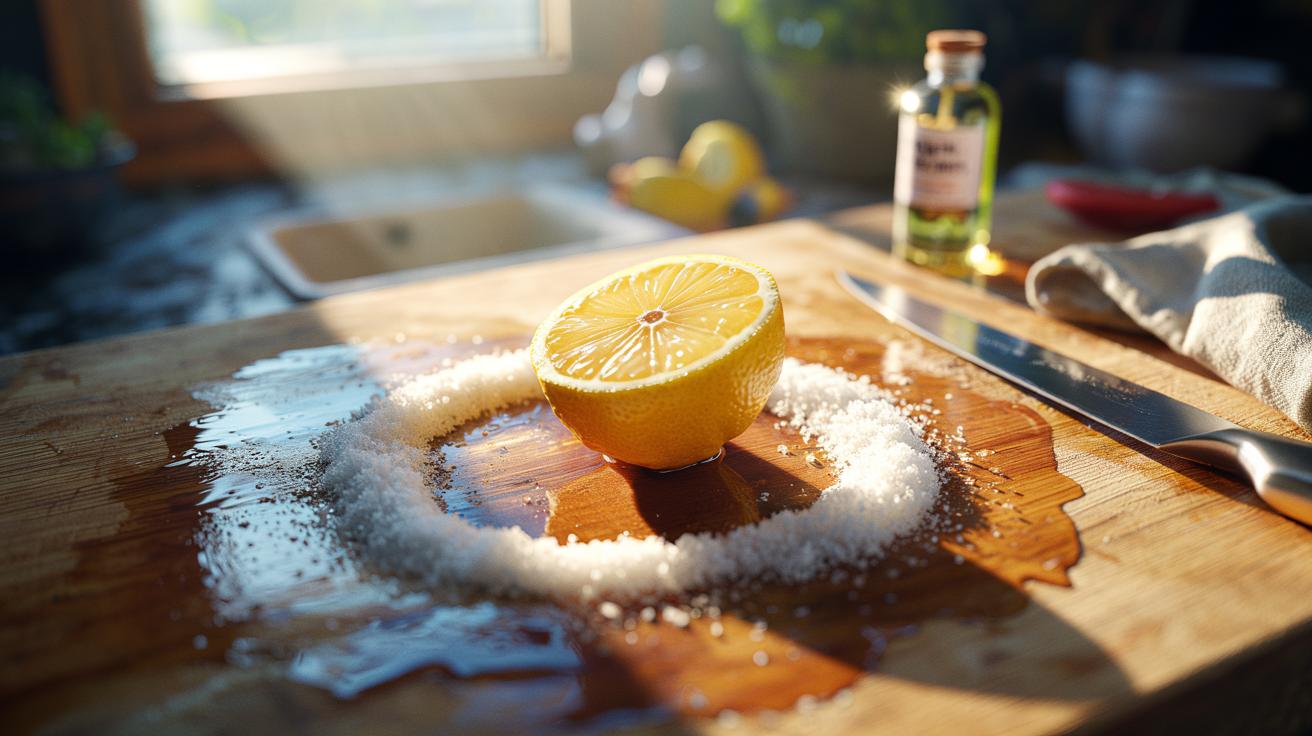
Start with a clean, dry board. Sprinkle a teaspoon or two of coarse sea salt across the surface. Halve a fresh lemon and use the cut face as your “sponge”, pressing and rubbing in tight circles to create a briny, citrusy slurry. Work with the grain to protect fibres, then cross the grain to reach into shallow cuts. Aim for even coverage, including board edges and juice grooves. Do not leave boards wet or in standing water; focus the moisture where you scrub, not in a pool.
Let the acidic foam sit for 3–5 minutes for contact time, then scrub again lightly. Rinse quickly under warm running water and wipe dry with a clean cloth. Stand the board upright so air can circulate on both faces. Once fully dry, condition with a thin coat of food-safe mineral oil or a wax-oil blend to seal fibres and slow future staining. Regular light care beats rare heavy rescues.
| Stage | Action | Time | Purpose |
|---|---|---|---|
| Prep | Dust with coarse salt | 10 seconds | Abrasive base |
| Scrub | Rub with lemon half | 1–2 minutes | Lift residue; spread acid |
| Contact | Let slurry rest | 3–5 minutes | Reduce bacteria; fade stains |
| Rinse & Dry | Rinse warm; stand upright | 2 minutes | Prevent warping; remove salt |
| Condition | Apply mineral oil | 5 minutes | Seal fibres; prolong whiteness |
Whitening Stains and Neutralising Odours
Dark marks from tea, wine, berries, or beetroot are often polyphenol and tannin-based stains that bond to wood fibres. Citric acid helps by chelating metal ions and breaking some pigment bonds; the salt scrub then lifts loosened colour. Repeat short contact rounds rather than one long soak to avoid swelling the board. Garlic and onion leave sulfurous compounds that cling to the porous surface; lemon’s acids and natural terpenes help neutralise those and leave a clean citrus note without perfumes. Most day-to-day odours fade after one treatment.
For stubborn blotches, target the area: add a pinch more salt, drizzle a few extra drops of lemon directly, and scrub just that patch. Sunlight can brighten wood, but keep exposures brief to avoid drying cracks. Avoid bleach on wood; it can roughen fibres and leave a lingering smell. Rinse, dry thoroughly, then oil—conditioning often makes a board look visibly lighter by evening out absorption.
Care Beyond the Scrub: Oiling, Drying, and Food Safety
Good habits keep boards tidy between deep cleans. Always wash promptly with warm water and a small amount of mild soap, rinse, and dry standing. Never put wooden boards in a dishwasher; heat and steam cause warping and glue-line failure. Once a month—or whenever the surface looks thirsty—rub in food-grade mineral oil, then buff with a beeswax blend to add a moisture-resistant finish. End-grain boards benefit particularly from regular oiling, which protects their checkerboard of exposed fibres.
Food safety is about separation and maintenance. Use a dedicated board for raw meat, or choose plastic for that job and reserve wood for bread, fruit, and veg. The lemon-and-salt routine helps reduce surface bacteria, but deep knife gouges can harbour debris. If a board remains furrowed or carries a persistent smell after cleaning, sand the surface lightly or retire it. When in doubt, replace—kitchen kit should earn trust every time you cook.
This deceptively simple lemon-and-salt method wins because it pairs chemistry with elbow grease: low pH weakens microbes, and grit restores the surface. It is quick, smells pleasant, and respects the living character of wood. Make it part of a weekly rhythm, then lock in the results with proper drying and a light oil. If you’ve used sprays or harsh cleaners before, give your board a gentler future. What’s your own ritual for keeping wooden kit bright, safe, and ready—will you swap to the citrus-and-salt reset, or adapt it to suit your kitchen style?
Did you like it?4.4/5 (20)