In a nutshell
- ✨ Tarnish is a thin layer of silver sulphide; citric acid in lemon juice gently dissolves it via protonation and light chelation, avoiding abrasive scratches.
- 🧪 Method: mix lemon and water at 1:2, soak 3–5 minutes, buff with a microfibre cloth, rinse and dry immediately; plated items need shorter, cautious contact.
- ⚠️ Safety: Never mix acids with bleach; wear gloves, ventilate, and optionally neutralise with a mild bicarbonate rinse before the final wash.
- 🔁 Alternatives: for heavy tarnish, consider the aluminium + bicarbonate reduction bath, and seek a conservator for delicate inlays or questionable solder.
- 🗄️ Maintenance: store pieces dry in anti-tarnish cloth, add silica gel, and use short, repeatable cleanings to preserve engraving detail and long-term shine.
When silverware loses its sparkle, the culprit is usually a stubborn film of tarnish that dulls every curve and engraving. There’s a surprisingly simple fix hiding in your fruit bowl: lemon juice. Powered by naturally occurring citric acid, it loosens and lifts tarnish without harsh fumes or abrasive scrubbing. The method is quick, inexpensive, and gentle on most table settings, making it ideal for busy homes and collectors alike. Handled with care, a citrus soak can restore lustre in minutes, turning dreary knives and forks into a dinner-table centrepiece once again.
Why Silver Tarnishes and How Citric Acid Works
Silver darkens because it reacts with airborne sulphur compounds, forming a thin layer of silver sulphide. This film scatters light, so pieces look grey, brown, or almost black in spots. In kitchens, wool cupboards, and urban air, sulphur traces are enough to start the process. That’s why even well-stored sterling can fade between uses. Tarnish isn’t dirt; it’s a chemical conversion of the surface, so brushing alone won’t restore the mirror finish. You need a way to unpick the sulphide layer without stripping metal or leaving micro-scratches that invite faster re-tarnishing.
Enter citric acid, the gentle workhorse inside lemon juice. As a weak, food-safe acid, it protonates the sulphide layer and helps detach it from the silver beneath. It also acts as a light chelating agent, binding stray metal ions and keeping them in solution instead of re-depositing. The result is controlled dissolution rather than aggressive etching. This is why a properly diluted lemon solution can be both effective and kind to detail, especially on patterned flatware where abrasive polishes struggle to reach every groove.
Step-by-Step Lemon Juice Method
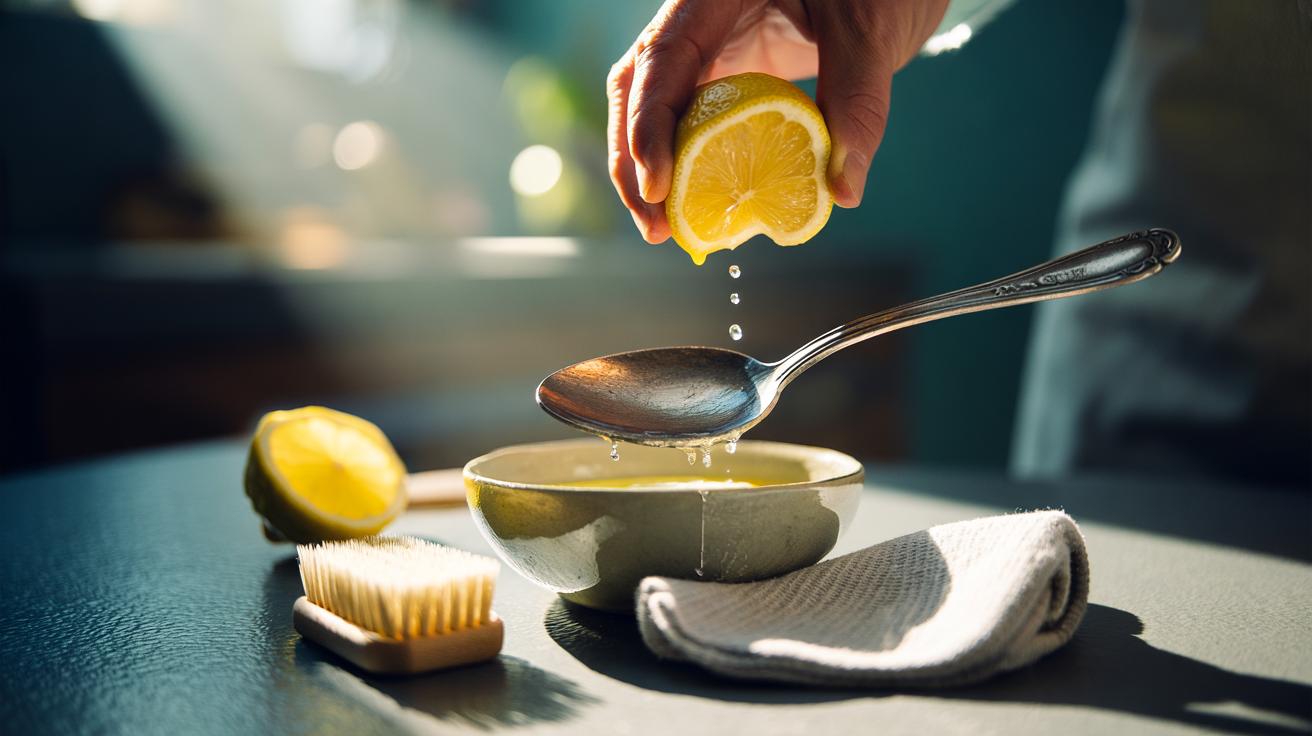
Start by mixing fresh lemon juice with warm water in a non-metal bowl. A reliable ratio is 1 part lemon juice to 2 parts water. Submerge a test piece for 3–5 minutes, then lift and rub gently with a soft microfibre cloth. For crevices, use a soft-bristle brush. Rinse thoroughly under warm running water and dry immediately with a lint-free towel to prevent water marks. Do not soak plated silver for long periods; the aim is to lift tarnish, not to challenge thin finishes. Repeat once if needed rather than increasing acidity drastically.
For heavy tarnish, increase contact time in small steps or refresh the bath. Avoid vigorous scouring pads that create fine scratches. If a piece has glued-on elements, pearls, or hollow handles, keep immersion brief and work mainly with a dampened cloth to prevent moisture ingress. Once you’re satisfied, store the pieces dry and separate, ideally wrapped in anti-tarnish cloth or sealed bags. Always test on an inconspicuous spot before treating an entire set, particularly with heirlooms or unknown plating quality.
| Item | Lemon:Water | Contact Time | Notes |
|---|---|---|---|
| Sterling spoon | 1:2 | 5–10 min | Gently buff; rinse and dry fully |
| Lightly tarnished knife | 1:3 | 3–5 min | Short soak; avoid blade adhesives |
| Plated fork | 1:3 | 2–4 min | Keep brief to protect plating |
| Stubborn spots | 1:1 (spot treat) | Up to 2 min | Rinse immediately after rubbing |
Safety, Materials, and When to Try Alternatives
Gather a non-metal bowl, fresh lemons or bottled citric acid solution, microfibre cloths, soft brush, and plenty of warm water. Gloves help, especially with sensitive skin. Never mix acids with bleach; the combination can release hazardous fumes. Work with good ventilation and keep the process measured rather than forceful. After cleaning, a quick rinse in a mild bicarbonate solution can neutralise leftover acidity before a final water rinse, helping to stabilise the surface and slow re-tarnishing.
Some situations call for different tactics. Extremely blackened heirlooms may respond better to the classic aluminium and bicarbonate bath, which reduces sulphides instead of dissolving them. Intricate antiques with inlays, organic materials, or loosened solder deserve a professional conservator’s eye. To keep your silver bright between uses, store it dry, wrap in anti-tarnish cloth, and add silica gel or activated charcoal nearby. The gentlest routine you can repeat is the one that preserves value and shine over years.
The Science Behind the Shine: Chelation and Sulphide Removal
Citric acid is a triprotic organic acid with multiple carboxyl groups that can bind metal ions, forming citrate complexes. In a diluted bath (roughly pH 2.5–3.0), it protonates the tarnish layer and encourages fragments of silver sulphide to detach. The chelation keeps freed ions suspended, improving rinsing and reducing the risk of redeposition. This tandem of mild acidity and complexation is why lemon juice often feels “effortless” compared with dry rubbing, which only pushes residues around and scuffs the surface.
This approach differs from electrochemical methods that use aluminium foil to convert silver sulphide back to metallic silver. The lemon route removes the film; the foil route reverses it. Both can be safe when controlled, but the lemon method offers better day-to-day maintenance with household ingredients and fewer strong odours. To avoid over-thinning fine details, keep contact times short and repeat in stages. Small, steady interventions preserve crisp edges and engraving clarity.
Harnessing the quiet power of lemon juice brings dull cutlery back to life with minimal fuss, low cost, and a greener footprint. By understanding how citric acid lifts tarnish and adopting careful timings, you maintain brilliance without reaching for harsh polishes. Store pieces smartly, neutralise after cleaning, and handle plated items conservatively to prolong their sheen. Think of it as housekeeping for heirlooms—little and often beats heroic rescues. Which pieces in your drawer are ready for a citrus refresh, and how will you tailor the method to suit their history and finish?
Did you like it?4.5/5 (25)