In a nutshell
- 🍋 Lemon steam neutralises microwave smells by combining hot vapour with citric acid and limonene, which loosen grease and bind odour molecules—this is removal, not masking.
- ⏱️ Quick method: add 200–250 ml water and a squeezed lemon half to a bowl, heat for 2–3 minutes, rest 1 minute, then wipe with a microfibre cloth for instant freshness.
- 🛡️ Safety first: use microwave-safe glass/ceramic, reduce superheating risk with a wooden stir stick, never seal containers or add metal, and don’t mix lemon with bleach or ammonia.
- 🧼 Keep it fresher: cover splattery foods, wipe spills promptly, ventilate after pungent meals, and place bicarbonate of soda inside overnight to absorb residual odours.
- ♻️ Smart extras: reuse warm lemon water to degrease drains and refresh chopping boards; schedule a weekly lemon-steam to keep the microwave—and your food—smelling clean.
Stuck with a microwave that smells like last night’s curry? A humble lemon half and a few minutes of heat can reset the air inside your appliance with startling speed. When water and lemon juice are superheated, the resulting citrus-infused steam coats the oven’s interior, loosening grease and binding to lingering odour molecules. Wipe away the condensate and, with it, the smells. This is a quick, low-cost trick that relies on chemistry rather than perfume. It also leaves a clean, bright scent that fades naturally instead of clashing with food. Here’s how the method works, why it’s so effective, and the safest way to try it at home today.
Why Lemon Steam Works in a Microwave
Microwaves excite water molecules in seconds, creating a plume of hot steam that saturates the oven cavity. That vapour condenses on cool walls and the door, dissolving sticky splatters and softening polymerised fats that trap smells. Add lemon and you supercharge the effect: citric acid lowers pH, helping to break down amine-based and sulphurous residues that cause stubborn odours. Meanwhile, the peel releases limonene, a natural solvent that lifts greasy films, letting odour-carrying particles detach from the surface. The magic isn’t masking—it’s physical and chemical removal, powered by condensation and light acidity.
Odours often persist because volatile compounds cling to rough, greasy layers. Lemon steam dislodges those layers so they can be wiped away. The heat also accelerates evaporation of lingering volatiles, while the condensate traps them. Crucially, steam reaches corners, vents, and the door seal, areas a cloth alone can miss. That’s why a single lemon half can neutralise smells so quickly: the vapour gets everywhere, the acidity disrupts residues, and the wipe finishes the job with minimal elbow grease.
Step-by-Step: The Three-Minute Lemon Method
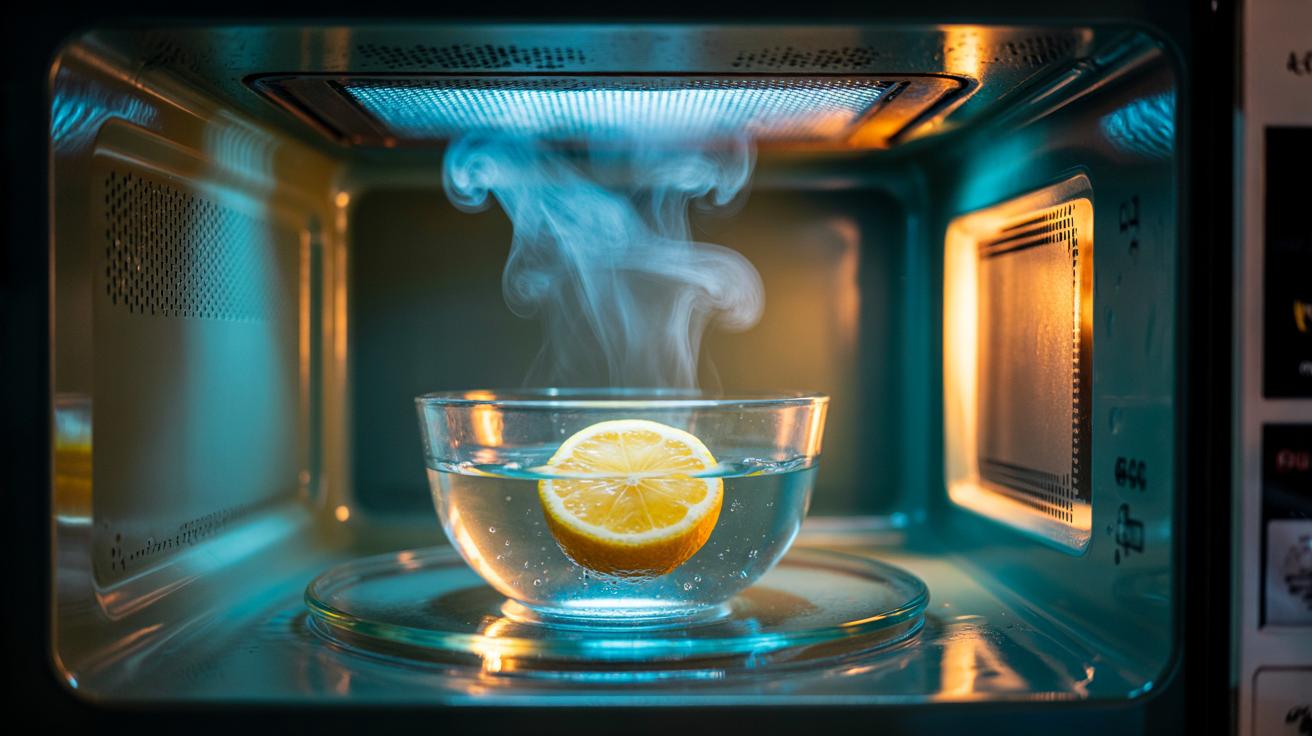
Use a microwave-safe glass or ceramic bowl. Add about 200–250 ml of water. Halve a fresh lemon, squeeze one half into the bowl, then drop that squeezed half in. Place the bowl centrally, ensuring the turntable can rotate. Heat on high power for 2–3 minutes, until the water reaches a vigorous boil and the window fogs. If your microwave is very powerful, start at two minutes to avoid excessive boiling. Leave the door closed for one additional minute to let the citrus steam bathe every surface.
Open the door carefully to avoid a burst of hot vapour. Remove the bowl with oven gloves. Wipe all interior surfaces—ceiling, sidewalls, door, and seal—with a microfibre cloth, rinsing it in the hot lemon water between passes. Lift out the turntable, clean beneath it, and dry with a fresh cloth. For crusted spots, dab with the warm lemon water, wait 30 seconds, then wipe. Most everyday odours clear in a single cycle; intense fish or curry smells may benefit from a second round.
| Item | Amount/Setting | Time | Outcome |
|---|---|---|---|
| Water | 200–250 ml | 2–3 min | Generous steam |
| Lemon | Half, squeezed | 1 min rest | Acidic, fresh vapour |
| Wipe-down | Microfibre cloth | 2–3 min | Residues removed |
Science and Safety: Steam, Materials, and Myths
Steam does the heavy lifting, but safety matters. Superheating can occur in very smooth containers, causing sudden boiling when disturbed. To reduce risk, use a bowl with a clean but not mirror-smooth interior, or place a wooden stir stick in the water. Never seal the bowl or add metal. Choose heatproof glass or glazed ceramic; thin plastic can warp or leach odours into itself. Keep an eye on the water level—too little won’t steam enough, too much delays boiling and wastes time.
Steam and acidity help cut microbial load, yet this is not full sterilisation. It’s a hygiene boost, not a hospital protocol. Avoid mixing lemon with bleach or ammonia; the fumes are hazardous and unnecessary. For persistent smells in door seals or vents, apply a cloth dipped in warm lemon water and work gently into creases. If the cavity shows damaged enamel, go light on scrubbing. Odour control is best achieved by removal, not perfuming, which is why citrus vapour plus a wipe beats air fresheners.
Beyond Odours: Keeping Your Microwave Fresher for Longer
Prevention protects your clean slate. Cover splattery foods with a vented lid or a paper towel to curb residue. Wipe fresh spills immediately; they’re easier to lift before they dry into a sticky film. Ventilate the kitchen after pungent meals so air doesn’t flow back into the appliance. Between deep cleans, park a small open bowl of bicarbonate of soda inside the cold microwave overnight to gently absorb background smells. Odour control is a routine, not a rescue mission, and small habits make a noticeable difference.
Put the lemon to work beyond the microwave. Reheat the used lemon water and pour it into the sink to degrease the drain. Rub the squeezed half over chopping boards, then rinse. Drop the rind into your compost or a simmering pot as a natural air freshener. For heavy-duty weeks—fish pies, garlic roasts—schedule a quick lemon-steam clean on Friday to reset the kitchen. The result is a fresher appliance and food that tastes as it should, without yesterday’s aroma tagging along.
A three-minute burst of lemon steam is a rare win: fast, frugal, and rooted in simple chemistry. It dissolves grime, neutralises odours, and leaves nothing behind but a light citrus note that fades cleanly. When smells return, they’re usually riding on new splatters rather than lurking in the air, so the fix is as easy as repeating the cycle and wiping. Will you try the lemon half today—or will you adapt the method with lime, bicarbonate, or vinegar to build your own signature routine for a consistently fresh microwave?
Did you like it?4.6/5 (29)