In a nutshell
- ❄️ Vinegar ice cubes deliver chilled cleaning: the melting film of acetic acid dissolves limescale, soap scum, and odours—let it dwell briefly before wiping for clarity on glass and chrome.
- 🧪 Choose a flexible silicone tray and use white distilled vinegar; adjust dilution ratios (neat for scale, 1:1 for routine, 1:2 for deodorising) and clearly label “Cleaning Only.”
- 🧼 Target taps, shower screens, grout, stainless sinks, fridge seals, and bins; allow adequate contact time (1–5 minutes), then wipe and rinse on food-contact areas.
- ⚠️ Respect surfaces to avoid: natural stone, aluminium, unsealed wood, and cast iron; spot-test delicate finishes and never mix with bleach or ammonia.
- 🌱 An eco-friendly, low-waste habit: fewer plastic bottles and aerosols, precise portion control, and best results with a washable microfibre cloth.
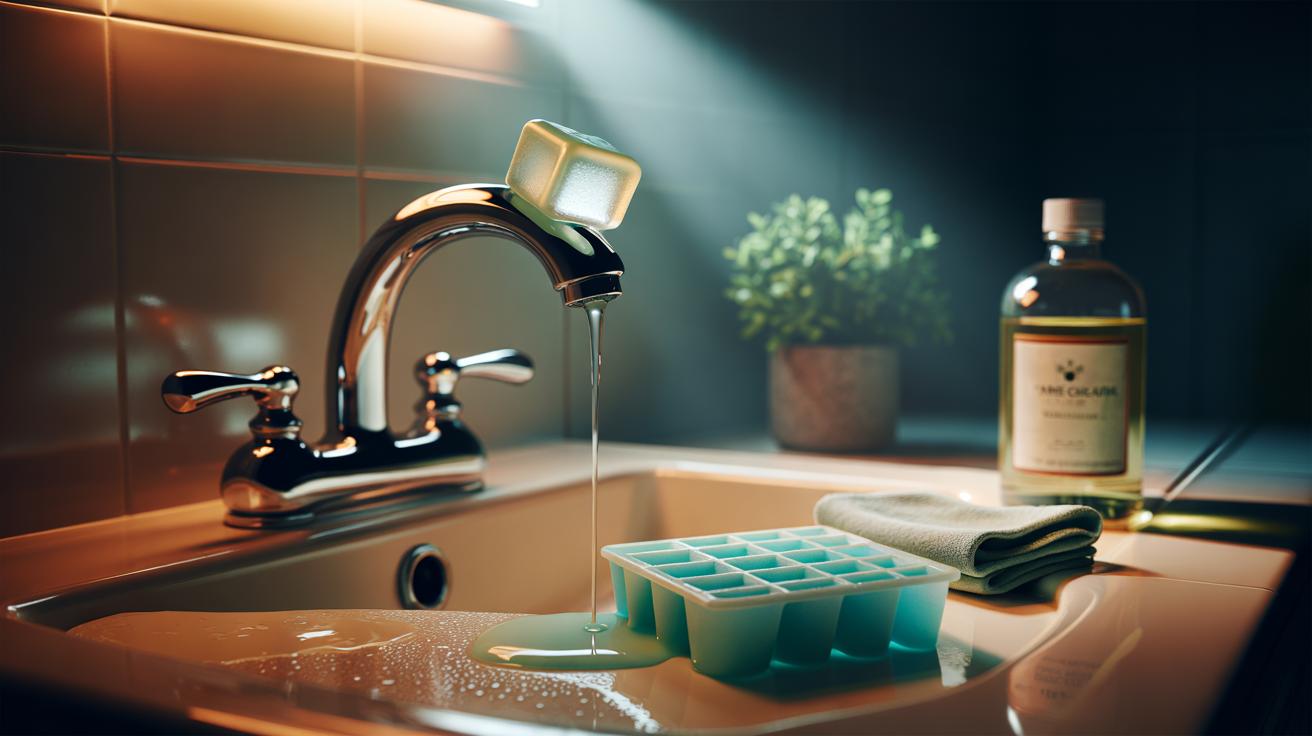
There’s a neat domestic hack turning heads in British kitchens and bathrooms: freezing household vinegar into tidy cubes for messes that don’t wait. Drop a cube on a sticky spill, run one over a tap crusted with limescale, or glide it along grout for a targeted clean that’s as frugal as it is effective. As the cube melts, it releases a controlled film of acetic acid, helping break down mineral deposits and daily grime while the cold helps tame odours. Use the melt to your advantage: a slow release means less waste and more contact where it counts. From fridges to bins, these cubes bring speed, precision, and surprising satisfaction to everyday cleaning.
How Vinegar Ice Cubes Work on Grime and Germs
Each cube is a compact delivery system: the cold surface loosens sticky residues and dulls odours, while the thawing film of acetic acid (about 5% in standard white vinegar) dissolves limescale, soap scum, and light rust. The slick, wet melt spreads evenly, so the chemistry keeps working after your first pass. A cube’s corners offer gentle mechanical action without harsh abrasives, ideal for taps, shower screens, and grout lines. Allow the liquid to sit briefly before wiping for best results. You’ll often see instant clarity on glass and chrome as the thin acid layer lifts mineral veils.
On hygiene, vinegar has documented antimicrobial effects, reducing common household bacteria on hard, non-porous surfaces when given adequate contact time. It isn’t a hospital-grade disinfectant, but it’s a practical, low-tox option for day-to-day freshness. Let the melt dwell for 1–5 minutes where hygiene matters, then wipe and rinse if the surface contacts food. The result is a simple cycle: chill, glide, dwell, and buff to a clean, streak-light finish.
Choosing the Right Tray and Vinegar Mix
Opt for a flexible silicone tray with a lid to contain odours and prevent spills in the freezer. Non-reactive materials are key; avoid trays with aluminium components, as vinegar can corrode reactive metals. Standard white distilled vinegar is best—clear, consistent, and low on residue. Skip malt vinegar; its colour and aroma tend to linger. You can freeze straight vinegar for heavy limescale or dilute with cold water for everyday wipe-downs. Label the tray “Cleaning Vinegar—Not for Drinks”. For fragrance, a strip of lemon peel can be added sparingly, though plain cubes are the most versatile and surface-safe.
Match dilution to the job and remember that colder cubes last longer on hot surfaces, extending the working window. Pre-score silicone trays for easy pop-out; store cubes in a sealed bag to minimise freezer odours and evaporation. Keep cleaning cubes separate from edible ice at all times.
| Task | Dilution (Vinegar:Water) | Notes | Suggested Contact Time |
|---|---|---|---|
| Taps, shower screens | 1:1 | Glide, then leave melt to sit | 2–3 minutes |
| Limescale spots | Neat | Reapply cube as needed | 3–5 minutes |
| Fridge seals, bins | 1:2 | Deodorises and lifts grime | 1–2 minutes |
| Worktops (non-stone) | 1:1 | Rinse on food-contact areas | 1–3 minutes |
Where and When to Use the Cubes
Vinegar cubes shine on bathroom chrome, ceramic tiles, glass doors, and plastic shower heads—rub a cube along the surface, let the melt creep into crevices, then wipe dry. In the kitchen, they’re excellent on stainless-steel sinks, microwave interiors, fridge seals, and plastic bins. For chopping boards, use a mild dilution, wipe thoroughly, and rinse with warm water. The cold helps immobilise sticky residues, while the acid loosens films that cause dullness. For grout, trace the line slowly so the cube lingers long enough to dissolve soap scum.
There are red lines. Do not use vinegar cubes on natural stone such as marble, limestone, or granite, or on unsealed wood. Avoid cast iron, aluminium, and any surface with a protective alkaline finish. Always spot-test on delicate finishes and rinse on food-contact areas. And a vital safety rule: never mix vinegar with bleach or products containing chlorine or ammonia; harmful fumes can result. Used thoughtfully, cubes deliver precision where sprays scatter.
Safety, Storage, and Environmental Upsides
Keep cubes in a designated, labelled container, well away from edible ice and curious hands. Mark clearly: “Cleaning Only—Do Not Consume”. A lidded tray or freezer bag prevents odour transfer and accidental use. Vinegar’s acidity holds up in the freezer, so cubes remain effective for months; make small batches and refresh seasonally for best aroma. If splashes reach eyes or broken skin, rinse promptly with plenty of water. On metals, wipe off residues and dry to avoid dulling. For fabric spills, test on an inconspicuous patch first.
On sustainability, these cubes cut single-use plastic from spray bottles and reduce propellant-laden aerosols. A litre of supermarket white vinegar is inexpensive and goes far when frozen into portions. The method encourages targeted cleaning, which means less liquid, fewer paper towels, and more control. Used with a washable microfibre cloth, the cubes create a low-waste routine that still feels premium. It’s a small, cleverly chilled step that adds up to a tidier home and lighter environmental footprint.
Vinegar ice cubes make housekeeping unexpectedly tactile and satisfying: a chilled glide, a quick dwell, and a bright finish without a cupboard full of speciality products. From daily fingerprints to stubborn limescale, the method rewards patience and precision, not elbow-busting effort. The trick lies in matching dilution to the task, watching contact time, and respecting the few surfaces that don’t play well with acids. Label, store safely, and never mix with bleach, and you’ll have a ready-to-go cleaner on hand whenever grime appears. Which corner of your home would you tackle first with a tray of smart, frozen cleaning power?
Did you like it?4.5/5 (24)