In a nutshell
- 🧪 The combo of baking soda (alkaline) and natural acids creates CO₂ fizz that agitates grime, while hot water melts fats; together they disrupt grease, biofilm, and loosen hair without harsh chemicals.
- 🚿 Step-by-step: preheat the drain with hot (not boiling) water, add 80–100 g (about 1/2 cup) baking soda, wait 10–15 minutes, then flush with 1–2 litres of hot water; repeat once if needed and optionally boost fizz with a dash of lemon juice.
- ⚠️ Safety first: avoid boiling water on PVC, never mix with chemical drain openers, clear standing water, seal the overflow for pressure, and remove the pop-up to access hair before flushing.
- 🛠️ Escalation cues: after two passes, use a plunger; call a professional if multiple fixtures slow, toilets bubble, or sewage odours appear—signs of deeper blockages or old, scaled pipes.
- ♻️ Smart maintenance: this method is low-cost, pipe-friendly, and greener; use weekly for prevention and reduce clogs by catching food scraps and brushing hair into the bin.
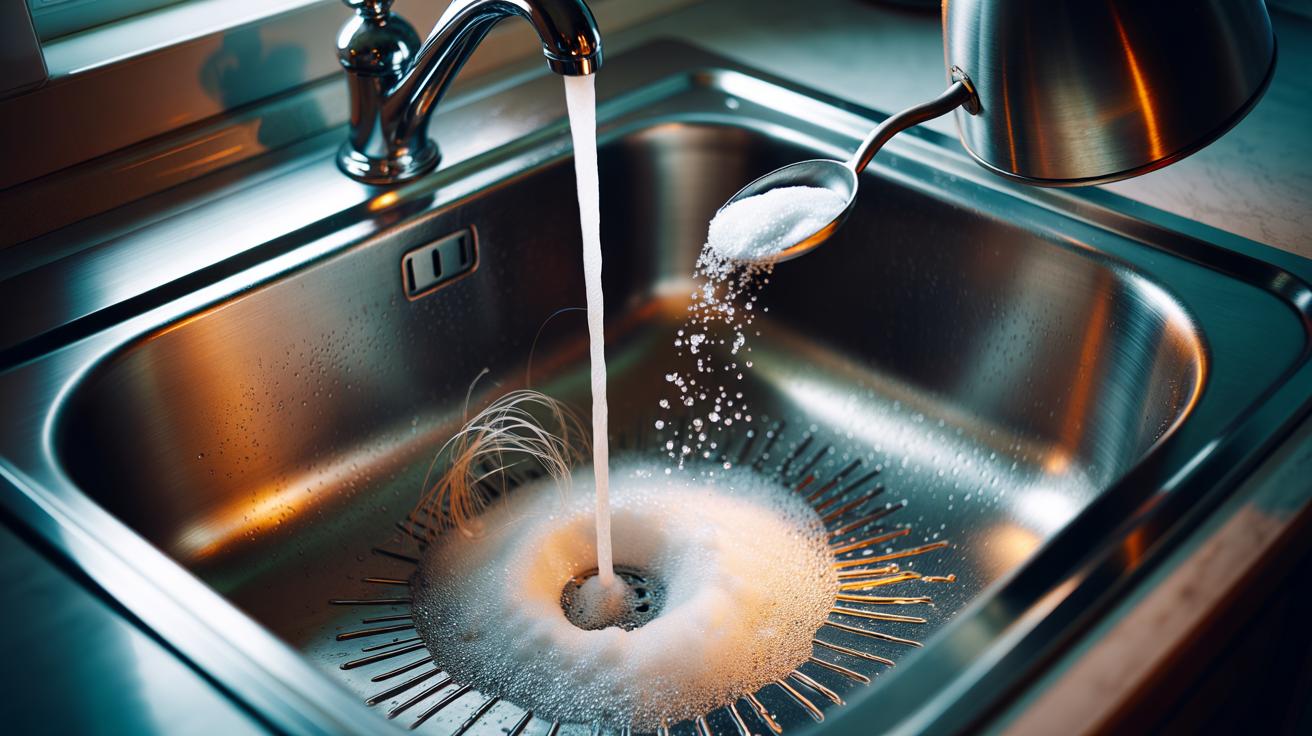
Blocked sinks rarely arrive with warning, but the fix might already be in your cupboard. A measured pour of baking soda followed by plenty of hot water can dislodge the build-up that slows kitchen and bathroom drains. The trick isn’t magic; it’s chemistry and heat, aided by a little agitation. As baking soda hits the damp, acidic grime lining your pipe, you may hear a gentle fizz. Those bubbles help break up grease, soap scum and loosen hair snarls, while hot water melts congealed fats so the whole mess slides away. Used correctly, this quick pour is safe, cheap, and kinder to pipes than harsh chemicals, and it often restores full flow in minutes.
Why Hot Water and Baking Soda Work
Sodium bicarbonate is mildly alkaline, so it nudges the pH upward inside your drain. That shift weakens the sticky matrix of fatty acids, soap scum, and skin oils that catch crumbs and hair. When bicarbonate meets naturally acidic residues (think coffee, tomato, vinegar traces), it releases carbon dioxide. Those tiny bubbles provide a scrubbing action as they expand through the sludge. This is the “fizz” you hear: a physical push that helps detach films and granules. Crucially, the alkalinity also disrupts bacterial biofilm, the slick layer that makes grime cling to pipe walls.
The heat does the heavy lifting. Hot water melts congealed fats so they no longer glue debris together, and it softens soap deposits into movable flakes. Hair, made of tough keratin, doesn’t dissolve, but it’s far easier to shift once coated in a thin alkaline solution and warmed until the tangle relaxes. Do not pour boiling water directly into PVC traps or fragile seals—use hot, not rolling boil. This combination—alkali, effervescence, and heat—often restores a clear run without disassembling the trap.
Step-By-Step Method for a Fast Unclog
First, clear standing water so the treatment reaches the blockage. Boil a kettle, then let it sit 30–60 seconds. Pour a slow litre down the drain to preheat the pipe. Tip in about half a cup (80–100 g) of baking soda, nudging it into the opening so it reaches the u-bend. Wait 10–15 minutes to allow bicarbonate to interact with acidic residues and soften grime. Follow with another 1–2 litres of hot water, poured steadily. If the flow improves but isn’t perfect, repeat once. For extra fizz, you can add a small splash of lemon juice before the final hot-water flush.
Never mix baking soda with store-bought drain openers; if you used chemicals recently, flush thoroughly and wait. Place a cup over an overflow hole to keep pressure in the drain during the hot-water pour. If your sink has a removable trap and you suspect a solid plug (like a bottle cap), place a bowl beneath and check the trap safely. The method below summarises the key measures.
| Item | Why It Works | How Much | Notes |
|---|---|---|---|
| Baking soda | Alkalinity disrupts grease; fizz agitates grime | 80–100 g (about 1/2 cup) | Push into drain opening for best contact |
| Hot water | Melts fats; carries loosened debris away | 1–3 litres at 60–80°C | Avoid boiling water on PVC |
| Lemon juice (optional) | Boosts fizz with mild acid | 60–120 ml | Rinse thoroughly after reaction |
What the ‘Fizz’ Really Does to Grease and Hair
The fizz is carbon dioxide formed when bicarbonate meets acids left by food or toiletries. Each microbubble expands within the sludge, prying apart layers the way rising dough loosens tight gluten. At the same time, the alkaline solution begins to saponify some fatty residues, turning them into slippery, soap-like substances that rinse away more easily. This combination of micro-agitation and chemical softening is why a simple pour can feel surprisingly powerful. The hot water then sweeps the loosened mass downstream, reducing the chance it re-sets in the bend.
Hair doesn’t fizz away, but it loses grip. Oils that cement strands to the pipe wall are dissolved or liquefied, while softened soap scum releases its hold. The result is a lighter, less cohesive clump that moves with the flush rather than acting like a net. You may notice a faint sound and a whiff of stale odour as gases escape—both signs the matrix is breaking. If you hear persistent gurgling from other fixtures, the blockage may be deeper than the trap.
When to Use a Plunger or Call a Professional
If two passes of the baking soda and hot water method don’t restore normal flow, add gentle mechanical help. A cup plunger on a sink with the overflow sealed can create short pulses that move a loosened plug onward. Keep the water level covering the plunger rim, give 10–12 firm plunges, then test the drain. Do not combine plunging with chemical drain cleaners. In bathrooms, remove the pop-up and fish out visible hair before repeating the hot-water flush.
Know the red flags for a bigger issue: multiple fixtures slowing at once, toilet bubbling when you drain the basin, or sewage odour from a floor drain. These point to a stack or main line problem that needs rodding or jetting. Very old galvanised pipes can harbour scale that resists home remedies, and fatbergs may require professional cutters. If in doubt, stop, ventilate, and seek a licensed plumber—especially where backups risk water damage. Prevent future clogs by catching food scraps and brushing hair into the bin, not the drain.
The humble pairing of hot water and baking soda is a newsroom favourite because it’s fast, gentle on plumbing, and kinder to the environment than caustic cocktails. The fizz loosens, the heat melts, and the rush carries grime away—often all you need to beat a sluggish sink before work. Keep a box near the kettle, mind your water temperature, and treat drains before they grind to a standstill. Used weekly, the same pour doubles as preventative maintenance. What’s your go-to tweak—an extra pause, a dash of lemon, or a follow-up plunge—that turns this simple method into a guaranteed clear-out?
Did you like it?4.6/5 (29)