In a nutshell
- 🍎 Fruit flies are irresistibly drawn to fermentation volatiles—think apple cider vinegar, ripe fruit, and yeast—making these scents ideal lures.
- 🧪 A drop of dish soap lowers water’s surface tension, causing instant wetting so flies sink and drown instead of perching on the surface.
- 🧴 Simple setup: 2–3 tbsp apple cider vinegar, 1–2 tbsp water, 1–2 drops washing-up liquid; light suds help wetting—avoid thick foam that can act as a raft.
- 🧹 Boost results by adjusting ratios, positioning traps near hotspots, refreshing every 24–48 hours, and tackling sources—clean bowls, seal bins, and refrigerate ripe produce.
- 🐾 Practicalities: keep traps out of pets’ reach, dispose down the drain with water, and consider alternatives (funnel jars, red wine) if you prefer fewer kill-based methods.
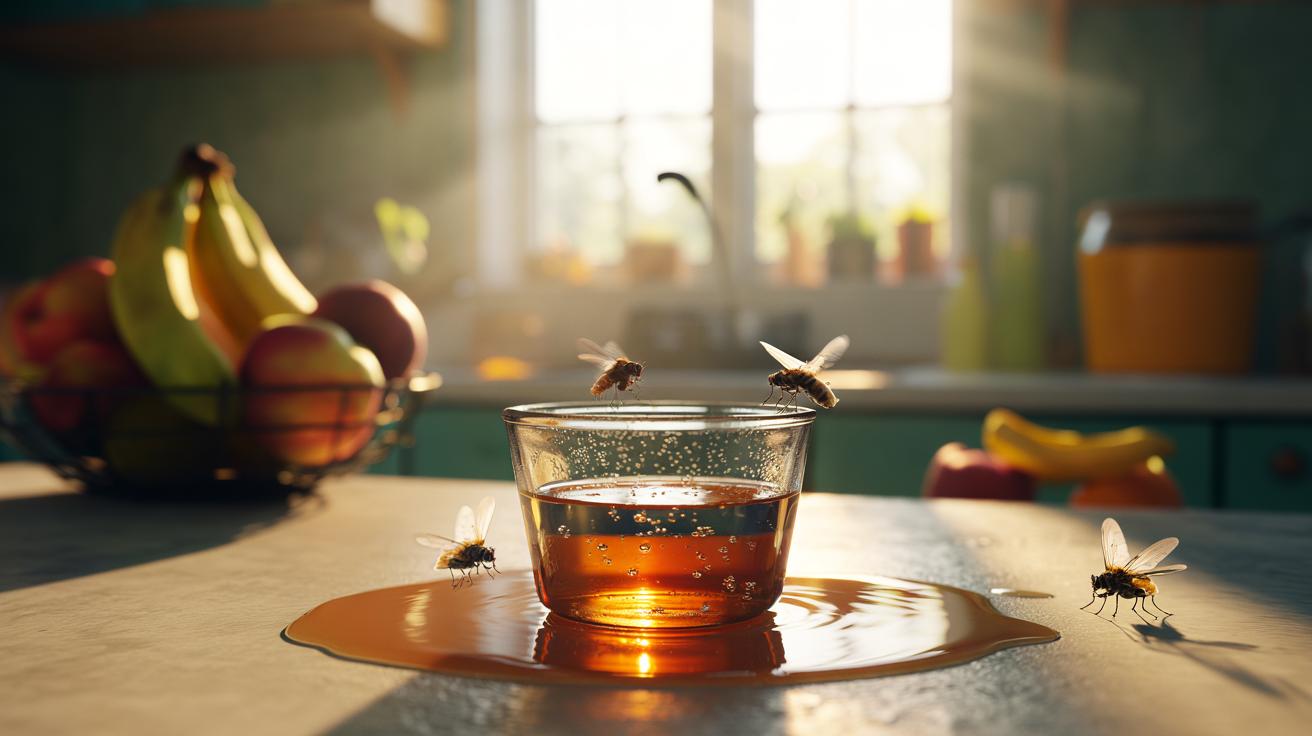
On a late summer afternoon, tiny fruit flies gather in clouds above the fruit bowl, drawn by a bouquet of sweet and sour notes. The simplest answer to this domestic siege is disarmingly elegant: a dish soap mixture whose scent lures, while physics finishes the job. At its heart, the method exploits fermentation volatiles to attract the insects, then uses surface tension—or rather the lack of it—to prevent escape. It is a quiet trap that turns the flies’ own preferences against them. Here’s how the “dish soap bubble” trick actually works, why the aroma is irresistible, and what to do to make the method both effective and tidy in a UK kitchen.
Why Fruit Flies Can’t Resist Fermenting Aromas
Fruit flies evolved to find yeasts and fermenting sugars with astonishing sensitivity. The odour from ripening or bruised fruit is rich in volatile esters like ethyl acetate, along with acetic acid and a touch of ethanol—signals that advertise a microbial banquet. To a fly’s receptors, a splash of apple cider vinegar is a neon sign. Add a cube of very ripe fruit or a teaspoon of sugar and a pinch of yeast, and you amplify the plume of scent that curls across a kitchen. These cues do not just promise calories; they indicate a place to mate and lay eggs, completing the insects’ brief life cycle.
From sink caddies to compost caddies, the same chemistry applies. The aroma tumbles through the air, carried by convection and the faintest draught. Unlike drain flies or fungus gnats, Drosophila seek the ferment, not stagnant water or soil. That’s why a lure centred on fermentation outperforms floral fragrances or generic sweeteners. If your trap smells like cider and fruit skins, you are speaking the flies’ language. Keep containers open enough for odour to escape, but with an inviting, dark rim that signals a landing zone.
Surface Tension, Surfactants, and the Fatal Slip
On pure water, a fly can tiptoe with hydrophobic legs, the meniscus holding fast. Enter dish soap. As a surfactant, it slices the water’s surface tension from around 72 mN/m to a much lower level, breaking the supportive film. Without that high surface tension, a fly cannot stand. The moment its feet brush the treated surface, wetting occurs, its body hydrophobicity fails, and capillary forces pull the insect under. Soap also creates transient micro-bubbles: fragile films that pop and drape liquid over the fly’s fine hairs, ensuring rapid soaking.
In practice, the physics is merciless. Viscous drag and the collapse of the meniscus make “take-off” nearly impossible once a fly is wetted. Even brief contact becomes fatal as spiracles clog and energy drains while the insect struggles. A thin sudsy layer can help by bursting into a wet sheet on contact. The trap doesn’t need depth; it needs low surface tension and clean wetting. That is why even a shallow dish, properly dosed with soap, proves so effective.
Setting Up the Dish Soap Bubble Trap at Home
The kit is simple: a small glass or ramekin, 2–3 tablespoons of apple cider vinegar, a splash of water, and 1–2 drops of washing-up liquid. Swirl gently to create a sparse cap of micro-bubbles—just enough to help wet the first landing flies. Do not whip up a stiff foam; thick suds can act as a raft. Position the container near the fruit bowl, bin pedal, or compost caddy, places where scent plumes and fly traffic are strongest. Replace daily during a surge, and refresh every few days otherwise.
| Component | Typical Amount | Role in Trap |
|---|---|---|
| Apple cider vinegar | 2–3 tbsp | Fermentation aroma that attracts flies |
| Water | 1–2 tbsp | Balances scent strength and volume |
| Dish soap | 1–2 drops | Lowers surface tension for rapid wetting |
| Ripe fruit piece (optional) | 1 small cube | Boosts volatile esters for extra pull |
For a tidier look, cover the glass with cling film and punch a few pencil-tip holes; flies enter, scent escapes, and the low-tension liquid awaits below. Unscented soap avoids masking the vinegar bouquet. If you prefer a stronger lure, add a pinch of yeast and sugar to create a gentle, ongoing ferment overnight.
Troubleshooting, Hygiene, and Ethical Considerations
If the trap underperforms, adjust the ratio: increase vinegar by a tablespoon, or add a sliver of very ripe banana to spike the ester profile. Move the container closer to the source—under the fruit basket or by the recycling. Replace every 24–48 hours; stale mixtures dull the signal. Eliminating breeding sites is half the victory: wash the fruit bowl, empty the caddy more often, rinse bottles before recycling, and store ripe produce in the fridge during peak season. These steps starve the population, while the trap tackles fliers already on the wing.
Dispose of contents down the loo or outside drain, flush with water, and rinse the container. For households with pets, place traps out of reach; the ingredients are mild but not for drinking. If you prefer to reduce kill-based methods, funnel jars that capture for release are an option, though less practical indoors. A red wine lure works, but vinegar is cheaper and more consistent. Good hygiene plus a well-tuned trap breaks the cycle fast.
In the end, the “dish soap bubble” trick is a small act of kitchen physics: a sweet scent draws in curious fruit flies, then lowered surface tension denies them a foothold. The result is clean, quick, and far less intrusive than sprays. It doubles as a lesson in how chemistry, behaviour, and design intersect at the scale of a teacup. When we control odours and interfaces, we control outcomes. What other household nuisances might yield to this blend of patient observation and simple science, and how would you test them in your own home?
Did you like it?4.5/5 (26)