In a nutshell
- 🔬 Cornstarch absorbs moisture via hydrophilic amylose/amylopectin, lowering humidity that feeds odour-causing bacteria, while light adsorption helps trap volatile compounds.
- 🧪 How-to: Dust 1–2 tsp per shoe or use a sachet (coffee filter/sock), leave 8–12 hours, then tap out; avoid heavy powder on damp shoes, brush interiors, and rotate pairs for full drying cycles.
- 🦺 Safety: Patch-test on dark linings/suede, keep quantities modest in leather, avoid inhalation and use around pets, and don’t apply on broken skin or diabetes-related foot issues—powder complements drying, it doesn’t replace it.
- ⚖️ Comparison: Cornstarch = moisture control; baking soda = acid neutralising (gritty, can dry leather); talc = absorbent with inhalation risks; silica gel = strong drying but no odour neutralising.
- ✅ Routine wins: Pair cornstarch with breathable socks, insole washing, and weekly refreshes; use sachets for leather and light dusting for canvas/knit to keep footwear consistently fresher.
Trainers that smell like last night’s gym session can undo the crispest outfit. The simplest rescue lives in your kitchen: a light sprinkle of cornstarch. This ultra-fine powder soaks up moisture, lowering the swampy microclimate that encourages odour-making microbes. While sprays mask smells, cornstarch changes the conditions that create them. Cut the damp and you cut the stink. Below, we unpack the science behind powder-led freshness, how to deploy it without mess, when to avoid it, and how it stacks up against baking soda, talc and silica gel. Ready to give your footwear a clean slate between commutes, classes and circuits?
How Cornstarch Absorbs Moisture and Odor
Cornstarch granules are built from amylose and amylopectin, plant-based polymers with hydrophilic sites that attract water. Sprinkle the powder into a shoe and each microscopic particle becomes a tiny sponge, wicking perspiration out of the insole and lining. That drop in humidity deprives odour-causing bacteria of the dampness they need to thrive. Dry shoes seldom smell. Crucially, cornstarch is fragrance-free, so you’re not layering scent over funk; you’re tackling the root cause: sweat lingering where air can’t circulate.
The powder also traps some volatile compounds—such as short-chain fatty acids—through light adsorption and physical sequestration in its fine matrix. This dual action reduces the immediate whiff and slows its return after wear. It’s gentle on most materials, from canvas to knit uppers, and compatible with leather when used sparingly. If you like a hint of freshness, mix a drop or two of tea tree or lavender oil into the powder before use, but avoid soaking insoles with liquid.
Step-by-Step: Using Cornstarch to Deodorise Shoes
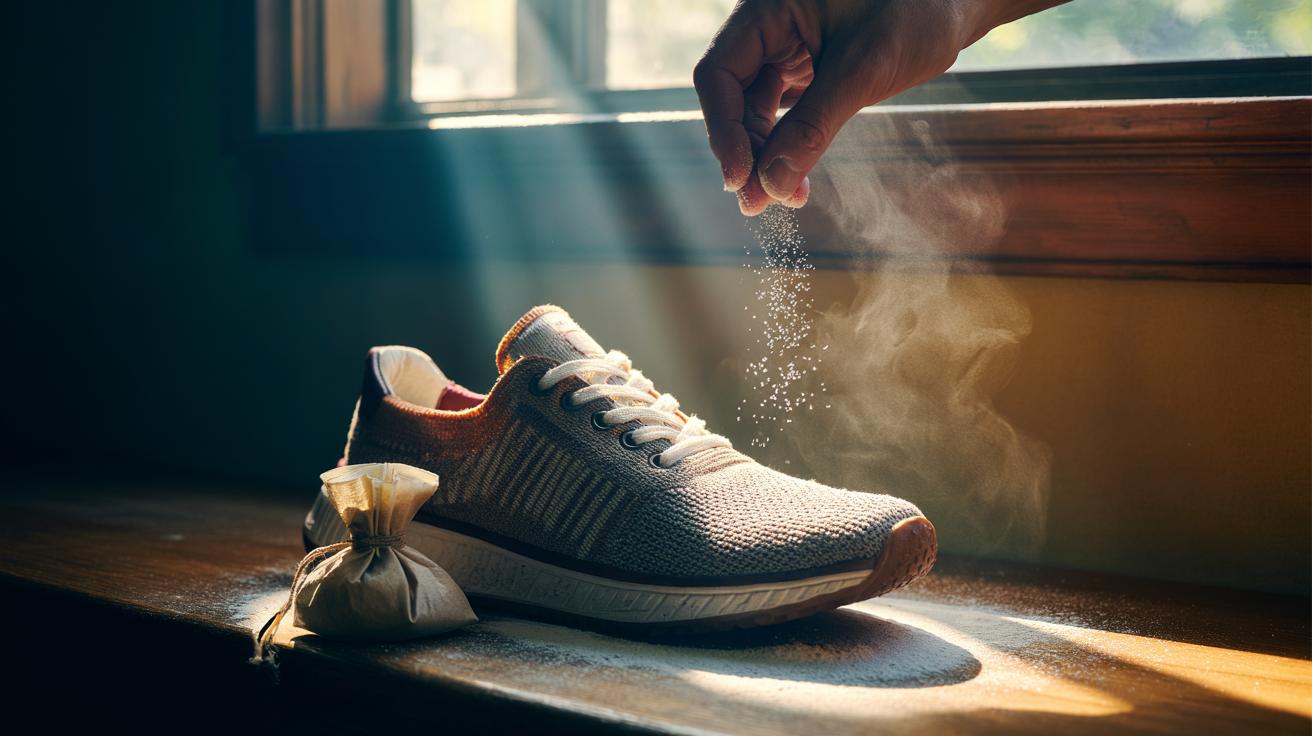
Start clean and dry. Remove insoles if possible and let shoes air for an hour. Dust 1–2 teaspoons of cornstarch per shoe, focusing on the toe box and heel where sweat accumulates. For minimal mess, pour the powder into a coffee filter or thin sock, knot it, and tuck the sachet inside. Leave overnight—8 to 12 hours is ideal—so the granules can pull moisture from the lining. Do not apply heavy powder to a damp shoe; lock in water and you prolong the smell. In the morning, tap out the excess and brush the interior with a clean cloth.
For leather, use the sachet method to avoid residue. For knit or canvas, a direct dusting is fine but go light to prevent clumping. Refresh weekly during hot spells or after intense workouts, and rotate pairs so each has a full drying cycle. If odour persists, launder or replace insoles and repeat the treatment. A quick in-shoe blast of cool air after powdering speeds the wicking effect.
Safety, Materials, and When Not to Use Powder
Cornstarch is broadly safe, but precision matters. Patch-test on dark linings and suede: the fine powder can leave a faint haze if you overdo it. Keep quantities modest, especially in structured leather, to prevent caking in seams. Avoid using powders on broken skin or if you have diabetes-related foot issues—seek clinical advice first. Do not inhale the dust and keep it away from curious pets; store in a sealed container. On hard floors, a stray sprinkle becomes a slip hazard, so handle over a bin or bath.
On skin, use sparingly and never leave on persistently damp feet, because any carbohydrate-based powder can become a holding medium for fungal growth if moisture isn’t removed. Cornstarch is best deployed in the shoe, not as a heavy foot powder. If your footwear stays wet after a storm or workout, prioritise drying: remove insoles, stuff with paper, and use gentle airflow before any powder. Powder is a finishing touch, not a substitute for proper drying.
Cornstarch vs Baking Soda, Talc, and Silica Gels
Different powders solve different problems. Cornstarch excels at moisture control with a low risk of material damage. Baking soda neutralises acidic odours but can be gritty and may dry out leather over time. Talc is a classic moisture absorber yet carries inhalation concerns; use only in contained sachets. Silica gel (reusable desiccant beads) is powerful at drying but doesn’t directly neutralise odour compounds. Combine smartly: a cornstarch sachet for nightly moisture, a short baking soda stint for stubborn smells, and silica packets for post-rain recovery.
| Product | Primary Action | Best For | Cautions |
|---|---|---|---|
| Cornstarch | Absorbs moisture | Daily deodorising without scent | Go light on dark linings |
| Baking Soda | Neutralises acids | Persistent odours | Can dry leather; gritty residue |
| Talc | Moisture absorption | Short, contained use | Inhalation risk if airborne |
| Silica Gel | Powerful drying | Wet shoes after rain | No odour neutralising; keep away from pets |
A tailored toolkit beats a one-product fix. If you value simplicity, cornstarch delivers consistent results with minimal fuss and cost. For heavy trainers with foam-rich insoles, pair it with regular airing and occasional insole washing. For dress shoes, keep to sachets to preserve finish. Whatever you choose, consistency—light dusting, full dry time, weekly refresh—keeps the odour cycle at bay.
A small kitchen staple can transform your shoe care routine without harsh perfumes or pricey gadgets. By treating moisture as the enemy, you dampen bacterial growth, protect materials, and keep commutes and workouts pleasantly neutral. Pair the powder trick with breathable socks, rotation between wears, and occasional insole laundering for long-term gains. Fresh shoes start with dry shoes. Will you build a simple, sustainable deodorising ritual with cornstarch, or experiment with a mix of powders and desiccants to match each pair’s material and lifestyle?
Did you like it?4.6/5 (20)