In a nutshell
- 🧪 Yellow stains form when aluminium salts from antiperspirant bind with sweat oils and proteins; heat sets them, so ordinary detergent often leaves a shadow.
- 💥 A bicarbonate of soda paste loosens acidic residues; adding vinegar creates CO₂ fizz that micro-agitates fibres, with optional 3% hydrogen peroxide for gentle brightening (avoid on wool/silk).
- 🧴 Method: mix 3:1 bicarb to water, apply 30–60 minutes, mist with vinegar, brush gently, rinse, then launder; do not tumble-dry until the mark has fully gone.
- 🛠️ Stubborn cases: soak with oxygen bleach, use enzyme detergents, and spot test for colourfastness; avoid chlorine bleach which can yellow and weaken fibres.
- 🧼 Prevention: apply antiperspirant at night, let it dry before dressing, rinse underarms after wear, rotate shirts, and consider low- or no-aluminium deodorants; air-dry with a touch of sunlight.
It’s the domestic mystery that ruins crisp officewear: why do white shirts develop stubborn yellow halos beneath the arms, and how can a simple kitchen staple bring them back to life? The answer lies in a smart bit of household chemistry. A paste of bicarbonate of soda—better known as baking soda—breaks down the gunk, while a gentle fizz lifts it out of the fibres. Used correctly, this low-cost method rivals specialist stain removers without harsh bleaching. Here’s how the reaction works, why it matters for different fabrics, and the step-by-step routine that restores whites without shredding the cloth or dulling the weave.
Why Sweat Turns White Shirts Yellow
Those mustard-hued crescents are not just sweat. They’re a cocktail of aluminium salts from antiperspirant, skin oils, and proteins that bind to cotton cellulose. Aluminium chlorohydrate reacts with compounds in perspiration and sebum, forming complexes that lodge deep in the weave. Heat from a hot wash can set these residues, turning a light mark into a baked-in stain. Over time, oxidised body oils reinforce the tint, which explains why frequent washing doesn’t always shift it. Once the stain is set, ordinary detergent often skims the surface while the deeper discolouration stays put. That’s why a targeted pre-treatment matters: you need an approach that softens the chemistry holding the mark in place, then removes it physically without shredding the fabric or fading the surrounding panel.
Enter bicarbonate of soda, a mild alkali with a knack for loosening acidic residues and emulsifying greasy films. It works at fabric-friendly pH, so you aren’t bludgeoning fibres as you would with harsh bleaches. Add a controlled fizz, and you can unseat the gunk that detergent leaves behind.
The Science Behind Baking Soda Paste and Fizz
Bicarbonate of soda (sodium bicarbonate) is a buffered alkali that nudges the pH upward, weakening aluminium-based complexes and helping to break up fatty acids. Mixed with a little water, it forms a spreadable paste that clings to the underarm panel, drawing out residue as it dries. The “fizz” arrives when you add a mild acid—typically white vinegar (about 5% acetic acid). The acid-base reaction releases carbon dioxide bubbles that agitate the stain at fibre level, like thousands of tiny plungers. This micro-agitation is the lift that helps float loosened soil to the surface.
Another route uses 3% hydrogen peroxide with bicarbonate. Here the chemistry leans on reactive oxygen, which can gently bleach organic discolouration while the bicarb tackles grease. Always test for colourfastness and avoid this on wool or silk, whose protein fibres dislike alkali and peroxide. Whichever route you choose, the aim is the same: soften and disrupt, then lift and rinse. The trick is contact time and restraint—enough chemistry to free the stain, not enough to fatigue the cloth.
Step-By-Step Method: From Paste to Pristine
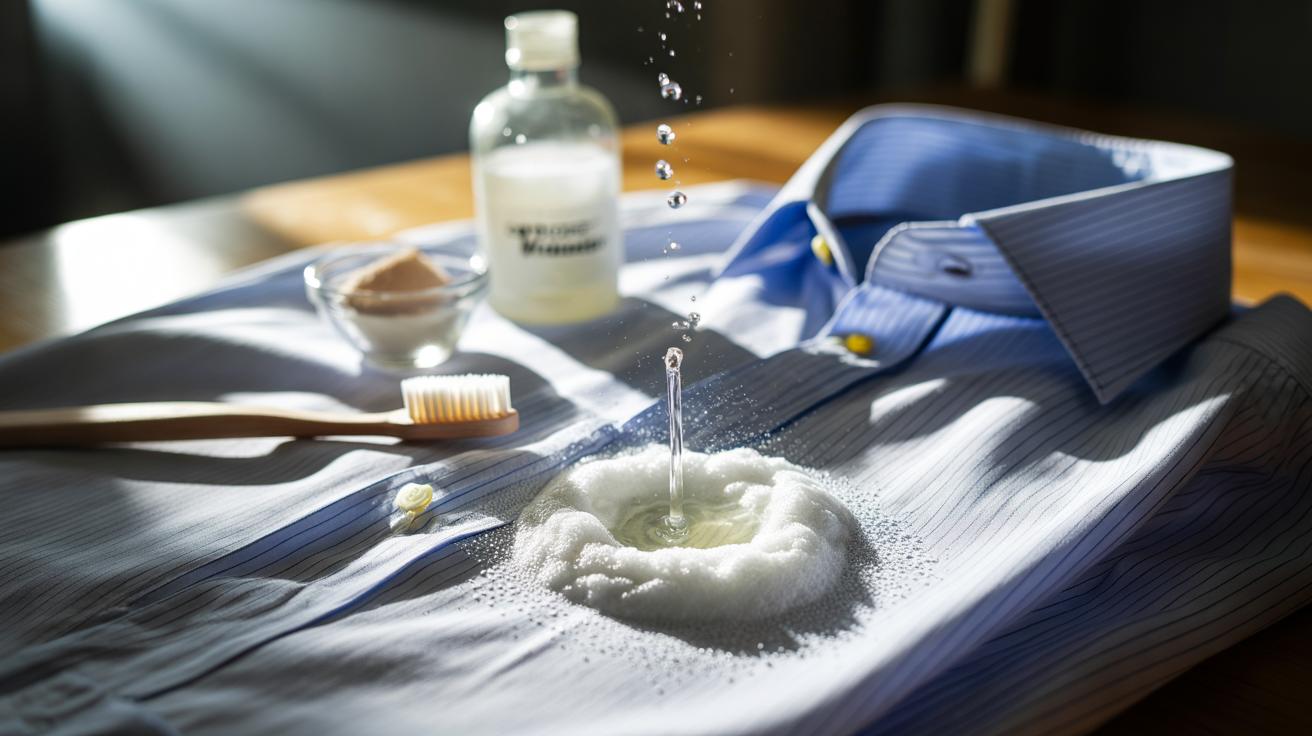
Start with clean, dry fabric. Mix a thick paste: three parts bicarbonate of soda to one part cool water. Spread it 3–5 mm thick on the stained area, working it in with your fingers or a soft brush. Leave for 30–60 minutes until tacky. If the stain is heavy, mist with white vinegar; the controlled fizz helps dislodge residue. Gently scrub with a soft, old toothbrush in short strokes following the weave, then rinse in cool water. Launder on a standard cotton programme with a quality detergent; add an oxygen bleach booster for persistent marks. Do not tumble-dry until the stain is gone—heat will set any remnants. Repeat once if needed rather than forcing the fabric with harsh chemicals.
| Item | Ratio/Use | Time | Notes |
|---|---|---|---|
| Bicarbonate of soda | 3 parts to 1 part water | 30–60 min | Alkali to loosen acids and oils |
| White vinegar (5%) | Light mist or dab | Until fizz subsides | CO₂ fizz agitates fibres |
| Hydrogen peroxide (3%) | Optional: 1 part with 2 parts bicarb + water | 10–20 min | Spot test; avoid wool/silk |
| Soft brush | Short, gentle strokes | 1–2 min | Follow the weave to reduce pilling |
For drying, favour air and daylight; sunlight’s UV offers a mild whitening nudge without the risks of chlorine bleach. If any shadow remains, repeat the pretreat-and-fizz cycle before the next wash. One careful pass is better than a scorched quick fix.
Troubleshooting, Alternatives, and Fabric Care
If the stain persists, soak the shirt in warm water with an oxygen-based bleach (sodium percarbonate) according to the label, then reapply the bicarb paste. Switch to a detergent with enzymes to digest proteins and body oils. Avoid chlorine bleach on protein stains—it can yellow whites and weaken fibres. For delicate fabrics (silk, wool), skip alkali pastes and use a specialist stain remover or professional cleaning; these fibres are sensitive to pH shifts and peroxide. Check trims and printed logos for colourfastness before treating. Always test in an inconspicuous spot and wait until the fabric dries to judge results.
Prevention helps. Apply antiperspirant at night to reduce aluminium transfer, let it dry fully before dressing, and rotate shirts to reduce build-up. A quick post-wear rinse of the underarm zone stops residues setting between washes. For recurring issues, try low-aluminium or aluminium-free deodorants, which are less prone to forming yellow complexes with sweat.
In the end, the genius of bicarbonate lies in elegant simplicity: a gentle alkali to loosen grime, a controlled fizz to lift it free, and sensible laundering to finish the job. It’s budget-friendly, fabric-kind, and reliably effective when you respect contact time and fibre type. Think of it as a small chemistry experiment with a big wardrobe payoff. What’s your most stubborn laundry challenge at home, and which fabric or stain would you like this fizz-first method to tackle next?
Did you like it?4.5/5 (20)