In a nutshell
- 🔬 The science: baking powder contains acid, base, and starch; their reaction releases CO₂ whose effervescence lifts grime while fine particles mildly abrade and starch absorbs oils—no bleaching required.
- 🧪 The mix: 2 tbsp baking powder + 1 tbsp warm water + 1/2 tsp mild soap, with optional 1 tsp hydrogen peroxide (3%) for whites; apply, let fizz, gentle circular scrub, wipe-rinse, and air-dry—avoid soaking midsoles.
- ⚠️ Material care: Works best on fabric soles, mesh, and rubber; go light on leather/PU, avoid suede/nubuck, protect seams and adhesives, use warm filtered water, and patch-test coloured areas.
- 🛠️ Troubleshooting: Prevent grey redeposit by rinsing cloths; repeat application for scuffs, pre-treat oils, and tackle yellowing as oxidised residue with fresh paste; deodorise by dusting dry baking powder once fully dry.
- ✅ Benefits: Restores a bright white finish, preserves structure and prints, and relies on the triple action of bubbles, gentle abrasion, and absorption—no harsh bleach or aggressive scrubbing.
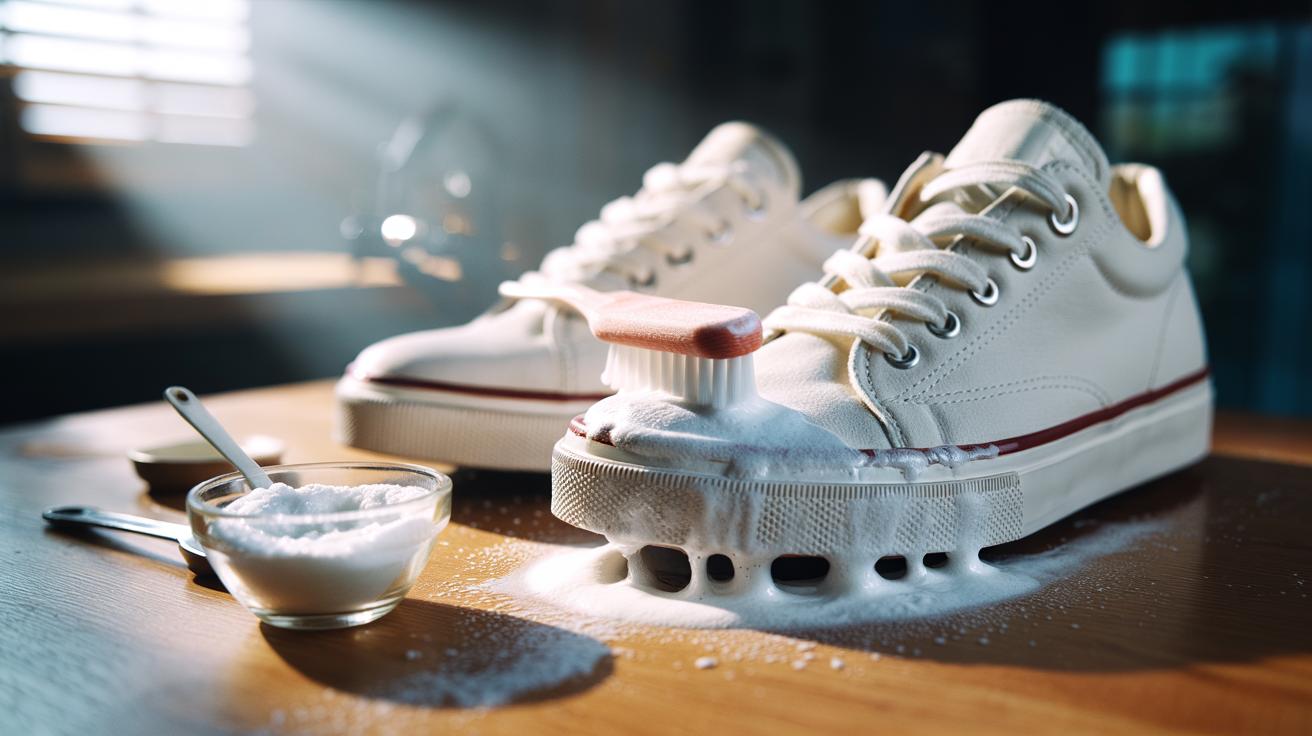
There’s an oddly satisfying science behind brilliantly white trainers, and it starts with the humble tub of baking powder. Canvas and knit uppers, along with textured rubber sidewalls, collect grey road film, oxidised oils, and gritty dust that simple soaps can’t lift. When you mix baking powder with a little water, a gentle fizz forms. Those bubbles travel into weave gaps and along treads, loosening residue for your brush to whisk away. Effervescence does the micro-scrubbing so your hands don’t have to. With a few added drops of surfactant and a cautious approach to drying, your sneakers can look newsroom-photo ready without nasty bleaches or brittle finishes.
What Is in Baking Powder and Why It Works
Unlike plain bicarbonate of soda, baking powder already contains a built-in acid—typically monocalcium phosphate or sodium acid pyrophosphate—plus starch as a stabiliser. Add water and you trigger a mild acid–base reaction that releases CO₂. The resulting effervescence nudges grime from the micro-grooves of fabric and rubber, while the fine particles act as a mild abrasive to polish away traffic film. Starch helps by absorbing trace oils that darken white soles. This isn’t a bleach; it’s controlled chemistry that lifts dirt rather than stripping colour. On canvas foxing and rubber outsoles—where discolouration stems from embedded dust and oxidised residue—that fizzing action is especially effective, freeing contaminants so they rinse away without harsh scrubbing or damage to the weave.
The reaction is self-limiting, so you won’t overdo it. That makes the method friendly to white fabric soles, knit collars, and textured sidewalls. You get three cleaning forces at once: gas bubbles that agitate, a paste that gently scours, and starch that mops up lipids. Used correctly, it restores brightness while respecting the adhesives and coatings that hold your trainers together.
The Step-by-Step Whitening Mix
Make a foaming paste: 2 tablespoons baking powder + 1 tablespoon warm water + 1/2 teaspoon mild dish soap. For white-only canvas, you may add 1 teaspoon hydrogen peroxide (3%) as an optional brightener; skip it on coloured fabrics. Remove laces and insoles, dry-brush away loose dirt, then dab the paste onto fabric soles and rubber sidewalls using a soft toothbrush. Let it fizz for 5 minutes, then gently scrub in small circles. Reapply to stubborn areas and rest another 5–10 minutes. Wipe with a clean damp cloth and lightly rinse. Do not soak the midsole—excess water stresses glue bonds. Stuff with paper to hold shape and air-dry away from direct heat or sun.
If stains linger, repeat once more. Fizzing diminishes as the reaction completes, so mix fresh paste each round. A soft nail brush tackles outsole texture; a detailing brush reaches stitching. Keep motions gentle to avoid lifting threads. Patience beats pressure: let the chemistry dislodge grime, then sweep it away. Finish by relacing once fully dry; a final wipe with a barely damp cloth removes any powdery film for a clean, matte white.
Fabric, Rubber, and Adhesives: What to Know Before You Scrub
Canvas, mesh, and engineered knit respond well because their fibres trap dirt that CO₂ bubbles can liberate. Coated leather and PU trims prefer a dab-and-wipe approach; avoid saturating seams. Suede and nubuck are delicate—keep the mix off them and rely on a dry suede brush instead. Rubber sidewalls and textured outsoles tolerate the paste nicely, though you should limit dwell time near glue lines. Prolonged soaking is the enemy of adhesives. On coloured uppers, omit peroxide and perform a patch test inside the tongue. Reflective films and printed logos can scuff; use only the softest brush there.
Water quality matters. Hard water can leave faint mineral veils; use filtered or distilled water if your tap is chalky. Temperature helps: slightly warm water speeds reaction without softening glues. Ventilate the area and wear light gloves if your skin is sensitive. Always let trainers dry completely before wearing; residual moisture invites creasing and attracts new dirt. If yellowing appears, it’s often oxidised residue: a second pass with fresh paste and better rinsing usually clears it.
A Simple Reference Table and Troubleshooting Tips
Use this quick guide to tune your cleaning session. The ratios suit one pair of adult sneakers with fabric soles and rubber sidewalls.
| Surface | Mix Ratio | Dwell Time | Safe? | Notes |
|---|---|---|---|---|
| Canvas/Knit Fabric Soles | 2 tbsp baking powder + 1 tbsp water + 1/2 tsp soap | 5–15 mins total | Yes | Add 1 tsp 3% peroxide only on whites |
| Rubber Sidewalls/Outsoles | As above; slightly thicker paste | 5–10 mins | Yes | Use soft brush on fine textures |
| Leather/PU Trim | Very thin mix | Apply, scrub lightly, wipe off | With care | Do not flood seams or logos |
| Suede/Nubuck | Not recommended | — | No | Use dry suede eraser/brush |
If you see a grey cast, you likely moved loosened dirt around. Rinse the cloth often and brush under running water. Scuff marks on rubber respond to a second application or a dedicated white rubber block; go easy to avoid shine. Oil spots need a pre-treat with a drop of detergent before the paste. Persistent yellowing is usually oxidised residue rather than dye damage; fresh paste and distilled water typically resolve it. For odours, sprinkle a pinch of dry baking powder inside once shoes are fully dry, then tap out before wearing.
Clean, bright trainers signal care without shouting. A simple baking powder paste harnesses effervescence to lift grime from fabric soles and bring rubber back to crisp white—no harsh bleaches, no abrasive scrubbing. With a measured dwell, light brushing, and a mindful dry, the chemistry does the work while your sneakers keep their structure. Next time road dust dulls your favourites, will you reach for the fizzing mix, or tweak the blend with a dash of surfactant or a cautious spot of peroxide to suit your pair’s materials?
Did you like it?4.4/5 (21)