In a nutshell
- 🔬 The eye’s ipRGCs detect blue-rich light (460–480 nm), signalling the SCN and suppressing melatonin; dim, warm lighting lowers melanopic lux and stabilises the circadian rhythm.
- 🌙 Under dim conditions, Dim Light Melatonin Onset (DLMO) occurs 2–3 hours before bedtime; aiming for warm, low illumination helps melatonin rise on schedule.
- 🕒 A three-step wind-down: T−3 hrs (100–200 lux, 2700–3000 K), T−2 hrs (50–100 lux, 2200–2700 K), T−1 hr (<30 lux, ≤2200 K) with calm, low-contrast activities.
- 💡 Layered home lighting: warm LEDs (2200–2700 K), dimmers, lamps below eye level, blackout curtains, and amber path lights to reduce glare while staying safe.
- 📱 Device discipline and morning reset: enable night modes, dim screens, add warm bias lighting, cover status LEDs, then get 5–30 minutes of daylight and keep the bedroom cool to support melatonin.
As dusk falls, your biology expects shadows, not ceiling-filling glare. In the age of LEDs and late emails, a simple evening wind-down ritual can restore what night naturally promised: a gentle rise in melatonin, a steadier circadian rhythm, and a less fractured night’s rest. The trick is not mystical; it’s about light. Dimmer, warmer lighting acts as a biological whisper that it’s time to power down. By shaping your environment—lowering brightness, shifting colour temperature, and cutting blue light—you prime your body for sleep without pills or elaborate routines. Here is how dim lights cue hormones, and how to choreograph an evening that lets sleep arrive on time.
The Science of Dim Light and Melatonin
Your eyes do more than see. Specialised retinal cells—intrinsically photosensitive retinal ganglion cells (ipRGCs)—contain melanopsin, a pigment tuned to short-wavelength, blue-rich light around 460–480 nm. When evening light stays bright and cool, these cells signal the brain’s master clock, the suprachiasmatic nucleus, to keep you alert. That delays the pineal gland’s release of melatonin, the hormone that nudges core temperature downward and builds sleepiness. Even modest doses of blue-heavy light late at night can suppress melatonin and shift your biological night.
Conversely, reduce brightness and bias your lamps to warm tones and the signals flip. Researchers often track Dim Light Melatonin Onset (DLMO)—the point your evening melatonin begins to rise under dim conditions. Keep light low enough, and DLMO arrives on schedule, usually two to three hours before your habitual bedtime. The metric to watch is not just lux, but melanopic lux: how stimulating a light is to those blue-sensitive cells. Warm, dim sources drive melanopic exposure down, letting your internal clock hold steady.
Building a Wind-Down Routine with Light Cues
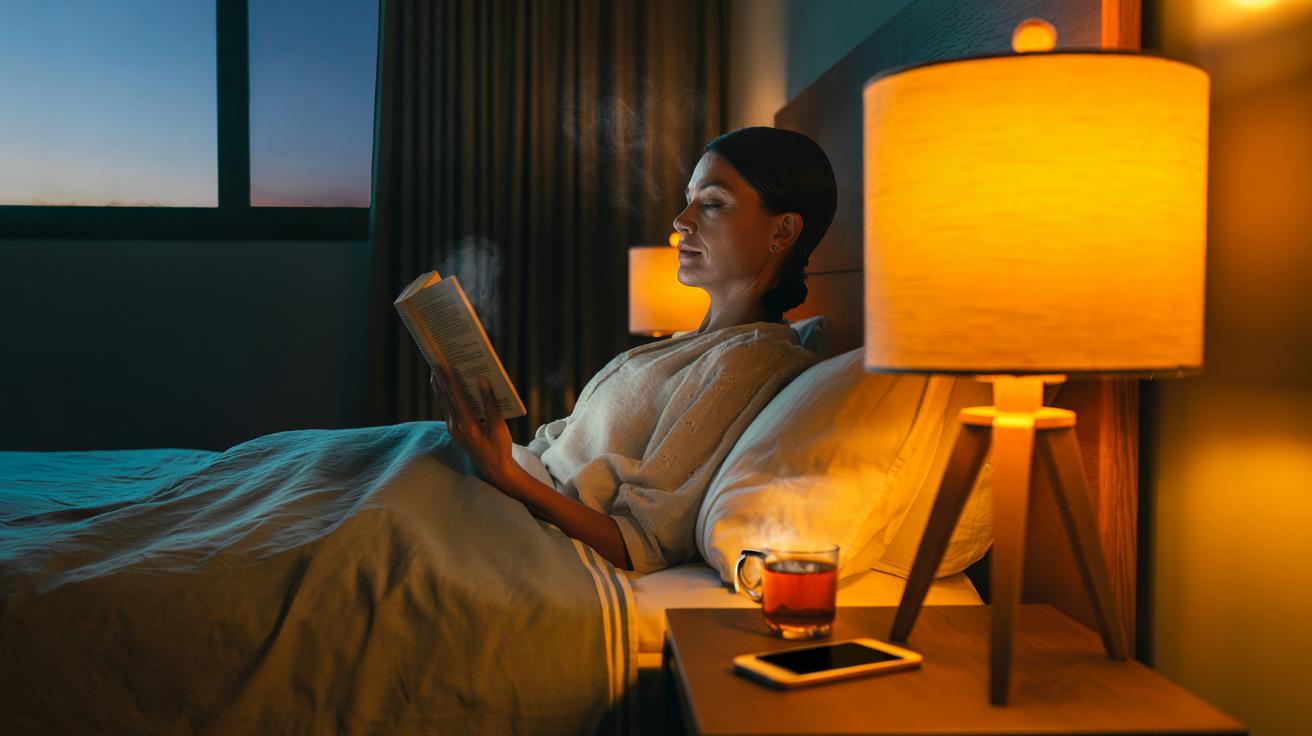
An effective evening ritual starts with a plan and ends with consistency. About three hours before bed, switch from overheads to table and floor lamps on the warmest setting. Two hours out, reduce brightness again, close curtains, and keep screens at their lowest comfortable brightness with a strong blue-light reduction. One hour before bed, aim for a cocoon: quiet tasks, soft lamps below eye level, and minimal contrast. If a light looks harsh to your night-adjusted eyes, your brain likely reads it as daytime. Prioritise safety, but choose the dimmest safe option in hallways and bathrooms.
Use the following guide as a starting template; adjust to your space and chronotype:
| Time to Bed | Target Light (lux) | Colour Temp (K) | Suggested Actions |
|---|---|---|---|
| T−3 hours | 100–200 | 2700–3000 | Switch to lamps, finish tasks needing brightness |
| T−2 hours | 50–100 | 2200–2700 | Close blinds, enable device night modes, low TV brightness |
| T−1 hour | <30 | ≤2200 | Reading, stretching, bathing; no work emails or intense chats |
| Lights out | 0 | — | Dark room; use dim red/amber night light only if needed |
| Morning | Daylight | 5000–6500 | 5–30 min outside to anchor the clock |
Designing a Home Lighting Plan that Works
Think in layers: ambient, task, and accent. Overheads are efficient, but at night they flood the eye with glare. Swap to warm-white LEDs (2200–2700 K) in bedside lamps and living spaces, add dimmers, and position light sources below eye level. Choose shades that diffuse hotspots and keep bulbs out of direct view. Blackout curtains and draught-proof blinds stop streetlight and early sun from punching through your melatonin window. For night-time trips, use plug-in amber path lights facing the floor. Make the darkest choice that is still safe for navigating your home.
Devices deserve discipline. Enable Night Shift or Night Light, trim brightness to the minimum that’s comfortable, and hold screens at least arm’s length. Avoid small, piercing LEDs from chargers or routers; cover them or relocate them. If you watch TV, reduce contrast and add a warm bias light behind the screen to ease the retinal load. Consistency matters: align mealtimes, caffeine cut-off, and exercise so the light cues don’t have to work alone. A final touch—cool your bedroom to support the temperature drop that melatonin naturally promotes.
Dim evenings are not an aesthetic fad; they are a biological strategy. By shaping brightness, colour, and contrast each night, you let melatonin rise reliably and invite sleep to arrive without wrestling. The payoff is cumulative: steadier mornings, fewer mid-night wake-ups, and a clock that resists social jet lag. Light is a lever you can pull every day, and the body responds faster than you might expect. What one change—swapping bulbs, adding a dimmer, or redrawing your last hour—will you try tonight to let your lighting ritual do the heavy lifting for your sleep?
Did you like it?4.6/5 (27)