In a nutshell
- 🫁 Slow, deliberate breathing with a brief pause activates the parasympathetic nervous system, improving heart rate variability and baroreflex sensitivity to help lower blood pressure.
- 🕰️ The technique: nasal inhale for 5–6 seconds, gentle 1–2 second pause, and a smooth exhale for 6–8 seconds, repeated for about five minutes at roughly 5–6 breaths per minute.
- 📊 Evidence shows small immediate mmHg drops and larger, steadier reductions over weeks, via improved vagal tone and reduced sympathetic drive—comfort and rhythm matter more than depth.
- 🧭 Track progress with a home monitor: compare systolic and diastolic readings, note how you feel 10 minutes later, and adjust by extending the exhale or shortening the pause if progress plateaus.
- ⚠️ Keep it gentle: avoid strain or dizziness, and seek advice if you have respiratory disease, severe hypertension, or are pregnant; it’s not a silver bullet but a practical ally alongside sleep, movement, and nutrition.
Slow, deliberate breathing has shifted from yoga studios to cardiology clinics for a simple reason: it works. A carefully paced inhale, a brief, gentle pause, and an unhurried exhale can dial down the body’s stress circuitry and lower blood pressure. The star of the story is the parasympathetic nervous system, the “rest and digest” network that steadies the heart and relaxes vessels. When breathing becomes a metronome—calm, consistent, and comfortable—the cardiovascular system follows its lead. The “deep-breathing pause” is a practical way to train this response, requiring only a chair, a few minutes, and your attention. Here’s how it steadies the nerves and why the science behind it is compelling.
Why Slow Inhales Calm the Body
At rest, your heart and vessels are governed by a push–pull between the sympathetic system (geared for action) and the parasympathetic system (geared for recovery). Slow breathing tilts that balance. A prolonged, gentle inhale through the nose reduces breathing frequency, increases heart rate variability, and enhances baroreflex sensitivity—the reflex that helps stabilise blood pressure beat by beat. Nasal inhalation also entrains airflow through the sinuses, where small amounts of nitric oxide are produced, supporting vessel dilation. In essence, slowing the breath slows the body’s internal tempo, creating conditions in which blood pressure can ease downwards.
The “pause” matters. A soft, one to two‑second hold at the top of a comfortable inhale minimises the urge to gasp and gives the baroreflex time to register pressure shifts. That “unhurried checkpoint” reduces respiratory turbulence and primes a steadier exhale, which is when vagal activity typically rises. Think of it as setting the stage: the slow inhale and brief pause lower the system’s arousal, and the extended exhale carries the relaxation through the cardiovascular network. Slow is the stimulus; comfort is the guardrail.
The Deep Breathing Pause: A Step-by-Step Technique
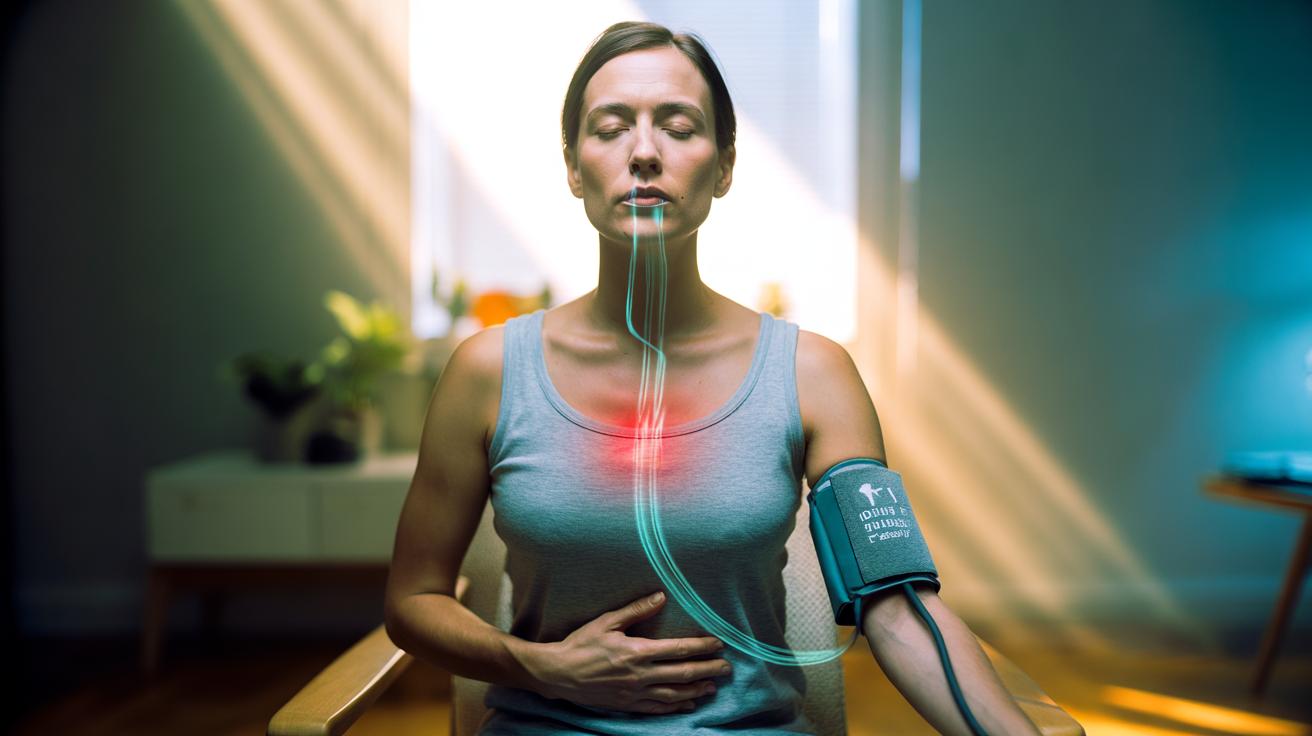
Start seated, spine tall but relaxed, feet on the floor, jaw and shoulders loose. Inhale gently through the nose for about five to six seconds. Add a soft pause of one to two seconds—no straining, no “locking.” Exhale smoothly for six to eight seconds through the nose, or pursed lips if that feels natural. That’s one cycle. Repeat for five minutes to reach roughly five to six breaths per minute. Never chase depth at the expense of comfort; light, slow, and quiet are the guiding cues. If you feel dizzy, shorten the inhale, skip the pause, or stop and resume later.
Consistency builds results. Aim for one or two five‑minute sessions daily—on waking, before a meeting, or prior to bed. You can practise on a train, in a parked car, or during a work break. Pair the routine with a trigger you already do (after brushing your teeth) to cement the habit. A home monitor can capture changes in systolic and diastolic readings before and after sessions. If you have respiratory disease, severe hypertension, or are pregnant, seek medical advice before starting a new breathing programme.
Evidence, Measures, and a Cadence You Can Use
Clinical studies of slow, device‑guided or self‑paced breathing commonly report modest blood pressure reductions—often a few millimetres of mercury immediately after a session, with larger, steadier gains after several weeks of regular practice. Mechanisms include increased baroreflex sensitivity, improved vagal tone, reduced sympathetic drive, and calmer affect, all of which support lower vascular resistance. The most consistently effective range is about five to six breaths per minute, emphasising effortless rhythm over heroic depth. For many, nasal breathing enhances comfort and helps avoid the hyperventilation that can occur with forceful mouth breathing.
Measure what matters. Note your resting rate, session length, and how you feel ten minutes later. Track home blood pressure two to three times a week at the same time of day. You are looking for trends, not perfection. If numbers plateau, adjust the exhale to be slightly longer than the inhale, or shorten the pause to maintain ease. Progress shows up as softer shoulders, warmer hands, steadier pulse—and gradually, steadier readings.
| Component | Typical Setting | What to Notice |
|---|---|---|
| Breaths per minute | 5–6 | Calmer pace without air hunger |
| Inhale | 5–6 seconds, nasal | Light, silent airflow; chest and belly expand |
| Pause after inhale | 1–2 seconds, gentle | No strain; urge to breathe stays mild |
| Exhale | 6–8 seconds, nose or pursed lips | Shoulders drop; heart rate feels steadier |
| Session length | 5–10 minutes | Warmer hands, clearer head, lower tension |
The deep-breathing pause is a small, repeatable act that can steady a hectic day and nudge high numbers in the right direction. By giving the parasympathetic system a clear signal—slow inhale, brief pause, long exhale—you create a feedback loop that soothes the heart and opens the vessels. This is not a silver bullet for hypertension, but it is a practical ally alongside movement, sleep, and food choices. Five quiet minutes can change the tone of the next hour. When will you test your own cadence, and what cues will help you make this calming ritual part of everyday life?
Did you like it?4.4/5 (25)