In a nutshell
- 🧊 A cold milk compress can ease swelling and tenderness; use pasteurised milk for 5–10 minutes, avoid direct ice, and always rinse thoroughly before feeds.
- 🌿 Turmeric (curcumin) shows anti-inflammatory potential but evidence for cracked nipples is limited; use only a tiny pinch, beware staining/irritation, avoid broken skin, and rinse off completely.
- 🧼 Prioritise hygiene and baby safety: fresh cold milk, sterile single-use pads, discard immediately, patch test first, and limit to once daily for up to three days.
- 🧭 Lean on evidence-based care: correct latch and positioning, consider lanolin or brief hydrogels, and use suitable NHS-advised pain relief; technique tweaks often outperform topical remedies.
- 🆘 Know the red flags: fever, spreading redness, pus, or pain lasting over 48 hours—seek help from an IBCLC, health visitor, or GP to rule out mastitis or thrush.
Across the UK, new parents quietly trade tips for easing the sting of cracked nipples, a common hurdle in early breastfeeding. One old-fashioned idea is the cold milk and turmeric compress: a kitchen-cupboard remedy said to calm irritation and brighten angry-looking skin. The science is mixed, but the logic is straightforward—cooling can temper swelling, and turmeric’s main compound curcumin has lab-tested anti-inflammatory properties. The key is safety: hygiene, timing around feeds, and a light touch. Always rinse thoroughly before a feed and stop at the first sign of irritation. Used sensibly and briefly, this combo can sit alongside evidence-based care, not replace it.
Why Cold Milk Soothes Sore, Cracked Nipples
A chilled compress reduces heat, swelling, and throbbing by narrowing surface blood vessels. A cold milk compress works much like a cool flannel, with the added slip of milk fats that can feel softening on dry skin. Importantly, this is about temperature and moisture more than magic. A clean pad soaked in pasteurised cold milk applied for 5–10 minutes can dampen tenderness after a feed or pumping session. Do not apply ice directly or chill the skin for prolonged periods, as that risks irritation or numbness that masks worsening damage.
Any potential soothing comes with hygiene caveats. Milk—animal or human—can harbour bacteria at room temperature. If you try this, use fresh, cold milk, clean gauze, and discard the pad immediately after use. Rinse with lukewarm water, pat dry, and let the nipples air briefly. This method should be occasional, not a routine. If pain persists beyond 48 hours, suspect a latch issue and seek help from an IBCLC or midwife.
What Turmeric Brings—and Where Caution Is Wise
Turmeric’s star molecule, curcumin, shows anti-inflammatory and antimicrobial activity in laboratory studies. That’s why some swear by a whisper of turmeric in a compress to ease redness. But clinical trials on cracked nipples are lacking, and the spice can stain skin a deep yellow. There is no robust evidence that turmeric safely “lightens” nipple pigmentation—the darker hue common in pregnancy and breastfeeding is hormonal and usually normal. At best, calmer skin may look less inflamed; at worst, turmeric may irritate or discolour.
If you experiment, keep it minimal: a tiny pinch mixed into the cold milk, not a thick paste. Patch test on your inner forearm first, wait 24 hours, and avoid altogether if you have eczema, dermatitis, or broken, bleeding skin. Always wash off completely before a feed to avoid infant ingestion. If stinging, rash, or warmth spreads, rinse off and stop immediately. Remember: turmeric is an optional adjunct, not a first-line remedy.
How to Try a Safe, Short-Term Compress
Here is a cautious, short-term approach designed to prioritise hygiene and baby safety:
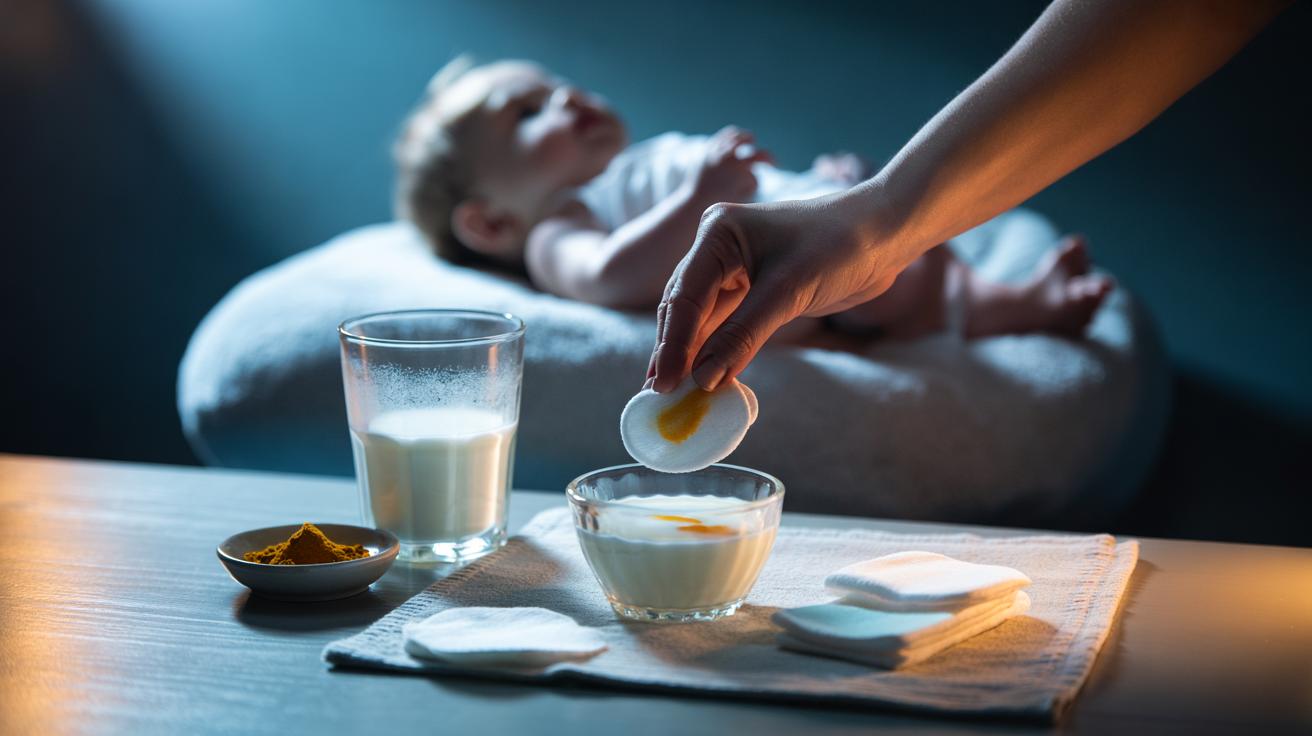
• Chill a small amount of pasteurised milk in the fridge. Stir in a tiny pinch of turmeric (less than 1/16 tsp), or skip the spice entirely if sensitive.
• Dip sterile gauze or a single-use cotton pad, squeeze until damp rather than dripping, and apply to the nipple and areola for 5–10 minutes.
• Discard the pad. Rinse the area with lukewarm water, pat dry with a clean towel, and allow a minute of air exposure.
• Apply a thin layer of purified lanolin or a few drops of expressed breast milk to support the skin barrier.
Only use once daily for up to three days. If pain or cracks persist, switch to evidence-backed options—correcting latch and positioning, hydrogel pads for short bursts, and scheduled rest for badly damaged areas. For pain relief, NHS guidance allows paracetamol or ibuprofen if suitable for you. Stop and seek advice if you note fever, spreading redness, or pus.
| Component | Potential Effect | Evidence Level | Key Risks | Use Notes |
|---|---|---|---|---|
| Cold milk | Cooling reduces swelling; fats feel emollient | Indirect (cold therapy supported; milk-specific data lacking) | Contamination if not fresh; over-cooling irritation | Use pasteurised milk, clean pads, 5–10 minutes max |
| Turmeric | Anti-inflammatory in vitro; may calm redness | Low for this use | Staining, irritation, potential infant exposure | Tiny amounts; rinse off completely before feeds |
| Alternatives | Barrier, moisture balance, pain relief | Moderate to high | Allergy, misuse | Lanolin, hydrogels short-term, latch support |
When to Seek Professional Help and Evidence-Based Alternatives
Cracked nipples often signal a latch or positioning problem. One session with an NHS infant feeding team, health visitor, or IBCLC can transform comfort by adjusting hold, angle, and baby’s mouth position. For pain, paracetamol or ibuprofen may be appropriate; check compatibility with your health history. Hydrogel pads, brief nipple rest with pumping, or temporary shields under professional guidance can assist healing. Consider moisture-balance care: gentle saline soaks, lanolin, or expressed breast milk after feeds.
Red flags demand prompt medical advice: fever or flu-like symptoms, a wedge of hot redness suggesting mastitis, shiny white nipples with stabbing pain (possible thrush), yellow crusting, or deep fissures that bleed. If symptoms don’t improve within 48 hours, prioritise assessment over home remedies. The aim is to maintain breastfeeding comfortably, not to push through severe pain. Safe, hygienic care plus expert support typically restores feeding and confidence quickly.
Cold milk and a whisper of turmeric can feel soothing, yet they are best seen as gentle adjuncts rather than cures. Baby safety, cleanliness, and effective latch will always matter more than any spice. If you try a compress, keep it short, light, and followed by a thorough rinse, and pivot to proven care if relief is fleeting. Many parents find that small technique tweaks outshine any topical trick. What comfort measures have genuinely helped you settle soreness while you arranged proper breastfeeding support—and what will you try next time?
Did you like it?4.5/5 (20)