In a nutshell
- 🌱 Coffee grounds make a smart mulch for flower beds, adding ~2% nitrogen, organic matter, and near‑neutral pH to improve soil structure, moisture retention, and microbial life.
- 🧪 Nitrogen drives chlorophyll, stems, and leafy growth; grounds provide a slow-release trickle that supports steady vigour without the surge that can suppress flowering.
- 🛠️ Apply in a thin layer (≤5 mm) and cap with 20–40 mm of coarse mulch; keep off stems, avoid crusting mats, and limit to 10–20% in potting mixes—don’t use directly on seedlings.
- ☕ Myths debunked: spent grounds aren’t highly acidic; the main risk is physical compaction. If unsure, compost first to stabilise nutrients and reduce any seedling sensitivity.
- 🔁 Source free grounds from cafés, dry clumpy batches, and blend 1:3 with leaf mould or bark for airflow—an easy, sustainable way to enrich borders and cut synthetic fertiliser use.
Britain’s love affair with coffee leaves a daily trail of spent grounds that too often end up in the bin. Used thoughtfully, those crumbly leftovers become a smart mulch for flower beds, delivering gentle nitrogen and organic matter while lightening soil. Handled well, coffee grounds help beds hold moisture, feed microbes, and power leafy growth without resorting to synthetic fertilisers. This guide explains what the grounds actually add, how nitrogen drives plant vigour, and the practical steps to use them safely. You’ll also find clear cautions and a simple plan to integrate café waste into a thriving, more sustainable garden routine.
What Coffee Grounds Add to Soil
Spent coffee grounds contain roughly 2% nitrogen, plus traces of phosphorus and potassium, and a rich mix of carbon-based compounds that soil organisms love. Their fine texture blends into topsoil, improving soil structure by boosting aggregation and helping beds retain moisture without becoming waterlogged. Worms drag particles down, accelerating incorporation and cycling nutrients to the root zone. After brewing, grounds are near-neutral in pH, so they won’t sharply acidify beds. The real gain is biological: microbes decompose the grounds, releasing nitrogen steadily for foliage, stems, and new shoots. Because the carbon-to-nitrogen balance is close to the microbial sweet spot, the nutrient trickle is reliable and plant-friendly.
What about the myths? Thick, fresh layers can crust and repel water; that’s application error, not a flaw in the material. Blend grounds with coarser mulch and keep layers thin to avoid compaction. Caffeine remnants are minimal and break down rapidly outdoors, though it’s wise to avoid using pure grounds around very young seedlings. Used well, coffee grounds behave much like a fine leaf mould: slow, steady, and supportive of a living soil that underpins resilient, colourful flower beds.
| Property | Typical Value | Why It Matters |
|---|---|---|
| Nitrogen content (N) | ~2% by weight | Feeds leafy growth and supports chlorophyll production |
| C:N ratio | ~20:1 | Encourages steady microbial release, not heavy nitrogen lock-up |
| pH (spent) | ~6.5–6.8 | Near-neutral; gentle on most ornamentals |
| Texture | Fine, moisture-retentive | Improves topsoil contact; must be mixed to prevent crusting |
| Mulch blend | 1 part grounds : 3 parts leaf mould/bark | Prevents hydrophobic layers and improves airflow |
Nitrogen: The Engine of Vegetative Growth
Nitrogen sits at the heart of plant metabolism, forming amino acids, nucleic acids, and the green pigment chlorophyll. In flower beds, that means denser foliage, faster recovery after pruning, and robust stems capable of supporting bloom clusters. Coffee grounds offer a slow-release trickle of nitrogen, unlocked by microbes as they digest the organic material. This pace suits ornamental borders, where sudden surges can produce sappy growth attractive to pests. By enhancing microbial activity, grounds also help mobilise existing nutrients already locked in the soil, making the entire bed more efficient.
Balance still matters. Overfeeding nitrogen can drive leaves at the expense of petals. Blend grounds with a general organic mulch and, where flowering is weak, pair them with phosphorus-leaning inputs such as composted poultry manure or bone meal used sparingly. The goal is not a nitrogen blast but a stable nutrient background that supports roots first and flowering on schedule. Think of coffee grounds as the steady background bassline, not a drum solo—present, reliable, and never overwhelming.
How to Use Coffee Ground Mulch in Flower Beds
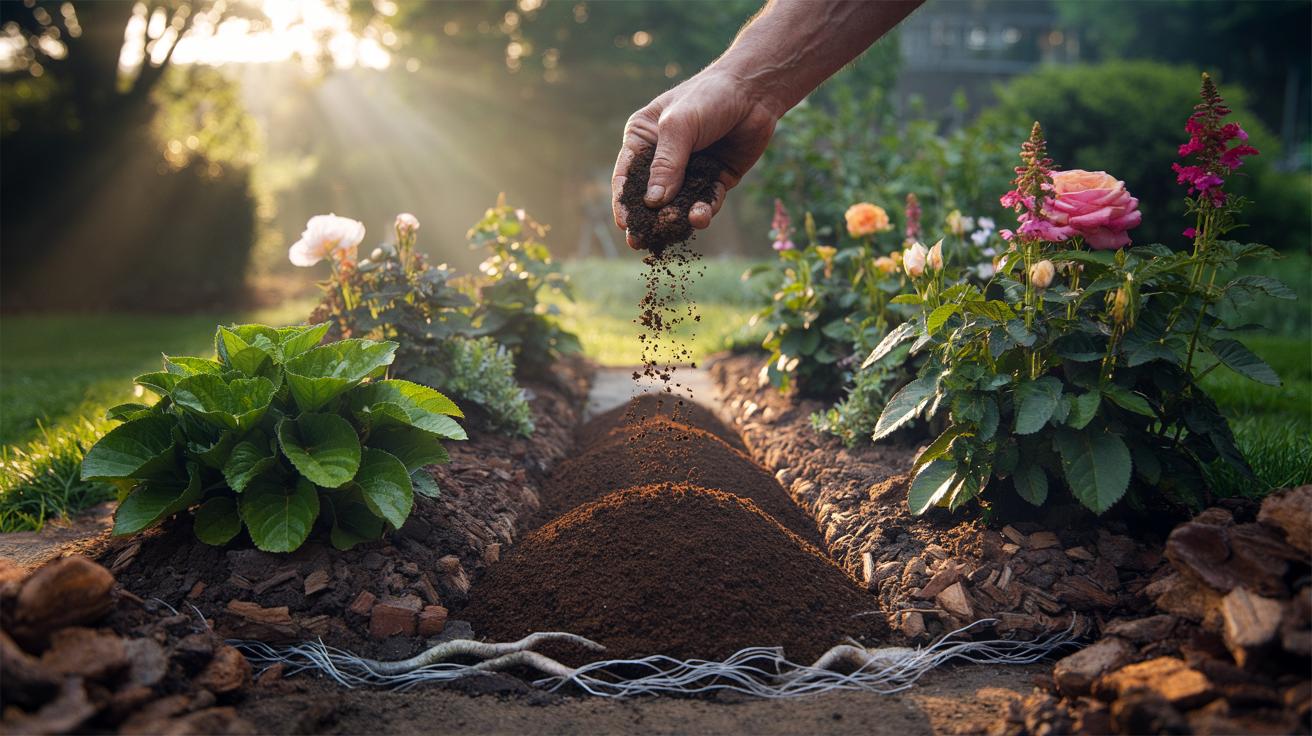
Apply a fine layer of used grounds across the soil surface at no more than 5 mm thick, then cap with a 20–40 mm layer of coarser mulch (leaf mould, bark, or shredded prunings). This sandwich approach prevents crusting, improves airflow, and keeps moisture where roots can reach it. Gently rake to avoid smothering crowns and keep material an inch from stems to deter rot. In spring, use grounds to wake up soil life; in summer, top up lightly after rain to hold moisture; in autumn, fold the remains into beds or compost heaps to finish breaking down over winter.
For containers and seed beds, be selective. Mix at up to 10–20% by volume with potting compost for established plants, but avoid direct use with seedlings until they are well rooted. If cats or slugs trouble a border, a light dusting of grounds under the coarse mulch may add mild deterrence, though results vary. Never heap wet grounds into thick mats—if they dry into a tight crust, re-wet and fluff before blending with bulkier matter.
Risks, Myths, and Sustainable Sourcing
Contrary to lore, spent grounds are not highly acidic. After extraction, they test near neutral and sit comfortably alongside roses, salvias, and hardy geraniums. The bigger risk is physical: a solid mat can shed water and suffocate soil. That’s why blending with a coarser mulch is non-negotiable. Some gardeners report seedling sensitivity where grounds touch tiny roots; treat them as you would a modest-strength fertiliser—useful, but not for nursery-fresh trays. If in doubt, compost first, then mulch. In a hot bin, grounds heat up quickly and speed the pile toward a hygienic, weed-killing temperature.
Sourcing is refreshingly simple. Many cafés are happy to hand over bags of grounds for free—take a lidded tub, and use them within a day to avoid mould. If the batch seems clumpy, dry it thinly on cardboard before mixing. Aim for diversity: combine grounds with leaf mould, shredded straw, or bark fines to keep biology varied. Heavy metals are typically negligible, and paper filters break down harmlessly. Used thoughtfully, coffee grounds are a circular, low-cost boost for soil health, kinder to budgets and the planet than quick-fix salts.
Coffee grounds are not a silver bullet, but they are a nimble tool: a steady nitrogen nudge, a microbial meal, and a moisture-savvy topdressing that helps flower beds look fuller for longer. The trick is restraint and blending—thin layers, coarse partners, and timing that suits your plants’ growth rhythm. With a bucket by the back door and a routine after weekend brews, you can turn a household habit into a soil upgrade. What will your first trial bed be—roses, herbaceous borders, or a bee-friendly mix of perennials and annuals?
Did you like it?4.5/5 (28)