In a nutshell
- 🍳 A splash of vinegar lowers pH so egg white proteins coagulate quickly, corralling wisps while keeping yolks soft.
- 🧪 Use 1–2 tsp of 5% vinegar per litre in water at a bare simmer (~62–65°C); crack into a cup and lower gently.
- 🔥 Timing guide: 3–4 min runny, 4–5 min jammy; underpoach for batch cooking, chill, then rewarm 30–40 seconds.
- 🥄 Flavor and swaps: choose white wine, cider, or malt vinegar; lemon juice or citric acid also work; rinse briefly if sensitive to tang.
- ❗ Myths busted: big whirlpools and salted water don’t tidy whites—controlled heat + light acid deliver tidy, tender poached eggs.
For cooks who dread a feathery blizzard of egg white in the pan, the cure tastes like a salad dressing. A brief splash of vinegar in gently simmering water can transform poaching from a gamble into a near‑certain win. The trick is chemical, not mystical: acid nudges fragile protein structures to set faster, corralling wispy albumen before it strays. Used properly, it won’t turn breakfast into a pickle. The small pH shift at the water’s surface is enough to tame runaway whites while keeping the yolk lusciously soft. Here’s how to use this simple intervention with surgeon-like precision, why it works at the molecular level, and what to swap in if you’re out of malt vinegar.
Why Acidity Tames Runaway Egg Whites
Fresh egg whites are alkaline, sitting around pH 8 to 9, which helps keep proteins such as ovalbumin loosely folded and mobile. When an egg meets hot water, those proteins unfold and tangle—a process called coagulation. Add a touch of acid and the proteins approach their isoelectric points, becoming less repulsive to one another and more eager to bind. This means a thin gel forms quickly at the outer edge of the white, sealing it before it can fray into streamers. The result is a neater silhouette and a tighter, tender exterior.
Temperature plays a quiet supporting role. Egg whites begin setting near 62–65°C, and acid slightly lowers the threshold, so the surface sets while the centre remains supple. Older eggs, whose thinner whites spread more easily, benefit most because the acid compensates for their slack structure. Crucially, you need only a modest dose: enough to alter the micro‑environment around the egg, not the overall flavour of your breakfast.
How to Poach With Vinegar: A Precise, Repeatable Method
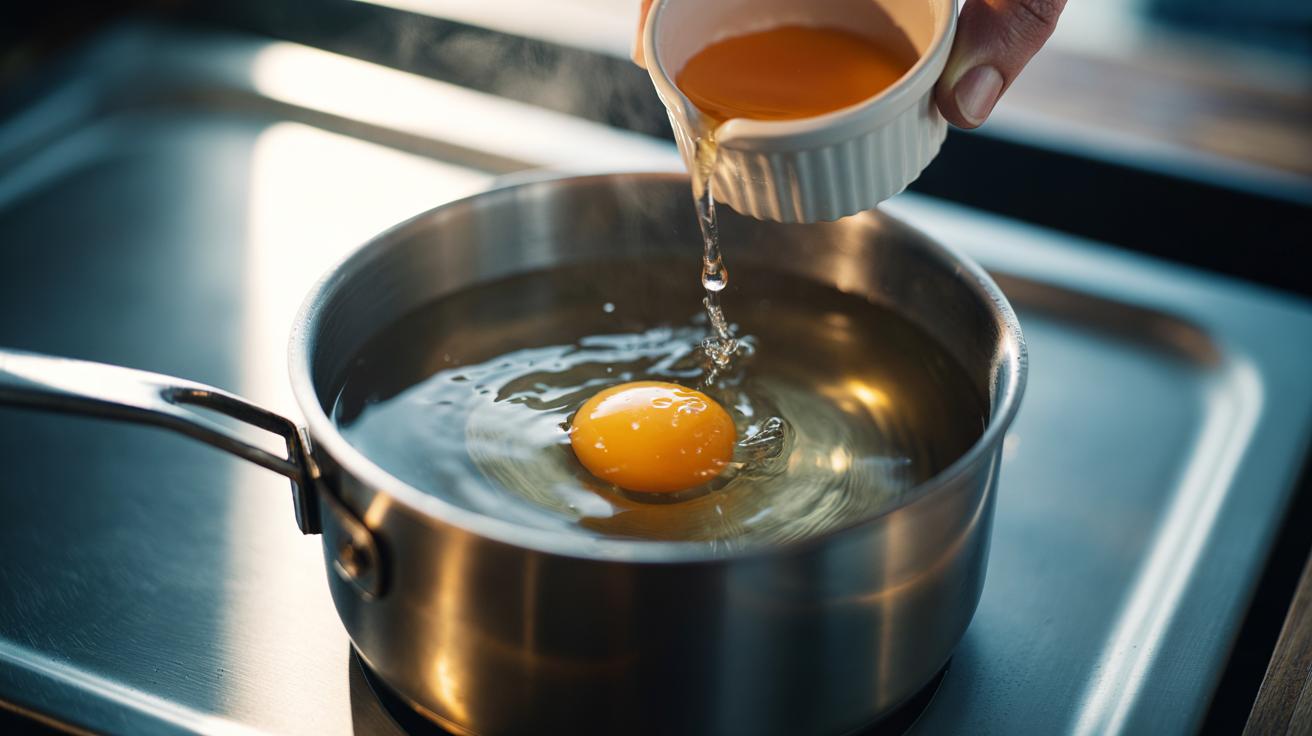
Use a wide saucepan with 5–7 cm of water at a bare simmer—small blips, not rolling boils. Stir in 1–2 teaspoons of 5% vinegar per litre of water; any more risks a tang. Crack each egg into a cup for gentle delivery. Lower the egg from just above the surface and release slowly so the white gathers around the yolk. For a compact shape, swirl the water in a loose vortex only if cooking one egg at a time; otherwise, allow calm water to do the work.
Poach for 3–4 minutes for a runny yolk, 4–5 for jammy. Skim wisps if you like, then lift with a slotted spoon and drain on kitchen paper. A quick dip in warm water can mellow any residual acidity, though at the recommended dose you’ll rarely need it. Season on the plate, not in the pot; salt in poaching water can toughen the exterior without improving shape. For batch cooking, underpoach by 30 seconds, chill in iced water, then rewarm for 30–40 seconds before serving.
Flavor, Safety, and Substitutions
Used judiciously, acidity won’t shout. Malt vinegar brings a malty roundness, white wine vinegar is cleaner, and cider vinegar whispers of fruit. Lemon juice works too, as does a pinch of citric acid, though each option nudges aroma differently. The goal is control, not flavour—just enough acid to set the white’s surface while leaving the yolk rich and unctuous. For sensitive palates, rinse the finished egg in warm water, or favour a neutral vinegar. Note that poaching does not fully pasteurise the yolk; frail immune systems may prefer firmer centres. Soft water can encourage spreading; acid helps normalise performance regardless of mineral content and egg age.
| Acid | Typical pH | Dosage per Litre | Taste Notes |
|---|---|---|---|
| White Wine Vinegar (5%) | ~2.6 | 1–2 tsp | Clean, minimal aroma |
| Cider Vinegar (5%) | ~3.1 | 1–2 tsp | Light fruitiness |
| Lemon Juice | ~2.0 | 1 tsp | Citrus tang |
| Citric Acid (powder) | — | Pinch (0.1–0.2 g) | Neutral, precise |
Common Myths, Tested
Myth one: a dramatic whirlpool is essential. It can help a single egg by wrapping the white inward, but with multiple eggs it causes collisions and ragged tails. Keep the water serene; the true work is done by controlled heat and a whisper of acid. Myth two: salty water tightens whites. In practice, salt can firm the exterior unevenly and does little to prevent feathering; it’s better reserved for finishing. Myth three: vinegar makes eggs taste sour. Not at the recommended 1–2 teaspoons per litre—taste panels struggle to detect it once the egg is drained.
Technique trumps gimmicks. Use the freshest eggs you can find for plump whites, control temperature below a boil, and dose vinegar sparingly. Crack into a cup, lower gently, and give the egg time. For cafés and home brunches alike, this disciplined approach turns a temperamental task into an easy service routine, delivering egg whites that are tidy, tender, and beautifully set around a molten centre.
In the end, the magic is measurable: a small pH nudge that coaxes protein to behave. That splash of acid creates order at the rim of the egg, saving you from cloudy water and preserving a yolk that runs like gold. With fresh eggs, a calm pan, and a teaspoon or two of vinegar, poaching becomes less art, more craft—still romantic, but reliably repeatable. Once you feel the difference, it’s hard to go back. What twist will you try next—switching acids, adjusting heat, or timing to suit everything from a smoked haddock kedgeree to a classic eggs Benedict?
Did you like it?4.5/5 (24)