In a nutshell
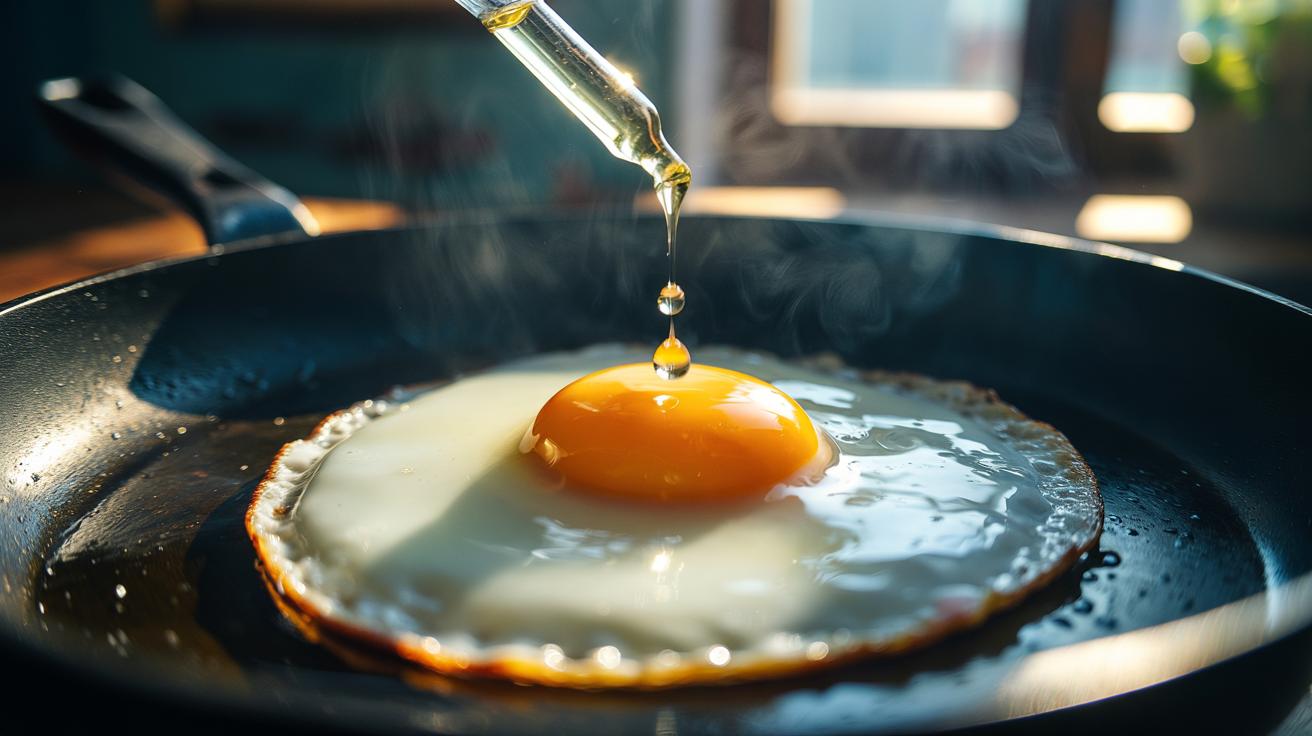
- 🍳 A single drop of vinegar lowers the white’s pH, prompting albumen proteins to coagulate at the edge so fried eggs keep neat, compact borders.
- 🧪 Heat-plus-acid synergy: acetic acid reduces charge repulsion while heat unfolds proteins, setting the perimeter instantly without toughening the centre.
- 🛠️ Method: medium-low heat, oil or butter, crack into a ramekin, then dab 1–2 drops on the thinning edge (or a 1:3 vinegar–water mist). Avoid dripping into hot fat to prevent spatter.
- 🥄 Choice matters: white distilled vinegar is clean and neutral; rice vinegar is gentler; lemon juice sets fast but adds citrus. Avoid dark/sweet vinegars that tint or sweeten the white.
- ⚠️ Troubleshooting: If you smell vinegar, you used too much—apply a micro-dose directly to the white, not the oil. For older eggs, use a ramekin, season at the end, and keep heat moderate to prevent rubbery edges.
For anyone who loves a sunny-side-up with tidy borders, the ragged fringe of runaway egg white can feel like sabotage. The smallest culinary hack solves it: add a whisper of vinegar. With a single drop, the albumen tightens, the edge sets, and the egg stays compact without a chef’s ring. This isn’t a gimmick; it’s protein chemistry made practical for breakfast. Acid lowers the pH of the white, nudging proteins to bond sooner and stop spreading. Because the outer rim hits heat first, a micro-dose of acid there locks the shape instantly. The trick is precise, fast, and so minimal you won’t taste it—only see the clean result.
Why a Drop of Vinegar Tames Runaway Egg Whites
Egg whites are mostly water and albumen proteins such as ovalbumin and ovotransferrin. In a raw egg, those proteins repel one another thanks to a relatively high pH, so the white flows thin and wide. Heat eventually denatures those proteins, but until that point the edge can frill into a lacy, untidy halo. Acetic acid in vinegar lowers the pH locally, reducing charge repulsion so the proteins coagulate more readily at the contact line with the pan. Result: the perimeter sets before it can creep, creating a neat, well-defined circle.
The effect is immediate because heat and acid work together. Heat unfolds the proteins; acid encourages them to link. That synergy pushes the edge to set at a slightly lower temperature than the rest of the white, stabilising the shape while the centre stays tender. You’re not pickling your breakfast—this is a microdose measured in drops. Used correctly, you get control without sourness, avoiding the need for high flames or heavy rings that can toughen the white.
Step-by-Step: The Quick Vinegar Method for Tidy Fried Eggs
Warm a non-stick or well-seasoned pan over medium-low heat and add a thin film of oil or butter. Crack the egg into a ramekin for easier placement. Slide the egg into the pan and let the white begin to cloud at the base. Now the move: touch a clean finger or a dropper to plain white vinegar and dab one or two tiny drops along the outer white where it thins. The perimeter will firm almost at once.
Prefer extra control? Make a 1:3 mix of vinegar and water in a small atomiser and give a single, light spritz only at the edge. Keep the pan heat steady; too hot and the white blisters, too cool and it stews. Tilt the pan slightly so fat pools around the edge to encourage a gentle, even set. For over-easy, flip briefly once the edge is sealed. Season after the white sets to avoid drawing out moisture prematurely.
Avoid dropping vinegar straight into hot fat—it will sizzle and can spatter. If you see vigorous bubbling, lift the pan off the heat for a second. Used sparingly and placed on the white rather than in the oil, the acid acts like a precise coagulant rather than a flavouring.
Choosing the Right Acid and Pan for Clean Edges
Any kitchen acid works, but some are better suited. White distilled vinegar is neutral and clear, ideal when you don’t want colour or aroma. Rice vinegar is gentler if you’re cautious about flavour. Lemon juice also sets quickly but adds citrus notes; use sparingly with butter for a café-style finish. Avoid dark or sweet vinegars such as balsamic, which can tint the white and introduce caramel notes. Fresh eggs spread less than older eggs, but even older whites snap into line with a drop of acid.
Pan choice matters. Non-stick is easiest for beginners, while carbon steel or cast iron give lovely heat stability if they’re well seasoned. Stainless can work if you preheat and use enough fat to prevent sticking. With reactive pans, never pool vinegar—keep it to the tiniest touch on the white. A dropper, teaspoon tip, or fingertip is the best applicator for accuracy and safety.
| Acid Option | Strength/Notes | Typical Amount Per Egg | Flavour Impact | Best For |
|---|---|---|---|---|
| White distilled vinegar | Clean, 5% acetic | 1–2 drops or 1 mist | Minimal | Everyday tidy edges |
| Rice vinegar | Mild acidity | 2–3 drops | Very low | Delicate flavours |
| Apple cider vinegar | Fruity notes | 1–2 drops | Light apple aroma | Rustic plates, toast |
| Lemon juice | Citrus acid (citric) | 1 small drop | Noticeable if overused | Butter-basted eggs |
| Pickle brine | Salty, acidic | 1 drop | Herby/savoury | Breakfast sandwiches |
Taste, Texture, and Troubleshooting
A well-executed vinegar drop keeps the edge neat and the centre supple. If you want crispy lace, use more heat and fat; if you want a plush white, keep the heat moderate and let the acid do the shaping. If you can smell vinegar after cooking, you used too much or puddled it in the pan. Switch to a micro-drop on the white, not in the oil. If the white looks tough or rubbery, reduce both heat and acid—remember, the reaction is fast, and excess acid can over-firm the rim.
Worried about pan seasoning? A minuscule drop won’t strip a well-maintained carbon steel or cast iron, but avoid lingering pools. For older eggs with looser whites, crack into a ramekin and pour gently to contain spread before applying the acid. Add salt at the end; early salting can pull liquid into the pan and encourage wisps. For a café gloss, spoon hot butter over the yolk once the edge is set—the egg keeps its shape without harsh heat.
This tiny intervention is a cook’s shortcut to professional-looking fried eggs: shape without stress, precision without gadgets. It saves time on busy mornings and rescues older eggs from untidy sprawl, all without compromising flavour. When you next heat a pan, keep a dropper or ramekin of white vinegar to hand and watch the edge seal like a drawn line. Once you’ve seen the tidy ring appear, it’s hard to go back. What other small, science-led tweaks could elevate your everyday breakfasts into something quietly brilliant?
Did you like it?4.4/5 (28)