In a nutshell
- 🍊 Salt sweetens by contrast: Sodium dampens bitter receptors via mixture suppression, boosting perceived sweetness and citrus aroma without adding sugar.
- 🧂 Technique matters: Use a tiny pinch (~0.2–0.3 g) of fine or iodised salt on cut segments, wait 15–30 seconds, and serve at room temperature for maximum effect.
- 👅 Sensory recalibration: Salt increases salivation, softens terpene harshness (e.g., limonene, linalool), and delivers a plusher texture and cleaner finish the palate reads as “sweeter.”
- 🍉 Works beyond oranges: Grapefruit benefits most from bitterness reduction; pineapple gains roundness; watermelon feels juicier—always start with a tiny dose.
- ⚖️ Practical and health tips: Keep the sprinkle minimal, adjust after tasting, consider sodium needs (especially for children), and aim for clarity not brininess.
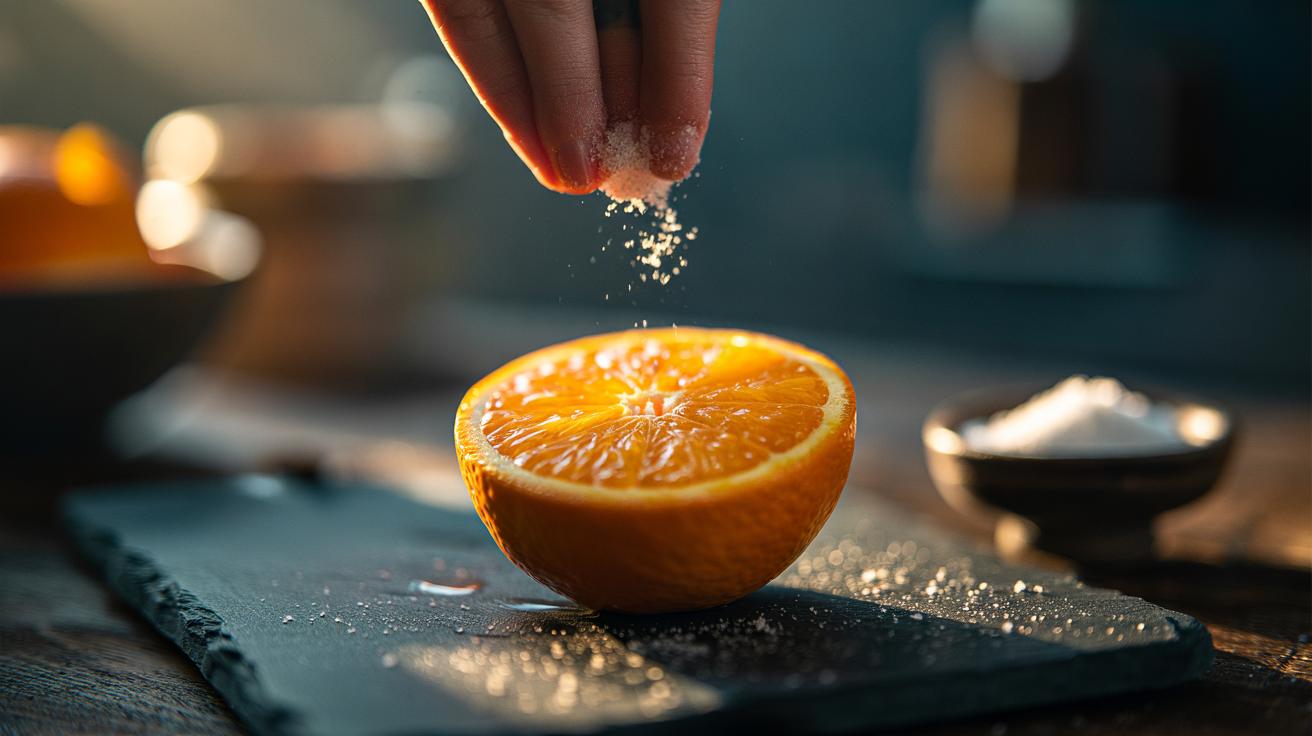
In Britain, we often pair an orange with lunch boxes or breakfast bowls, yet a small culinary trick can make that fruit sing: a discreet sprinkle of salt. It sounds counterintuitive, but a hint of salinity can make an orange taste sweeter and softer on the palate. Food scientists have long known that sodium dulls bitterness and amplifies pleasant flavours, a phenomenon you can test in seconds at the kitchen table. A pinch is enough to rebalance flavour without making the fruit taste salty. From Seville’s bitter edge to a navel’s gentle tang, the right dose of salt nudges your taste receptors so the orange’s natural sugars step into the spotlight.
Why Salt Makes Oranges Taste Sweeter
Salt’s sweetening magic begins with your taste buds. On the tongue, sodium ions interact with epithelial sodium channels and blunt the activity of certain bitter receptors. This dampening effect, known as mixture suppression, reduces the perception of bitterness from the orange’s pith and peel oils, allowing sweet perception to climb. At the same time, low-level salinity can heighten the release of aromatic compounds, meaning more orange blossom notes reach your nose retronasally. A tiny pinch can shift the whole flavour balance, lifting sweetness without adding sugar. Crucially, the effect is most noticeable where bitterness lingers—segments near the albedo or slightly underripe fruit—so the salt acts as a fast-track correction for an uneven bite.
There’s also a tactile side to the story. Salt stimulates salivation, bathing the tongue and dissolving sugars more quickly. As juices mingle with saliva, perceived viscosity rises and flavours seem fuller. The outcome is not a new sweetness but a reframed taste profile: less harshness from terpenes such as limonene and a cleaner finish. In tasting panels, that translates into brighter citrus, bolder juiciness, and fewer sharp edges. The palate reads “sweeter” because the competition—bitterness—has been turned down.
How to Sprinkle Salt the Smart Way
Technique matters. Slice the orange into wheels or segments, then add a pinch—roughly 0.2–0.3 g per medium orange—of fine table salt or iodised salt so it dissolves quickly on the moist flesh. Wait 15–30 seconds for contact time; that brief pause helps ions mingle with surface juices. If you prefer a lighter crunch, use flaky sea salt, but crush it between fingers for more even coverage. You only need a pinch; more than that risks tipping the balance. Room-temperature oranges taste sweeter than fridge-cold ones, so let fruit warm for ten minutes to maximise payoff.
For a flavour lift, add a twist of black pepper or a dusting of chilli-lime seasoning for sweet-heat contrast. If sodium is a concern, touch the cut surface with salted fingers, then rinse lightly; the saline residue still smooths bitterness. Those watching blood pressure should keep the dose tiny or skip altogether. For children, use an even smaller sprinkle and demonstrate the “taste, then stop” rule. The goal is clarity, not brininess, so treat salt as a tool, not a topping.
The Science in a Bite: Taste, Texture, and Temperature
Bitterness in oranges comes not only from the flesh but also from the albedo and volatile terpenes in the zest. Salt dampens bitter receptor activity while nudging acidity and sweetness toward harmony, a three-way balance your brain reads as “ripe and juicy.” Temperature plays a quiet role: cold suppresses sweetness and aroma, whereas moderate warmth releases more linalool and limonene into the air. If the fruit tastes flat from the fridge, warmth plus a pinch of salt can restore sparkle. Increased salivation from salt also lubricates the bite, making segments feel plusher and the finish cleaner.
There’s minimal osmosis at this scale, but surface moisture helps salt dissolve and spread. That’s why salting works best on cut faces or peeled segments rather than on intact peel. In sensory terms, you’re engineering a tiny recalibration: suppressing the “noise” of bitterness so the “signal” of sugar and citrus oils can shine. The trick thrives on moderation, and it flatters everything from tangy clementines to late-season navels.
Quick Comparisons Across Fruits
Salt’s balancing act extends beyond oranges, especially where bitterness or sharp acidity dominate. Grapefruit, famously pithy, benefits even more dramatically; pineapple’s enzymes and tartness gain roundness; watermelon, while not bitter, tastes sweeter because salt sharpens contrast and boosts juiciness perception. Think of salt as a dial that tunes competing tastes into a coherent chord. Keep the doses tiny and tailored—high-acid fruit usually needs slightly less than bitter fruit. Combine with temperature control: chilled watermelon plus a few crystals, room-warm pineapple with a whisper of fine salt. A simple guide below helps you judge the pinch.
| Fruit | Bitterness/Acidity | Salt Effect | Suggested Pinch |
|---|---|---|---|
| Orange | Light bitterness, moderate acid | Suppresses pithy notes; lifts sweetness | ~0.2–0.3 g |
| Grapefruit | High bitterness | Major bitterness reduction; cleaner finish | ~0.3 g |
| Pineapple | High acid, enzymatic sting | Rounds sharpness; enhances fruitiness | ~0.2 g |
| Watermelon | Low bitterness, low acid | Increases juiciness perception; contrast | Few flakes |
Whichever fruit you choose, start small and taste after 15 seconds. If the fruit still bites back, add a grain or two more—never a shower. Pairings such as mint with salted orange segments, or yoghurt and a salted citrus salad, show how savoury cues amplify sweetness without sugar overload. Less is more, and timing is everything.
Salting an orange is not a gimmick but a precise nudge to your senses: it mutes bitterness, coaxes sweetness forward, and clarifies aroma in a single, simple gesture. The technique respects the fruit; it doesn’t disguise it. Keep the pinch tiny, mind the temperature, and choose a salt that dissolves quickly. In a world chasing ever-sweeter snacks, this is a low-tech, high-payoff trick for better fruit. Will you try a pinch on your next orange and see how your palate resets, and what other everyday foods might benefit from the same deft touch?
Did you like it?4.5/5 (24)