In a nutshell
- 🧪 Salt reduces bitterness in grapefruit by dampening TAS2R bitter receptors and unmasking sweetness; the fruit isn’t sweeter chemically, but perception shifts.
- ⚡ Instant effect: dissolved Na+ in saliva quickly alters taste signalling, making bitterness recede while aroma clarity and brightness increase.
- 🍊 How to use it: start with a ripe, chilled grapefruit and a light sprinkle (about 0.3–0.5 g) of flaky sea salt; avoid over-salting, consider a 3:1 salt:sugar mix, and skip KCl if you detect bitterness.
- 🌍 Cultural and culinary angles: echoes fruit-with-salt traditions in Mexico, India, and the US South; pair with yoghurt, feta, or savoury salads to amplify contrast.
- 🩺 Nutritional note: a small pinch adds minimal sodium while curbing added sugar; those managing blood pressure should keep portions modest and season just before serving.
Salt on grapefruit sounds like an old aunt’s trick, yet the result is startling: a quick sprinkle softens the bite and seems to lift a latent bloom of sweetness. It is not culinary sleight of hand but a neat piece of sensory science. When NaCl meets a sharp, pithy citrus like grapefruit, it tamps down bitter notes while brightening fruit aromas, reshaping what our palate prioritises. The fruit does not become sugary; your brain simply perceives it as sweeter because the bitterness is dialled down. Here is how the chemistry plays out on the tongue, and how to use this tiny tweak with confidence at the breakfast table.
The Taste Science: Why Salt Makes Bitterness Recede
Bitterness in grapefruit largely stems from compounds such as naringin and related flavonoids that activate bitter receptors (notably the TAS2R family). A few grains of salt release sodium ions that interact with multiple taste pathways. On the one hand, sodium boosts the activity of certain sweet and umami signals; on the other, it blunts bitter signalling by interfering with receptor activation and downstream transduction. Reduce bitterness even marginally and the available sweetness feels more prominent, a perceptual rebalancing that’s measurable in sensory panels.
This is not merely about masking. Salt modifies the electrical environment of taste cells and can alter how ion channels open and close, changing the intensity your brain assigns to competing flavours. The effect is immediate because it is local: the crystals dissolve in saliva, the ions meet the receptors on your tongue, and the brain updates the flavour picture within seconds. That is why a light sprinkle feels “instant”—no marinating or cooking required for the transformation.
Instant Balancing Act: What Happens on Your Tongue
When you salt a wedge, saliva dissolves the crystals, delivering Na+ to taste buds. Sodium enhances water activity and can slightly modulate the release of aromatic volatiles, helping the fruit smell fruitier. Crucially, sodium dampens the bitterness pathway enough that sweetness perception rises from the background. The sum is a cleaner, rounder bite where grapefruit’s tang and perfume stand out while the harsh edge retreats. Think of it as turning down a loud instrument so the melody can be heard.
In practical terms, the perception shift looks like this:
| Taste Component | Effect of Salt (NaCl) | Perceived Outcome |
|---|---|---|
| Bitterness | Receptor signalling suppressed | Lower harshness |
| Sweetness | Competing signals unmasked | More sweetness noticed |
| Aroma | Volatiles seem clearer | Fruit tastes fresher |
| Acidity | Contrast sharpened | Brighter, less sour bite |
Nothing sugary has been added; perception has been reframed by adjusting the balance of signals. That is the quiet power of a pinch of salt.
How to Use Salt on Grapefruit: Methods, Variations, and Pitfalls
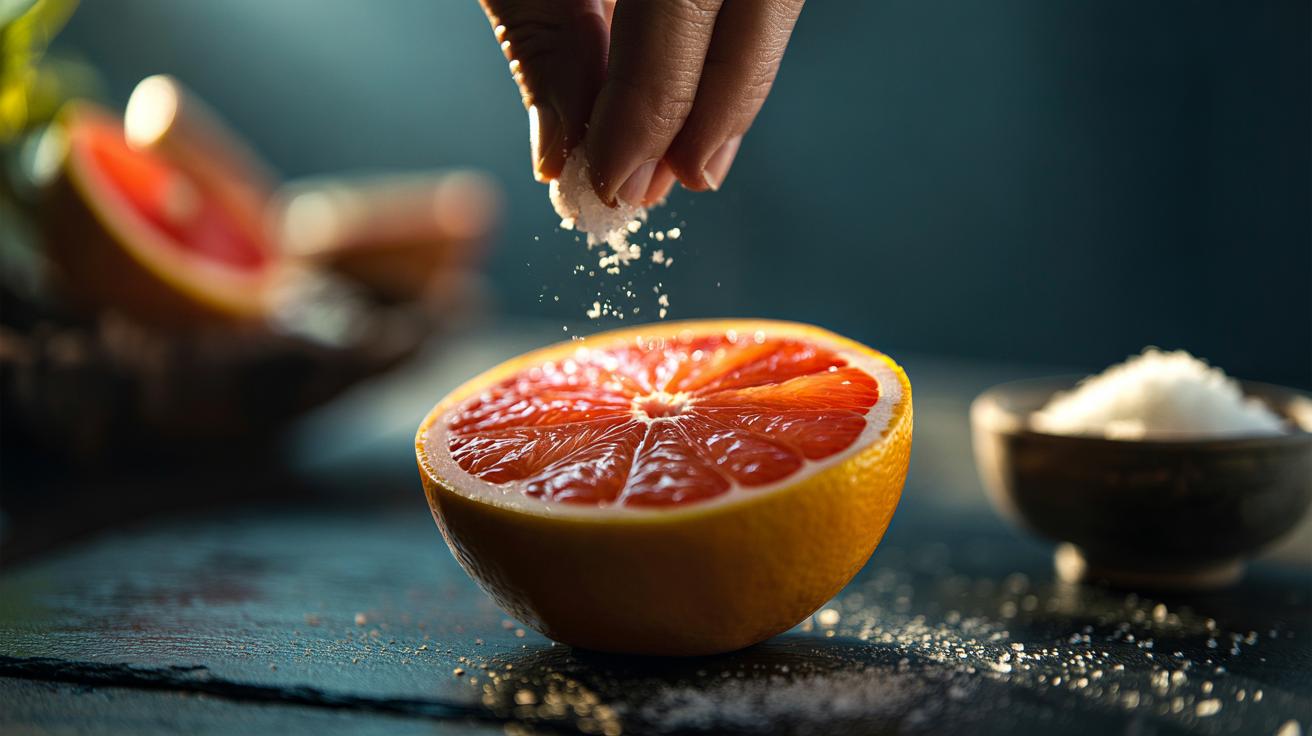
Start with a ripe, chilled grapefruit. Halve it, segment if you like, and sprinkle an even dusting—about a generous pinch per half, roughly 0.3–0.5 g of sea salt. Taste before adding more. Flaky salts (Maldon-style) spread gently and dissolve quickly; fine table salt works but is punchier. Resist over-salting: the goal is to quiet bitterness, not to taste saline. If you prefer warmth, add a few chilli flakes alongside the salt for a Mexican-style fruit seasoning effect that makes the citrus feel juicier.
For variety, try a micro-sprinkle of salt and sugar combined, say 3:1, to amplify the perception of sweetness without a heavy sugar load. A crack of black pepper or a squeeze of lime can add complexity. Steer clear of large doses of iodised salt if you notice metallic notes, and be cautious with potassium chloride (“low-sodium” salt), which can taste bitter. If you’re sodium-conscious, limit the portion: a pinch adds flavour impact for fewer milligrams than many spreads or cereals, often under 150 mg of sodium depending on the hand and salt type.
Beyond Breakfast: Culture, Pairings, and Nutrition
The salt-fruit pairing isn’t a British eccentricity. Across Mexico, salted chilli blends lift mango and pineapple; in parts of India, guava gets a saline dusting; in the American South, watermelon welcomes a pinch. Grapefruit fits that lineage elegantly. Broiled halves with a light crust of sugar and a whisper of salt bridge dessert and digestif. Salt provides the structural harmony that lets citrus oils, florals, and sweetness sing together. Pair salted grapefruit with creamy yoghurt, feta, or avocado toast to exploit contrast, or slice it into savoury salads with fennel and olive oil.
Nutritionally, the trade-off is modest when judicious. A pinch of salt delivers a strong flavour shift for minimal sodium, especially if you choose flaky crystals that feel generous but weigh less. The payoff: reduced temptation to add spoonfuls of sugar. For those managing blood pressure, keep the pinch small and balance the day’s intake. Stored in the fridge, pre-segmented grapefruit benefits from seasoning right before serving, when the saline sparkle is at its brightest.
In the end, the sprinkle works because it changes what your palate hears rather than what the fruit contains. Salt muffles bitterness, reveals sweetness, and clarifies aroma, making grapefruit taste like a sunnier version of itself. It is a tiny intervention with outsized sensory dividends. Tomorrow morning, before you reach for the sugar bowl, try the lightest dusting of salt and pay attention to how the first bite blooms. What other familiar foods might open up if you adjusted the seasoning by a single, thoughtful pinch?
Did you like it?4.4/5 (30)