In a nutshell
- 🧪 The science: capillary action in kitchen roll wicks hot fat away fast, keeping bacon dry so the Maillard reaction delivers ultra‑crispy results.
- 📻 Method: use the microwave only—layer kitchen roll, arrange rashers in a single layer, cook ~1 minute per rasher then 15–20s bursts, and rest 30–60s for carryover crisping.
- ⚠️ Safety: never use paper towel in an oven or on the hob; handle hot plates and fat carefully, and dispose of or save drippings responsibly (avoid the sink).
- ⚖️ Comparison: microwave + towel is fastest and cleanest; an oven rack suits batch cooking; a skillet brings smoky flavour with a chewier bite—pick by time, texture, and clean-up.
- 🥓 Pro tip: crispness equals dryness—keep rashers in a single layer, wick fat quickly, allow a short rest, and serve immediately for maximum snap.
Forget skillet acrobatics and oil-spattered aprons. The clever way to get ultra-crispy bacon relies on an everyday hero: the humble paper towel—or, as many in the UK prefer, kitchen roll. By drawing melted fat away the moment it renders, it prevents rashers from simmering in their own juices and turning floppy. The effect is surprisingly quick, satisfyingly tidy, and elevates the crunch while preserving savoury depth. The secret is fast wicking of rendered fat, not extra heat. Here’s the science behind the trick, the safest way to do it, and when to choose alternatives so you can tailor crispness to your taste and your timetable.
Why Paper Towel Makes Bacon Crisp Faster
The paper towel trick works because of capillary action. Cellulose fibres in kitchen roll create tiny channels that pull liquid along their length, a bit like roots pulling water from soil. As the bacon renders, those fibres actively draw hot fat away from the surface, keeping the meat dry enough for the Maillard reaction—the browning that delivers crunch and deep, savoury flavour. Remove surface moisture, and you swap gentle steaming for effective frying. By evacuating fat quickly, you stop the rasher poaching in its own juices and unlock that shatteringly crisp finish.
There’s also a mechanical benefit: the towel offers light contact that supports the bacon, preventing it from curling wildly while still allowing steam to escape. Less liquid means less spitting and fewer scorched spots. Because fat is a poor conductor of heat compared with direct contact, especially in the microwave, wicking increases effective heat transfer to the bacon itself. That’s why crispness improves even at modest power. The towel’s fibres catch micro-droplets too, cutting mess and delivering consistent, golden results with minimal fuss.
How To Use Kitchen Roll Safely: Step-By-Step
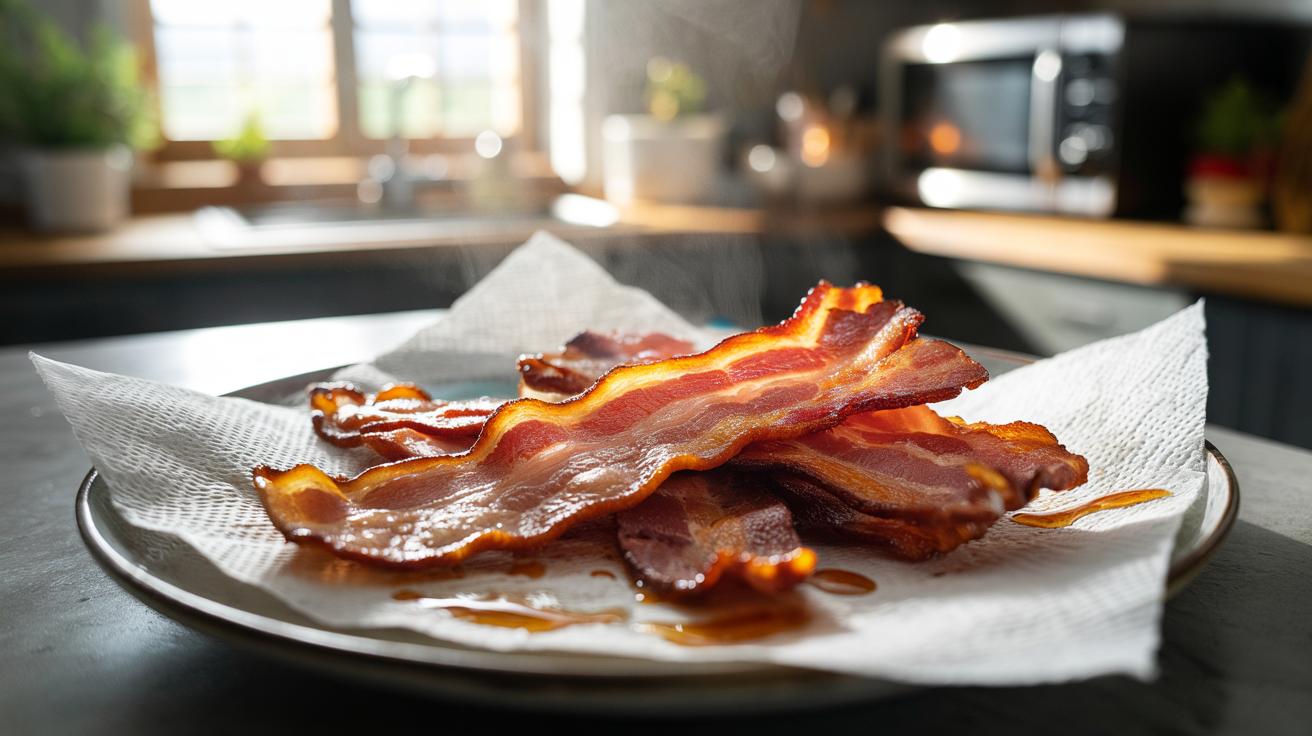
Use this method in the microwave only. Line a microwave-safe plate with two layers of kitchen roll. Lay bacon in a single layer, edges not overlapping, then cover with one more sheet to catch spatters. For a typical 800–900W unit, cook 1 minute per rasher to start, then add 15–20 second bursts until the bacon darkens and the sizzle subsides. Thicker cuts may need a little longer. Let the bacon rest for 30–60 seconds; carryover heat finishes the crisping as remaining moisture evaporates. Lift with tongs, and if the towel is saturated, swap in a fresh layer before the next batch.
Never use kitchen roll in a conventional oven or on the hob — it’s a fire risk. For oven baking, use a wire rack over a tray lined with parchment or foil; for the pan, blot with kitchen roll only after removing from heat. Pour cooled drippings into a jar (don’t send fat down the sink), or save for cooking. Choose recycled, unbleached towels where possible, and check local guidance on composting greasy paper. Safety, restraint, and supervision are the watchwords: hot fat can burn, so handle the plate and towels carefully and keep a clear workspace.
Comparing Methods And Results
If your priority is speed and minimal mess, the paper towel method is hard to beat. Batch cooking for a crowd, though, favours the oven rack, while purists who want smoky edges may still prefer the skillet. The table below summarises how each approach stacks up for six rashers, assuming standard supermarket bacon. Match the technique to your time, texture, and clean-up tolerance.
| Method | Heat/Setting | Typical Time (6 rashers) | Crispness | Mess/Splatter | Notes |
|---|---|---|---|---|---|
| Microwave + Paper Towel | 800–900W | 4–6 minutes total | Very crisp, uniform | Low | Fast; excellent wicking; watch carryover cooking |
| Skillet + Blotting | Medium heat | 8–12 minutes | Crisp with chewy bite | Medium–High | Great flavour; blot on rack and towel after cooking |
| Oven Rack (No Paper Towel) | 200°C fan/180°C static | 15–20 minutes | Even, adjustable | Low–Medium | Best for batches; fat drips to tray lined with parchment |
The microwave-and-towel technique shines when you want ultra-crispy rashers fast, for BLTs or crumbling over salads. The oven rack delivers consistency and hands-off ease, while the skillet excels at smoky caramelisation. Whichever route you take, remember the golden rule: crispness equals dryness. That’s why the towel trick works so reliably—by moving fat away at speed, it primes the surface for browning and avoids sogginess. Keep portions in a single layer, allow a brief rest, and serve immediately for the best snap and savour.
In the end, kitchen roll isn’t magic; it’s smart physics applied to breakfast. By exploiting capillary action, you accelerate crisping, reduce mess, and keep flavour where it belongs. Use the microwave method for quick weekday wins, the oven when feeding a table, and the pan when you want smoky nuances and a cook’s-eye on every rasher. The principle never changes: remove fat fast, keep surfaces dry, and the crunch takes care of itself. How will you balance speed, texture, and flavour for your next bacon binge—and which method will claim pride of place in your kitchen?
Did you like it?4.5/5 (30)