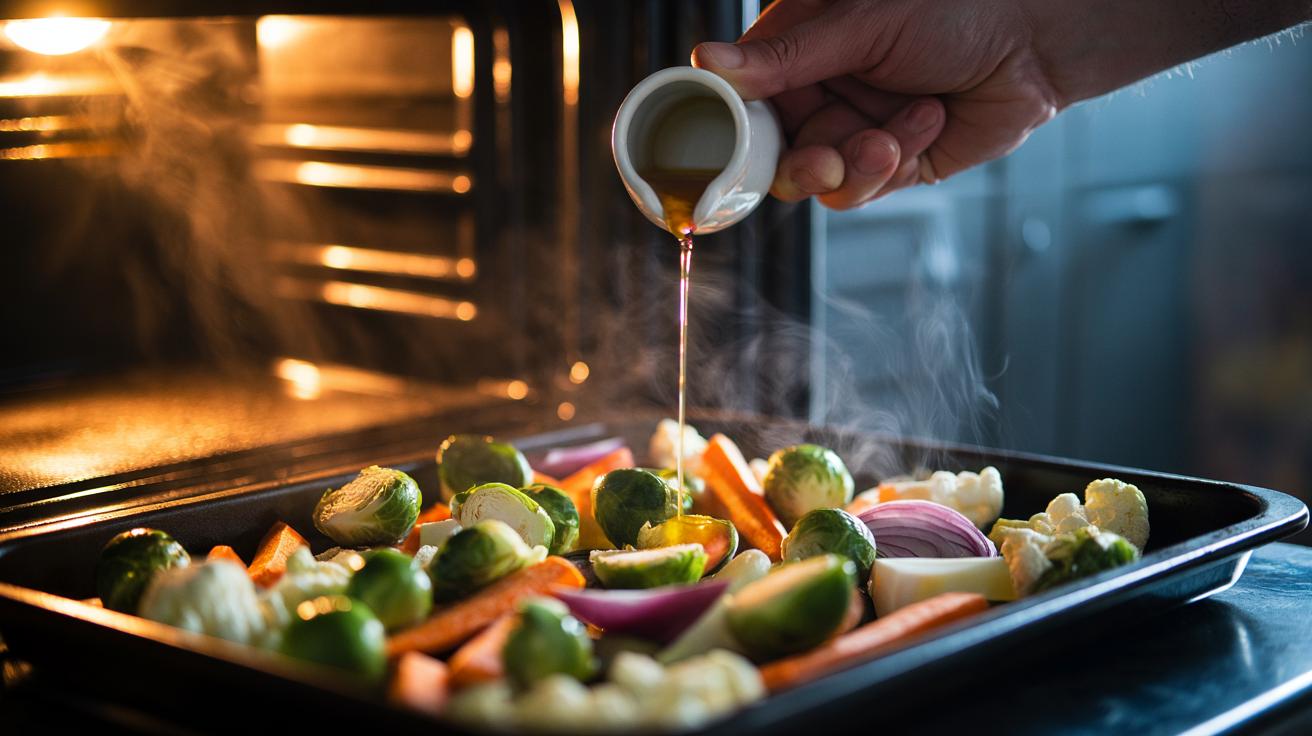
In a nutshell
- 🔬 Science of crispness: A thin oil film raises surface temperature, speeds evaporation, and drives caramelisation and the Maillard reaction, while lowering water activity for crackly edges.
- 🫒 Why olive oil: Fluid monounsaturated fats spread heat evenly; EVOO adds flavourful polyphenols. Use 1–2 tbsp per 500 g veg for bronzing without greasiness.
- 🔥 Heat and oil choices: Roast at 200–230°C; a preheated tray boosts conduction. Match oil to its smoke point (EVOO vs refined olive oil) for reliable browning.
- 🥕 Technique matters: Dry veg thoroughly, apply a thin oil coat, and give pieces space on the tray. Cut uniformly, resist early flipping, and blot wetter veg like courgettes.
- 🥗 Nutritional edge: Olive oil enhances uptake of fat-soluble nutrients (vitamins A, E, K, carotenoids); finish with a fresh EVOO drizzle for aroma and balance.
There’s a quiet alchemy that happens when chopped veg meet a hot tray and a glossy drizzle of olive oil. The edges begin to tinge gold, the centres stay tender, and suddenly Tuesday night broccoli tastes like something from a bistro. The secret isn’t magic; it’s chemistry. A thin coat of healthy fats lifts surface temperature, controls moisture, and encourages the flavour-building dance of caramelisation and the Maillard reaction. A little oil unlocks crispness you cannot get with steam alone. Here’s how olive oil helps vegetables roast more evenly, brown more deeply, and deliver a satisfying crunch—while boosting nutrition and aroma.
The Science of Caramelisation and Crispness
Caramelisation is the browning of natural sugars that begins around 160°C, while the Maillard reaction—between amino acids and sugars—kicks in from roughly 140–165°C. Both create the nutty, toffee-like flavours we crave. Vegetables contain water that must evaporate before browning can accelerate. Oil forms a thin film that spreads heat evenly and displaces surface moisture, helping water escape as vapour. Once the surface dries, temperatures climb rapidly and browning speeds up, giving those coveted charred edges on carrots, sprouts, and cauliflower.
Equally important is reduced water activity. Oil limits the constant re-wetting of the surface by boiling juices, so the exterior stays dry enough to crisp. It also creates more contact with the hot tray, improving conduction where veg touch metal. This “sizzle zone” is where blistering and caramel notes develop quickly. Without adequate fat, veg tend to steam and slump, leading to pale, soft results rather than crackly, mahogany corners.
Why Olive Oil Changes the Game
Olive oil brings flavour, but it’s the structure of its monounsaturated fats that matters for texture. They’re fluid at roasting temperatures and spread easily, creating a consistent coat that enhances heat transfer. Extra-virgin olive oil (EVOO) also carries polyphenols—aromatic compounds that withstand moderate heat and lend peppery, grassy complexity. A modest drizzle—about 1–2 tablespoons per 500 g of veg—optimises browning without greasiness. Too little and you risk steaming; too much and you dull edges and saturate interiors.
This fat does more than crisp. It aids absorption of fat-soluble nutrients such as vitamins A, E and K, and carotenoids in carrots, peppers, and squash. Pairing colourful veg with olive oil improves bioavailability, making your traybake more nourishing. EVOO’s antioxidants also help stabilise the oil as it heats, supporting flavour integrity. While you should mind the smoke point, roasting at 200–220°C is well within the comfort zone for most quality EVOO when used sensibly.
Choosing the Right Oil and Oven Settings
Different oils behave differently under heat. EVOO typically smokes around 190–210°C, refined olive oil higher, while cold-pressed rapeseed sits in a similar range to moderate-high heat. For most veg, a hot oven—200–230°C—promotes rapid dehydration and browning. Preheating the tray boosts contact heat, accelerating the first minutes when texture is set. If your oven runs fierce or veg are delicate (asparagus, tenderstem broccoli), start at 200°C and finish hotter for colour.
| Oil | Approx. Smoke Point | Suggested Oven Temp | Notes on Crispness |
|---|---|---|---|
| Extra-virgin olive oil | 190–210°C | 200–220°C | Great flavour; thin coat delivers sharp edges if tray is preheated. |
| Light/refined olive oil | 220–240°C | 210–230°C | Higher tolerance; neutral taste, reliable deep browning. |
| Cold-pressed rapeseed | 200–220°C | 200–220°C | Good for brassicas; mild flavour, steady crisping. |
Tip: If sensitive to EVOO’s aroma at high heat, roast mostly with refined olive oil, then finish with a fresh EVOO drizzle for fragrance.
Techniques for Maximum Crunch Without Excess Oil
Dryness determines crispness. Pat veg thoroughly, then toss with salt and a measured drizzle in a roomy bowl for even coating. Space pieces so they don’t touch; overcrowding traps steam. Cut to uniform sizes so everything hits doneness together—thicker roots can be parboiled for a few minutes to balance timing with softer veg. Preheat the tray, then add veg to hear a faint sizzle. Don’t flip too early; allow a crust to form before turning once for even colour.
Use about 1–2 tablespoons oil per 500 g, adding a teaspoon more if pieces look matte rather than glistening. For wetter veg like courgettes or mushrooms, salt lightly first, wait five minutes, then blot and oil. Finish with a final EVOO thread, lemon zest, or vinegar to brighten. Seasoning that contains a touch of sugar (paprika, miso, balsamic) can hasten bronzing—but use sparingly to avoid scorching.
In the end, that olive oil drizzle isn’t indulgence—it’s a precise tool that manages heat, moisture, and flavour to turn humble veg into something crisp, sweet, and irresistibly savoury. By choosing the right oil, keeping the oven honestly hot, and respecting space on the tray, you unlock repeatable, restaurant-level results at home. Hot oven, dry veg, thin oil coat, enough room: that’s the crisp code. What will you roast next—caramel-edged carrots with cumin, blistered sprouts with balsamic, or burnished cauliflower with tahini and herbs?
Did you like it?4.6/5 (20)