In a nutshell
- 🥛 A quick milk soak works because casein proteins bind sulphur volatiles like allicin, while fat dissolves hydrophobic aromas, instantly softening garlic’s bite.
- ⏱️ Practical method: soak sliced or crushed garlic in cold whole milk for 5–15 minutes, drain and pat dry; smaller cuts mellow faster—avoid heating the milk.
- 🧪 Chemistry in brief: casein micelles are amphiphilic, creating binding sites and fat “sinks”; neutral pH curbs enzyme activity from alliinase, reducing harshness without losing character.
- 🍴 Kitchen uses: reserve a spoon of soak milk for dressings, pre-rinse before sautéing to curb acrid edges, and add a pinch of salt to the soak for balance and better diffusion.
- 🌱 Alternatives: dairy options like yoghurt/kefir also tame pungency; vegan swaps (unsweetened soy milk plus oil, silken tofu purée, protein-rich oat milk) help, though binding is weaker.
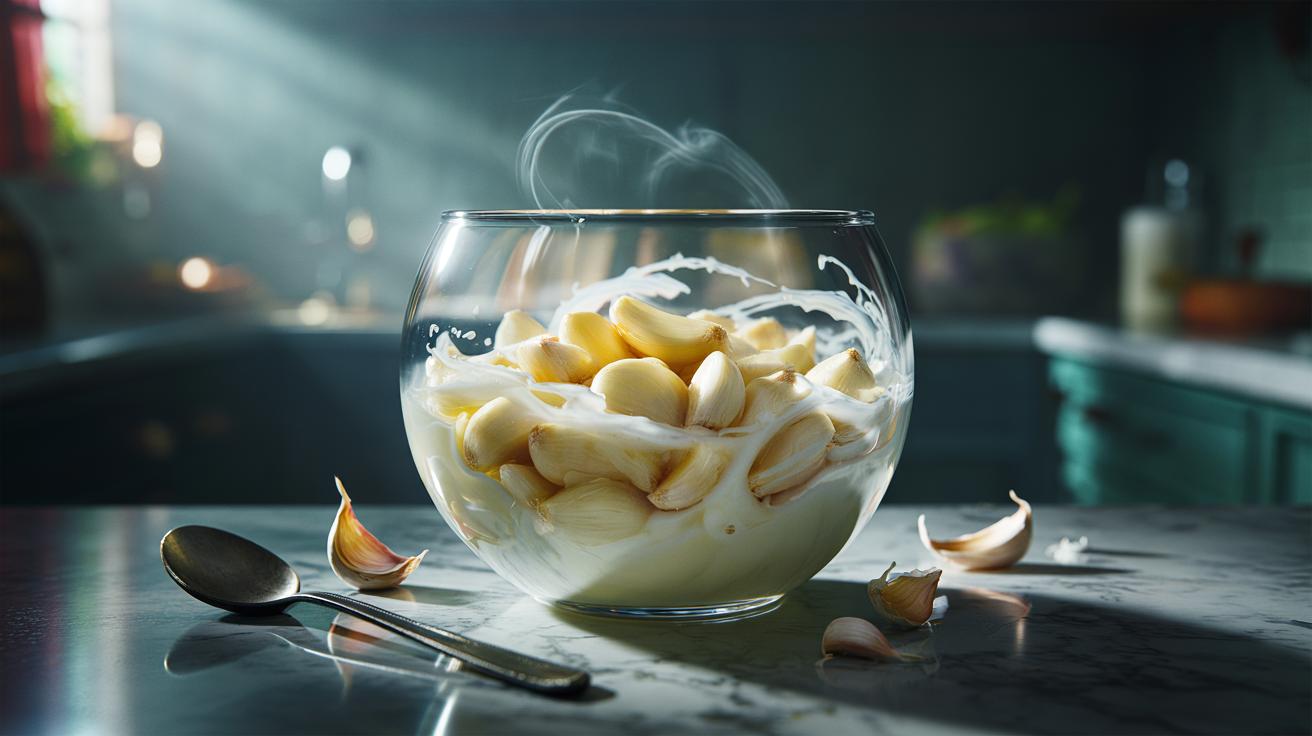
Garlic is adored for its punch, yet that same punch can bulldoze a dish. Cooks have long noticed that a quick bath in milk takes the edge off. The trick is not culinary folklore but chemistry: dairy proteins, especially casein, trap the pungent molecules that give raw garlic its bite. Fat in milk also helps sweep away volatile aromas that cling to the palate. Soaking sliced or crushed garlic in cold milk for minutes—not hours—can soften harshness without erasing character. Here is how and why it works, and how to deploy the method for subtlety rather than blandness.
Why Garlic Burns and How Milk Calms It
Raw garlic’s sting comes from enzymatic fireworks. When a clove is cut or crushed, the enzyme alliinase converts alliin into allicin, which then cascades into sulphur-rich thiosulfinates and other reactive compounds. These molecules are volatile, hydrophobic in parts, and intensely reactive with receptors in your nose and mouth, registering as heat, sharpness, and a lingering odour. Cooking tames them by breaking down enzymes and transforming allicin into mellower sulphides. But when you need the freshness of raw garlic without the aggression, milk offers a faster, colder route.
Milk soothes because its proteins, chiefly casein micelles, behave like tiny sponges. Their hydrophobic regions latch onto garlic’s smelliest compounds, while the fat phase helps dissolve and dilute those volatiles away from your palate. The result: flavour remains, bite recedes, and the aroma loses its hard edges. A brief soak—typically 5–15 minutes—moderates intensity far more gently than rinsing with water, which strips surface notes but leaves the core burn intact.
The Chemistry: Casein, Fat, and Sulphur Compounds
Casein is a family of amphiphilic proteins that form soft clusters in milk. Their mixed water-loving and water-fearing regions let them bind to tricky molecules, from capsaicin in chilli to sulphur volatiles in garlic. In practical terms, casein wraps around portions of compounds like allicin and diallyl disulphide, reducing their volatility and how strongly they interact with sensory receptors. Milk’s butterfat provides another sink, dissolving hydrophobic notes that water alone cannot tame. Together, protein and fat temper sharpness without scrubbing away all aroma.
pH matters too. Fresh milk sits near neutral, which suits casein stability and keeps alliinase from running riot; warmer temperatures accelerate diffusion but risk over-softening. Cold milk, short soak, small pieces: that is the control dial for a measured mellowing. For pungency management, semi-skimmed works, but full-fat binds more aggressively; choose based on how subtle you want the garlic to be.
| Garlic Compound | Flavour Note | Volatility | Casein/Fat Affinity | Kitchen Cue |
|---|---|---|---|---|
| Allicin | Pungent, sharp | High | Strong binding | Short soak to blunt bite |
| Diallyl disulphide | Garlicky, lingering | Moderate | Good in fat | Use full-fat milk for aroma |
| Ajoene | Earthy, savoury | Lower | Moderate | Minimal soak preserves depth |
How to Use a Milk Soak in the Kitchen
For salads, aioli, or quick pickles where raw garlic can dominate, slice or crush cloves to your desired size, then submerge in cold whole milk for 5–15 minutes. Drain, pat dry, and proceed. The smaller the cut, the faster the mellowing. If you need a whisper of garlic—say, in a delicate ricotta gnudi or cucumber raita—go longer or repeat with fresh milk. Time is your seasoning knob: taste at five-minute intervals and stop the soak when the loudness drops to a pleasant murmur.
For dressings, reserve a spoonful of the soaking milk: it carries a softened garlic essence that can round off acidity. In pan sauces, a brief warm rinse in milk tames rawness before the garlic meets heat, preserving sweet nutty notes without acrid edges. Avoid boiling the milk during soaking; heat shifts texture and can dull brightness. Add a pinch of salt to the soak if you plan to serve raw; salt nudges diffusion and improves overall balance.
Alternatives and Dietary Considerations
If dairy is off the menu, seek proteins and fats that mimic casein’s behaviour. Yoghurt and kefir work well; their acidity also reins in alliinase activity. For vegan options, unsweetened soy milk, silken tofu purée, or oat milk fortified with higher protein can help, though binding is weaker than with casein. Pair plant milks with a little oil to improve capture of hydrophobic volatiles. Aim for protein plus fat to approximate milk’s two-pronged mellowing. Coconut milk softens aroma, but its strong character may colour the dish’s profile.
Another route is pre-treatment: blanch sliced garlic for 10–20 seconds, then shock in ice water and finish with a brief dairy or plant-based soak. Roasting achieves deeper sweetness but loses raw vibrancy. To moderate breath impact, combine soaking with parsley, apple, or green tea, which contain polyphenols that mop up residual sulphur notes. Remember that quantity and cut size still rule intensity: use fewer cloves, slice not crush, and you may need only the lightest touch of milk.
The quiet magic of a milk soak lies in protein chemistry doing the cook’s bidding. By letting casein and fat shoulder the heavy sulphur notes, you keep the soulful part of garlic while ditching the blare. It is a rare technique that is fast, inexpensive, and reversible—taste, adjust, and stop when you strike the balance your dish deserves. Once you start tuning garlic this way, you can calibrate everything from vinaigrettes to mezze with precision. Where in your repertoire would a softer, silkier garlic note open up new flavours—and what will you try first?
Did you like it?4.5/5 (30)