In a nutshell
- 🥛 Milk fat coats flour particles, creating a hydrophobic barrier that prevents instant clumping; casein and milk phospholipids help emulsify for a silky, lump-free texture.
- 🔥 Keep to gentle heat and steady whisking; hold just below a boil to avoid scorching proteins, and simmer briefly to cook out raw flour and properly swell starch.
- 🧈 Choose the right liquid: whole milk is reliable, semi-skim needs a sound roux, skim requires extra butter; cream widens the margin for error, while soy, oat, and coconut drinks offer distinct stability and flavour.
- 🥄 Technique matters: make a classic roux (equal parts butter and flour), add cold milk in stages, whisk smooth, and simmer 2 minutes; adjust thickness with more milk or time on the heat.
- 📌 Season smartly after thickening—salt, wine, or acids can loosen starch networks—and aim for balanced mouthfeel and sheen that complements roasts, sausages, and mash.
Getting gravy right is a small domestic drama: one minute it’s promising, the next it’s a lumpy tangle that clings to the whisk. The quiet hero is milk fat. It cushions raw flour, keeps starch granules apart, and lets heat thicken the pan juices into something glossy and spoonable. British cooks know this from Sunday roast to weekday pie, yet the “why” matters as much as the method. Fat coats flour particles so water can’t turn them into instant dumplings. With the right proportion of dairy and a calm simmer, you can coax a sauce that is both resilient and elegant, ready to carry pepper, mustard, or a splash of pan drippings.
Why Fat Stops Lumps in Gravy
When dry flour meets hot liquid, the outside layer of starch swells fast and sets, trapping dry powder inside—mini dumplings that refuse to disperse. Introduce fat and the physics flips. Butter, cream, or the fat in milk forms a thin hydrophobic film around flour particles. This protective coat slows water absorption, so starch granules hydrate evenly and thicken smoothly. Milk brings extra allies: casein micelles and milk phospholipids behave like emulsifiers, helping disperse fat droplets and stabilise a silky sauce rather than a greasy split.
Once dispersed, heat can expand starch granules gradually, creating the familiar nappé texture. Fat then lubricates the network, boosting mouthfeel and sheen. Gently cooked flour loses its raw edge, while milk’s lactose rounds flavours and softens savoury notes. Keep agitation steady and temperature moderate; high heat risks scorching milk proteins and shocking the emulsion. Hold the pan just below a boil and whisk along the edges where thickening begins. The result is a fluid, cohesive gravy that clings to meat without chalkiness or lumps.
Milk, Cream, and Alternatives: Choosing the Right Fat
The fatter the liquid, the wider your margin for error. Whole milk (around 3.5–4% fat) is a dependable default, giving swift dispersion and a supple finish. Semi-skimmed works if you start with a proper butter-based roux. With skimmed milk, you must add enough butter—or you’ll invite clumps. Cream is the training wheels option: single cream enriches without heaviness; double cream delivers plush texture but can mute savouriness. Plant options vary: soy stabilises well thanks to protein; oat adds body via beta‑glucans; coconut milk is ultra-silky yet strongly flavoured.
Homogenised dairy disperses fat more evenly, aiding a stable emulsion. Salt, wine, or acidic ingredients can thin starch networks, so season and spike cautiously after thickening. For lump-resistant results, choose whole milk or fold in a splash of cream; if using skimmed milk, increase butter in the roux. Taste matters as much as chemistry: oat’s sweetness can flatter chicken gravies, while soy suits pepper gravies. Match the liquid’s character to the dish and the pan juices you’re amplifying.
| Liquid | Approx. Fat % | Smoothing Power | Notes |
|---|---|---|---|
| Skimmed milk | 0.1–0.3% | Low | Needs extra butter in roux to prevent lumps |
| Semi-skimmed milk | 1.5–2% | Moderate | Works if roux is well cooked and liquid added gradually |
| Whole milk | 3.5–4% | High | Reliable balance of richness and control |
| Single cream | ~18% | Very high | Silky texture; lighter flavour than double cream |
| Double cream | ~48% | Excellent | Luxurious; can mellow robust gravies |
| Soy drink | 1–2% (varies) | Moderate–high | Good protein for stability; neutral taste if unsweetened |
| Oat drink | 1–3% (varies) | Moderate | Extra body from beta‑glucans; slightly sweet |
| Coconut milk | 15–25% | Very high | Silky but distinct coconut flavour |
Technique: From Roux to Silky Milk Gravy
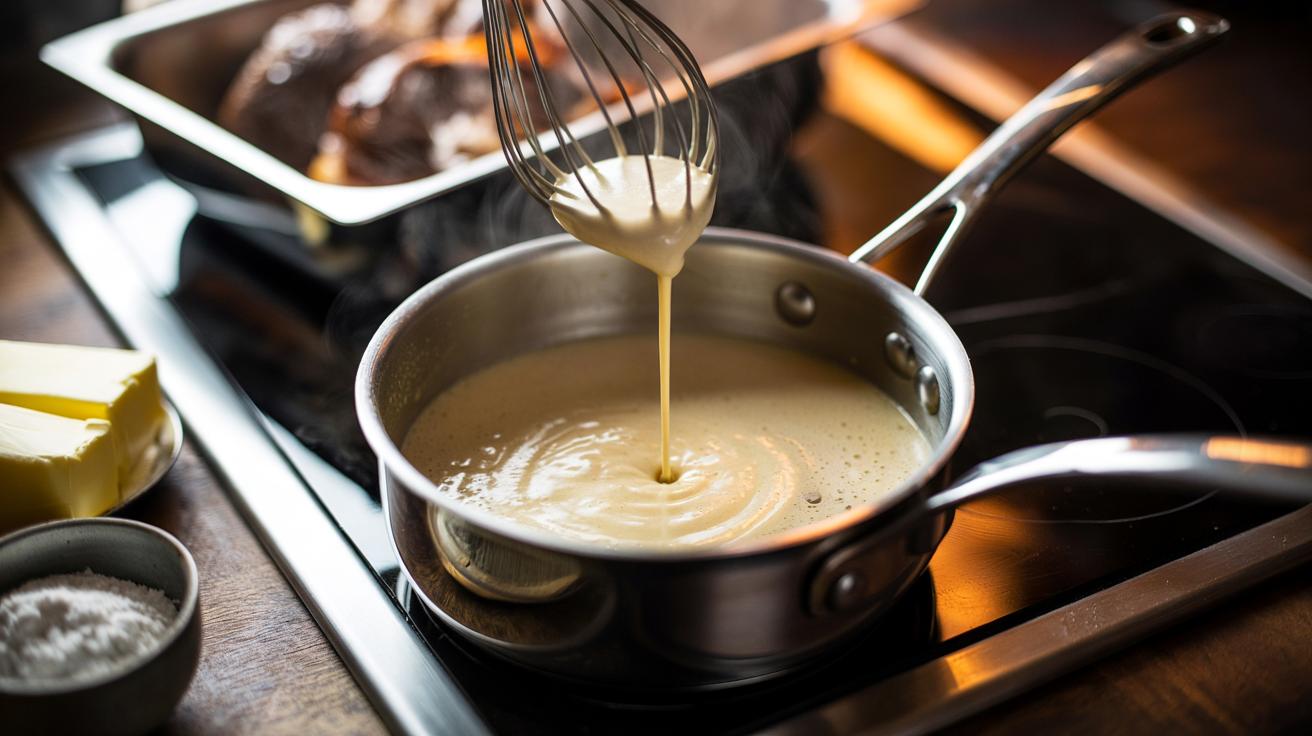
Start with a classic roux: melt 25 g butter, whisk in 25 g plain flour, and cook 1–2 minutes until foamy and pale blond. This pre-coats flour in fat, setting you up for lump-free thickening. Take the pan off the heat and add a splash of cold milk, whisking vigorously. Return to gentle heat and add the remaining milk in stages up to about 500 ml, whisking smooth each time. Cold milk into a hot roux yields the quickest, silkiest emulsion. Simmer gently for at least two minutes to cook out the raw taste and activate starch.
Layer in flavour: pepper, mustard, thyme, or a spoon of pan drippings for savoury depth. If it thickens too much, whisk in more milk; if too thin, simmer a touch longer. Alternatives include beurre manié (equal parts soft butter and flour kneaded together) kneaded in near the end, or a cornflour slurry for a glossy finish. Do not boil milk-based gravy hard, or proteins may tighten and the texture can turn chalky. Keep warm below a simmer and stir now and then to maintain silkiness.
At heart, silky gravy is simple science: fat disperses flour, heat swells starch, and steady whisking maintains a stable emulsion. Choose whole milk for assurance, upgrade to cream for indulgence, or play with plant milks that bring their own signatures. Control the heat, respect the ratio, and give the sauce those final patient minutes to bloom. The reward is a gloss that flatters roast chicken, sausages, or mash with equal grace. Which fat-forward approach will you try next—classic whole milk, a dash of cream, or a clever alternative that suits your table?
Did you like it?4.5/5 (27)