In a nutshell
- 🛒 Prioritise the ingredients list over marketing claims; ingredients appear in descending order by weight, so judge products by the first three ingredients.
- 🔎 Seek whole grains, recognisable foods, and healthy oils; skip ultra-processed additives, stacked sugars (e.g., dextrose, glucose-fructose syrup), and vague “flavourings”; check allergens in bold.
- 🚦 Use the UK’s traffic light labels alongside per 100 g and per-portion data and % Reference Intakes; sanity-check portion sizes to reflect what you actually eat.
- ⏱️ Apply a quick scan routine: assess the first three ingredients, compare sugars, salt, and fibre; prefer plain yoghurt and unsweetened, fortified plant milks; build a shortlist of reliable staples.
- 💡 Turn label checks into habit to make healthier choices effortless, boosting satiety and supporting metabolic and heart health with small, consistent swaps.
In the split-second between placing a product in the trolley and moving on, a quiet skill can radically improve your diet: reading the ingredients list. This habit cuts through packaging claims and marketing sheen, revealing what actually goes into your food. In the UK, front-of-pack traffic light labels help, but the back-of-pack text is where truth lives—especially around added sugar, refined grains, and ultra-processed additives. By building a quick, reliable method for scanning labels, you’ll choose options that keep you fuller for longer, stabilise energy, and support heart and metabolic health. A two-minute label review today can spare you months of empty calories and buyer’s remorse.
Why Reading Ingredients Beats Marketing Claims
Food packaging loves to speak in superlatives—“light”, “natural”, “protein-packed.” A label, though, speaks in facts. Ingredients are listed in descending order by weight, so the first few items tell you what you’re truly buying. If sugar, refined flour, or oils dominate the top three, the product’s core is unlikely to support steadier blood sugar, satiety, or cardiovascular health. Watch for stacked sugars—multiple sweeteners like sucrose, glucose syrup, and fructose that disguise total sweetness by splitting into smaller doses. The first three ingredients set the nutritional tone; judge the product by them.
Packaging implies virtue, but the ingredient panel verifies it. A loaf shouting “wholemeal” should list wholemeal flour first, not “wheat flour” (which is usually refined). “No added sugar” smoothies may still be concentrated fruit with high free sugars. For yoghurts, the simplest cups will list milk and cultures; longer lists often mean stabilisers, emulsifiers, and “fruit preparations” loaded with sweeteners. If a product claims purity but reads like a chemistry set, place it back.
Decoding the Ingredients List: What to Seek and Skip
Seek short lists built from recognisable foods: whole grains, legumes, nuts, seeds, vegetables, milk, and cultures. Prefer oils such as olive oil or rapeseed oil to blends or unspecified “vegetable oil.” In breads and cereals, choose wholemeal, oats, or rye near the top; in snacks, look for nuts first, not sugar or starch. Products higher in fibre generally satisfy better, so a cereal with ≥5 g fibre per 100 g is a good benchmark. If the first ingredient is a whole food, you’re already halfway to a better choice.
Be cautious with the red flags. “Sugar” hides behind names like dextrose, maltose, invert sugar, glucose-fructose syrup, and fruit concentrates. Note ultra-processed cues: emulsifiers (e.g., E471), stabilisers, thickeners (e.g., carrageenan), artificial sweeteners such as acesulfame K and aspartame, and “flavourings” without specifics. For dairy and plant drinks, avoid “hydrogenated” fats. If you have allergies, scan for the UK’s 14 allergens in bold (e.g., milk, gluten, nuts, sesame). When sugar and oil outrank the food itself, it’s dessert in disguise.
Understanding Percentages, Portions, and Daily Reference Intakes
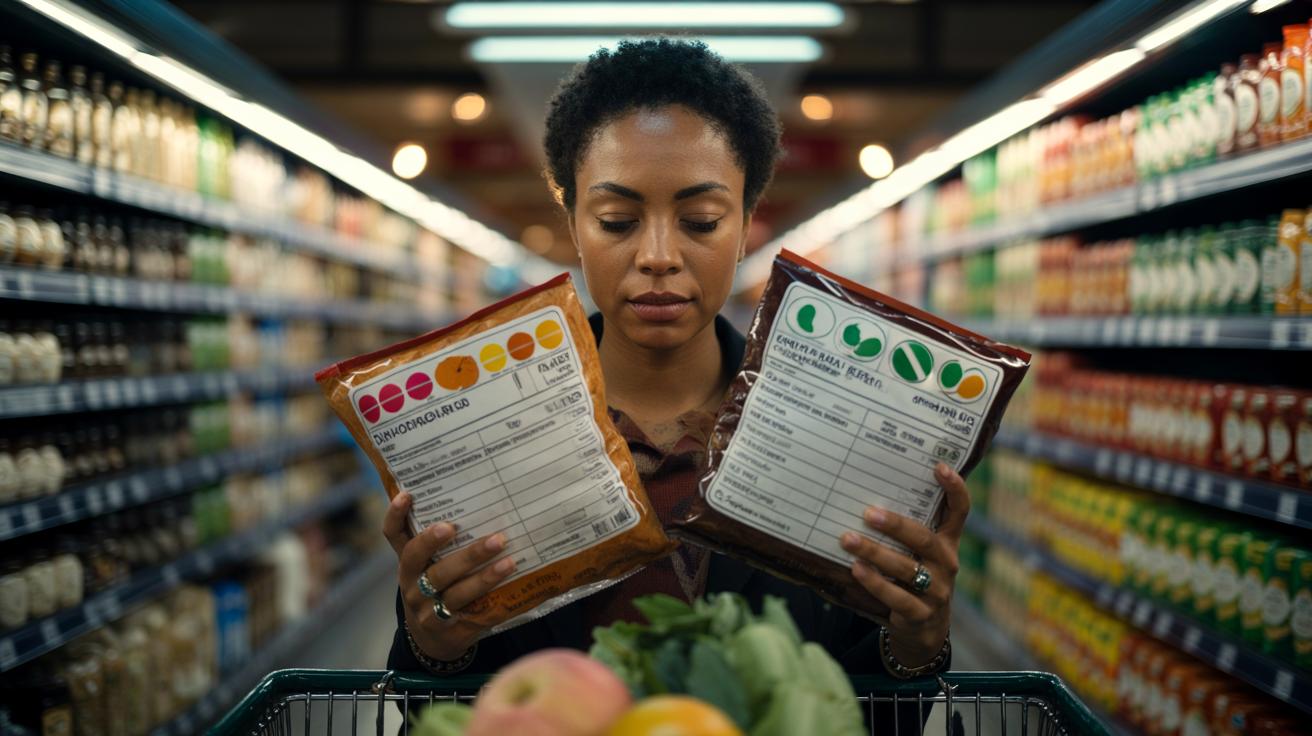
The UK’s front-of-pack traffic light gives a quick read on fat, saturates, sugars, and salt per 100 g, with colours to flag intensity. Pair this with the back-of-pack table, which shows per 100 g and per portion values alongside % Reference Intakes (RIs) for an average adult. Use per 100 g to compare products side by side; use per portion to estimate what you’ll actually eat. For drinks, remember thresholds differ per 100 ml, and portions can be unrealistically small. Always sanity-check a portion size against how you truly eat.
| Nutrient | Low (per 100 g) | High (per 100 g) |
|---|---|---|
| Fat | ≤ 3 g | > 17.5 g |
| Saturates | ≤ 1.5 g | > 5 g |
| Sugars | ≤ 5 g | > 22.5 g |
| Salt | ≤ 0.3 g | > 1.5 g |
Combine these signals with ingredients. A “green” sugar rating may still hide sweeteners, and a “red” salt code in soups could be mitigated by choosing a lower-salt version nearby. Labels are a map; ingredients are the legend that makes the map readable.
Time-Saving Tactics for Label Review in the Aisle
Create a fast, repeatable routine. Start with a 10-second scan of the first three ingredients; if they’re a whole food, water, or a minimally processed staple, proceed. Check per 100 g sugars and salt to compare brands, then glance at fibre—aim for higher numbers in breads, cereals, and snacks. For yoghurts, choose plain or lower-sugar options and add your own fruit. In plant milks, prioritise unsweetened, calcium-fortified, and free of unnecessary thickeners. Simple, consistent rules beat perfectionism when you’re shopping at speed.
Build a stable shortlist of go-to items so each trip gets faster. Swap white wraps for wholemeal, sugary cereal for high-fibre oats, and creamy sauces for tomato-based jars with fewer additives. Keep a mental watchlist of “back on the shelf” triggers: sugar in the top three, long lists of emulsifiers, and oils eclipsing core ingredients. Small swaps, repeated weekly, compound into meaningful changes for heart, weight, and wallet.
Turning label reading into a habit reframes the weekly shop from impulse-led to informed. You’ll start to recognise the brands that keep ingredients honest and the categories where quiet reformulations sneak in extra sugar or salt. Over time, the trolley shifts from convenience-laden to nutrient-dense without sacrificing flavour. Most importantly, this is a habit that transfers—to takeaway menus, coffee-shop snacks, even meal kits. Once you learn the language of labels, your choices become deliberate rather than accidental. Which product in your cupboard will you “translate” first, and what swap will you try next?
Did you like it?4.4/5 (20)