In a nutshell
- 🧊 An ice cube creates a thermal gradient that triggers a phase change, solidifying surface fats so they cling to a cold tool and lift off cleanly without watering down the sauce.
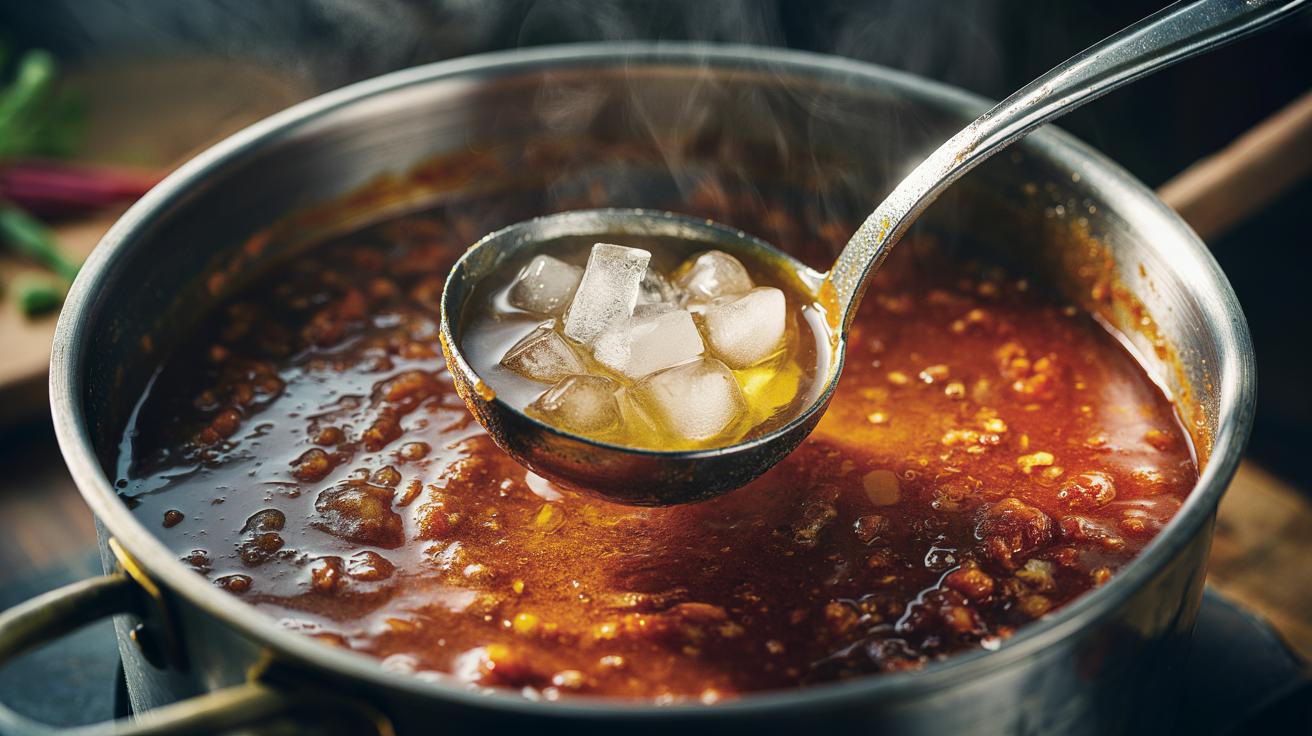
- 🍲 Method: keep the ragù at a gentle simmer, hold a stainless-steel ladle filled with ice just on the surface, wipe off the congealed fat, and repeat; a wrapped cube works too—stop when the shine turns glossy.
- 🛡️ Safety and hygiene: use sanitised tools, avoid dropping bare ice into the pot, don’t overcool the surface, and be gentle with thin cookware to prevent stress cracks or dilution.
- 🎯 Flavour control: remove the greasy slick but keep some fat for mouthfeel; time skimming to taste (early vs late), and recheck seasoning as acidity and clarity increase post-skimming.
- 🛠️ Alternatives and prevention: try a gravy separator, overnight chilling to peel a fat cap, chilled spoons or gel packs, light paper-towel blots, plus leaner mince and early draining to manage fat from the start.
There is a small, theatrical trick that cooks swear by when a hearty Bolognese throws up a shiny slick: touch the surface with an ice cube and the grease lifts off as if magnetised. The secret is not magic but physics. Cold encourages liquid fat to solidify into a removable film, letting you clean the surface without stripping flavour. Used properly, an ice cube gives you a silkier, brighter sauce in seconds, without watering it down. Below, we explore how the method works, the smart way to do it at home, practical safety tips, and reliable alternatives when you’re cooking for a crowd or planning ahead.
Why a Simple Ice Cube Works
Most meat sauces carry a mixture of lipids that sit above the liquid because of density and immiscibility: oil and water refuse to mix. When you introduce a sudden chill, you create a sharp thermal gradient at the surface. Heat flows into the cold object, lowering the temperature of nearby fat just enough to trigger a phase change from fluid to semi-solid crystals. Those crystals cling to the cold surface—ladle, spoon, or cube—so you can lift them free. Cold turns liquid fat into a removable film within moments, while the sauce beneath keeps simmering. The effect is visible: clear beads of oil lose their gloss, thicken, and stick, leaving the ragù looking cleaner and tasting more focused.
Different fats set at different temperatures, which is why beefy sauces respond quickly. Butter-derived milk fat firms in the mid-30s °C, while olive oil needs far cooler conditions. In a sauce, emulsifiers, gelatine, and dissolved solids shift these points slightly, but the trend holds: saturated fats solidify earlier. The table below offers quick guidance so you know what to expect when you deploy the cube during a busy weeknight cook or a leisurely Sunday simmer.
| Fat Type | Approx. Solidify Range (°C) | Kitchen Clue |
|---|---|---|
| Beef tallow | 30–40 | Sets readily; lifts as pale flakes |
| Pork lard | 30–40 | Clings in soft, opaque smears |
| Butter milk fat | 32–35 | Creamy dots turn waxy |
| Olive oil | Clouds ~7–10; firms below 0 | Clouds first; needs extra chill to set |
Step-by-Step: Skimming Bolognese with Ice
Heat your Bolognese to a gentle simmer, then reduce the flame to calm the surface. Fill a stainless-steel ladle with two ice cubes and hold the curved underside just touching the sauce. Within seconds, a ring of congealed fat adheres to the chilled metal; wipe it into a discard bowl with kitchen paper and repeat. Keep the ice isolated from the ragù so you don’t dilute seasoning or texture. If you lack a ladle, wrap an ice cube in a paper towel and glide it lightly over the surface, swapping it as it melts to maintain the chill.
Work in short passes, rotating around the pot to avoid overcooling any one spot. Use a broad spoon to corral loosened fat toward the cold surface. For a deeply flavoured sauce, remove only the slick and leave a little for mouthfeel. If you’ve cooked with milk (a classic Bolognese touch), keep an eye on the sauce body; too much skimming can strip sheen. Stop when the shine turns from greasy to glossy.
Safety, Hygiene, and Flavor Considerations
Use sanitised tools and clean ice from potable water. The technique should be swift: you are cooling only the surface, not the whole pot. If the sauce dips below a safe serving heat, return it to a light simmer. Avoid splashing water into the ragù; an ice-filled ladle or wrapped cube prevents dilution and protects the sauce’s salt balance. Never drop bare ice directly into the pot if you want precision and consistency. Mind the vessel too: a cold implement against thin glass may cause stress—choose heavy pans or touch the surface gently.
Flavour lives in fat, so remove excess, not character. The aim is balance: a cleaner finish without austerity. Consider the moment in the cook: an early skim removes rendered fat from browning; a late skim refines the finished sauce. If you chill and reheat leftovers, you’ll find a firm cap of fat—lift it off, then recheck seasoning. Acidity from wine or tomatoes will shine brighter once the greasy veil is gone.
Alternatives and Tools for Fat Control
If the ice trick doesn’t suit your setup, use a gravy separator jug: pour in the sauce, wait for fat to rise, and decant from the bottom. For batch cooking, cool the pot quickly, refrigerate overnight, and peel away the solid fat disc before reheating. Gel packs or a metal spoon chilled in the freezer mimic the ice-ladle effect without meltwater. Choose the method that removes fat without unbalancing texture or seasoning. When time is tight, a folded paper towel skimmed briefly across the surface absorbs isolated pools—just avoid over-blotting.
Prevention helps. Brown minced beef thoroughly, then drain early renderings before deglazing. Use a mix with less visible fat or ask your butcher for a lean-to-fat ratio that still tastes rich. Build structure with a splash of milk, which adds proteins that help emulsify, and simmer patiently to develop body without excess grease. Adjust salt after skimming; a reduced, de-fatted sauce will taste cleaner and may need a final pinch to sing.
A humble ice cube is a cook’s scalpel, not a blunt instrument: it edits, refines, and lifts a Bolognese from heavy to harmonious. By exploiting phase change and a controlled chill, you remove what blurs flavour while preserving the sauce’s soul. Used intentionally, the method is fast, safe, and repeatable, whether you’re polishing a weeknight pot or plating for guests. Which approach will you try next time you simmer a ragù—ice-ladle finesse on the fly, an overnight chill-and-lift, or a separator jug to keep service moving?
Did you like it?4.7/5 (22)