In a nutshell
- 🧊 An ice bath after a brief blanch halts pigment damage and overcooking, locking in bright colour and crisp texture.
- 🔥 The blanch–chill–roast method: salt the boil, blanch to just tender, plunge into ice, dry thoroughly, then roast on a hot tray at high heat.
- 🧪 Science at work: protects chlorophyll and anthocyanins, preserves turgor pressure, curbs carryover cooking, and encourages the Maillard reaction on a dry surface.
- ⏱️ Practical timings for favourites (broccoli, beans, asparagus, carrots, sprouts, beetroot) with the rule: dry well and avoid overcrowding for better browning.
- 🌿 Pro tips: add acids after roasting, skip bicarbonate for greens, optional calcium boost for firmness, finish with herbs and oil for vivid, crisp results.
British cooks have long learned that vibrant vegetables are won and lost in the minute between pot and pan. The unlikely hero is the humble ice bath: a bowl of freezing water that locks in colour and guards against sogginess. When you roast after a brief blanch and a fierce chill, you get the best of both worlds—emerald greens and burnished edges. Cold halts the very reactions that turn greens khaki and textures mushy. The result is confident roasting with crisp skins, tender cores and flavours that taste of themselves, not the oven. Here’s how the science—and the simple method—work.
Why Cold Preserves Colour and Crunch
Vegetable colour comes from pigments—chlorophyll in greens, anthocyanins in reds and purples, and carotenoids in oranges. Heat can push chlorophyll towards an olive hue and trigger enzymes that brown or dull. A fast blanch disables those enzymes; the ice bath then slams the brakes on residual heat, preventing continued pigment damage. Immediate quenching arrests both pigment degradation and the domino effect of overcooking. For beets and red cabbage, the chill stabilises anthocyanins, which shift with pH; for carrots and squash it preserves glossy orange while you chase caramel at high heat.
Texture lives in the cell wall. Gentle heat softens pectin, but prolonged heat collapses the scaffolding. By blanching until just tender and plunging into ice, you limit that softening, keep turgor pressure, and reduce the risk of watery interiors when roasting. The surface dries quickly after the bath, letting the Maillard reaction roar. Cold is not about making things frigid; it is about control—turning a chaotic roast into a calibrated one.
The Blanch–Roast Method, Step by Step
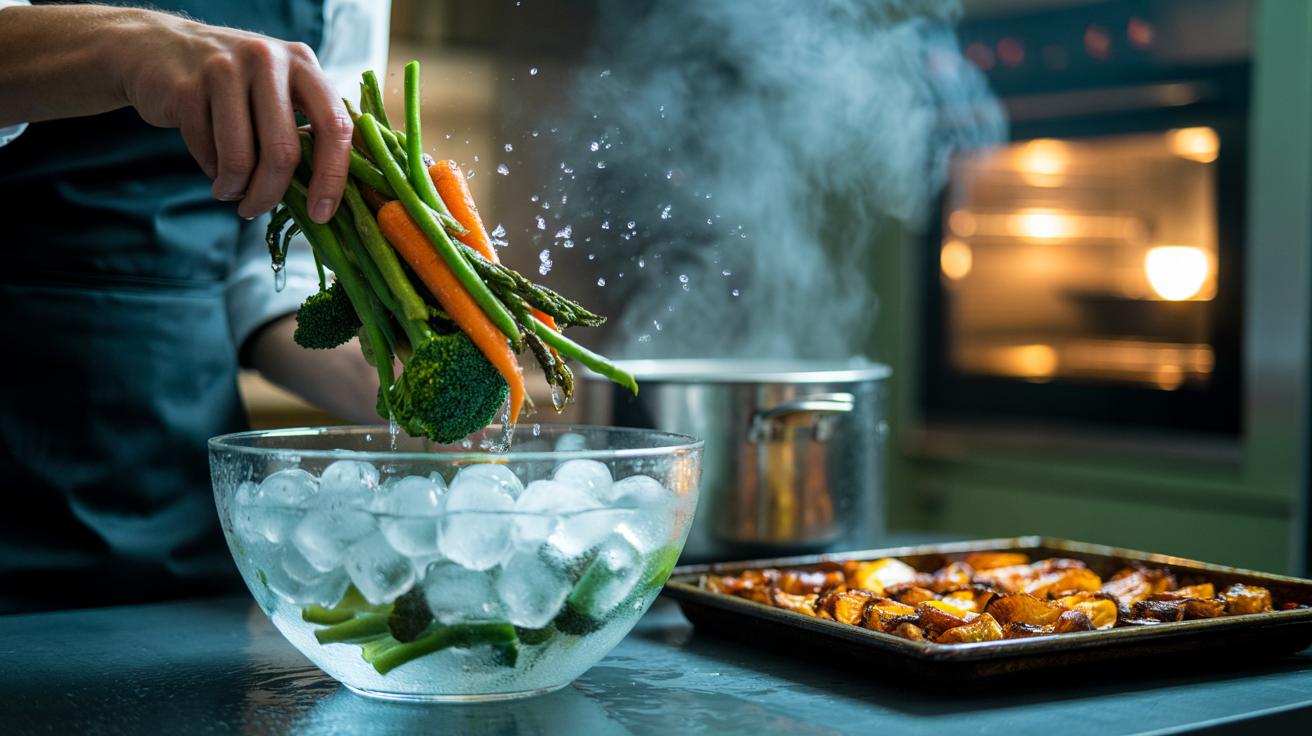
Bring a large pan of water to a rolling boil and salt it at about 1% (10 g per litre) for balanced seasoning. Drop cut veg into the water: you want a brief blanch, just until colour brightens and the exterior barely yields. Prepare an ice bath—a mixing bowl with two parts ice to one part cold water. Transfer veg straight from the pan to the bath. Quenching stops carryover cooking instantly and locks in bright pigment. Leave for one to three minutes, then drain and dry thoroughly with a tea towel or salad spinner; surface dryness is crucial.
Heat the oven to 220–230°C (fan 200–210°C) with the tray inside. Toss veg with a thin coat of oil and seasonings—salt, pepper, spices. Avoid bicarbonate for greens; it brightens but wrecks texture by breaking pectin. A touch of sugar or honey aids browning; a splash of vinegar or lemon at the end sharpens flavour without dulling colour. Tip onto the hot tray in a single layer. Roast, turning once, until edges caramelise and centres remain firm. Finish with oil, herbs and flaky salt. Dry surface plus high heat equals crisp, not soggy.
Science Notes: Texture, Moisture, and Heat Transfer
Roasting success pivots on moisture management. Blanching pre-gelatinises surface starch and starts softening pectin, so less oven time is needed—meaning less water loss. The ice bath resets temperature and curbs carryover cooking, protecting structure. Cold also helps rehydrate cut cells, restoring turgor pressure so veg feel snappy after drying. When the chilled, dried veg hit a ripping-hot tray, the surface warms fast and loses water as vapour, promoting the Maillard reaction without steaming the interior into mush.
Think gradients. You want a hot, dry exterior for colour and crunch, with a moist, just-tender core. Blanch–chill establishes that gradient before the oven. Calcium-rich water (or a pinch of calcium chloride) can strengthen pectin in greens and beans; acidic dressings should come after roasting to avoid dulling chlorophyll. The aim is orchestration: brief softening, decisive chilling, aggressive heat. That sequence safeguards colour chemistry and cell-wall integrity while delivering the roasted flavours we crave.
Timing Guide for Popular Vegetables
Times depend on cut size and oven behaviour, but this guide gets you close. Keep pieces evenly sized, and do not crowd the tray. Aim for tenderness at the core without collapse, and remember that colour is a better cue than the clock for greens. Shorter blanches for delicate veg; slightly longer for dense roots. Always dry well before roasting for crisp results.
| Vegetable (2–3 cm pieces) | Blanch Time | Ice Bath | Roast (Fan) | Notes |
|---|---|---|---|---|
| Broccoli florets | 1–2 min | 2 min | 200°C, 10–12 min | Add lemon zest after roasting to preserve green. |
| Green beans | 2 min | 2–3 min | 200°C, 8–10 min | Toss with almonds for texture. |
| Asparagus (medium) | 1 min | 1–2 min | 210°C, 6–8 min | Oil lightly; finish with vinegar, not during. |
| Carrots | 3–4 min | 2–3 min | 200°C, 15–20 min | Honey or miso helps caramelisation. |
| Brussels sprouts (halved) | 2–3 min | 2 min | 210°C, 12–15 min | Roast cut-side down on hot tray. |
| Beetroot (parboiled whole) | 10–12 min | 3–4 min | 200°C, 20–25 min | Keep skins on during blanch to hold colour. |
Use these times as a starting point. Denser veg, like parsnips, welcome a minute more in the pot; delicate greens demand brevity. If you see steam pooling on the tray, you are overcrowding—split batches for better browning. Season assertively, but add fresh herbs and acids after roasting to keep pigments radiant. Hot oven, dry veg, cold quench: that’s the triumvirate for crisp, bright roasts. Once dialled in, the method becomes second nature.
An ice bath may look like an old chef’s trick, but it is a modern guarantee of colour, texture and flavour. The cool shock lets you roast with confidence at high heat, hitting that sweet spot where veg stay vivid and edges caramelise. It is the small, decisive act that prevents a pan of promise turning into a tray of khaki softness. Ready to trade guesswork for control and put gleaming, crisp vegetables at the centre of your table—what will you blanch, chill and roast first?
Did you like it?4.5/5 (30)