In a nutshell
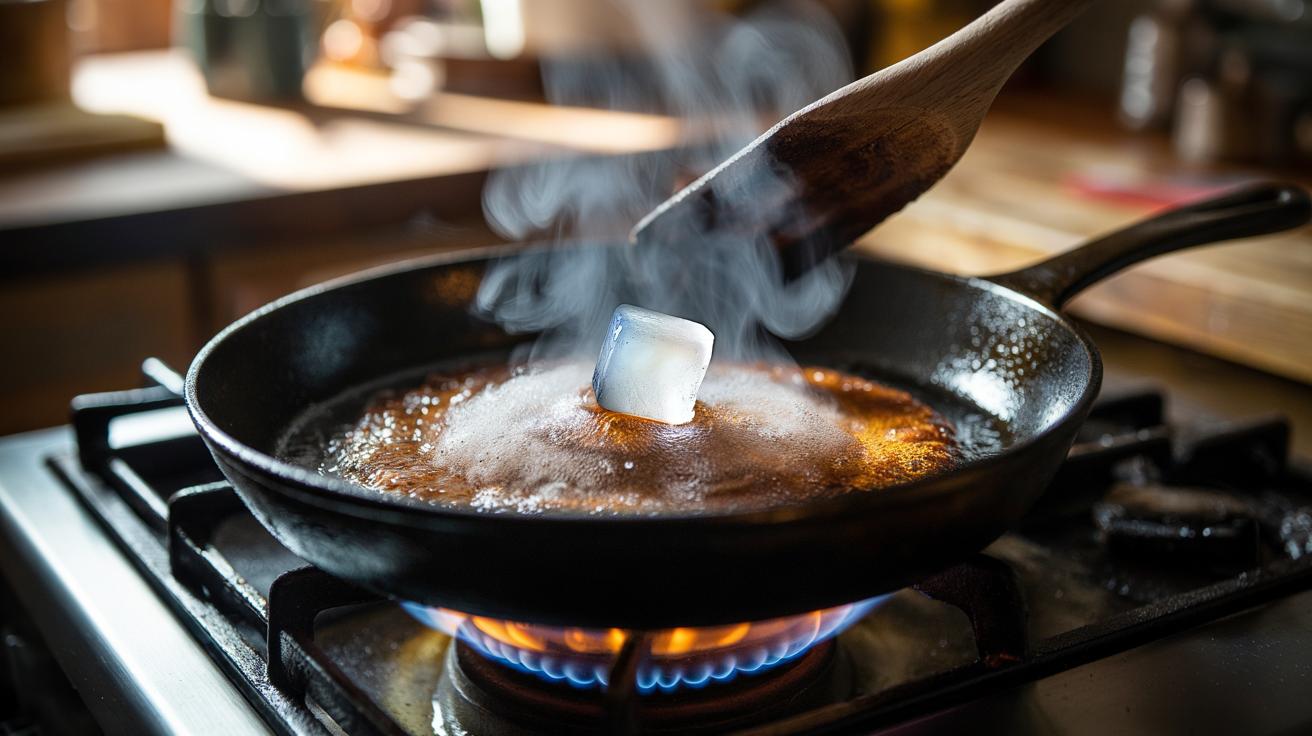
- 🔥 The hot pan + ice cube creates instant steam that lifts stuck-on bits, preserving the pan’s seasoning and polymerised oil without abrasive scrubbing.
- 🧊 Method: keep the skillet medium-hot, add one ice cube or 1 tbsp water, nudge released fond with a wooden spatula, wipe clean, reheat to dry, then apply a thin coat of neutral oil.
- ⚠️ Safety first: use small water additions to avoid thermal shock, don’t douse a hot pan, and treat enamelled cast iron gently; use gloves and ventilation.
- 🧪 Science and myths: a cured polymer layer tolerates brief steam; salt is optional, and a small amount of mild soap won’t strip robust seasoning.
- 📝 Quick wins: ideal for post-sear cleanup and controlled deglazing, this routine preserves patina, speeds washing up, and extends your skillet’s lifespan.
Across Britain’s kitchens, the oldest piece of kit is often the most misunderstood: the humble cast-iron skillet. When dinner leaves stubborn, caramelised bits welded to its surface, many home cooks panic, fearing they’ll ruin the cherished seasoning. There’s a smarter escape route. The hot pan + ice cube trick harnesses steam—not scraping—to lift stuck-on food, leaving the pan’s protective polymerised oil intact. The aim is to loosen debris without stripping your hard-won patina. It is quick, controlled, and surprisingly gentle, letting physics do the heavy lifting while you protect the pan for its next steak or sizzling shakshuka. Here’s how it works, why it’s safe, and when to use it.
Why Steam Saves Your Seasoning
A well-seasoned pan is coated in a microscopically thin, polymerised oil layer—a hard, slick film created by heat. Food sticks when residues outstubborn that film or when there’s insufficient fat. Add an ice cube to a hot surface and you get instant steam. That vapour flashes between the stuck bits and the iron, infiltrating the tiny gaps created by heat expansion and loosening the bond. The effect is like a gentle deglaze, but with near-zero liquid left behind. Because steam is transient and non-abrasive, it won’t sandblast your seasoning. Think of it as targeted release rather than a full wash.
Crucially, the pan must be hot—warm enough for rapid vaporisation, not roaring red. At this temperature, the seasoning remains stable, while moisture penetrates crusted fond. The steam releases browned sugars and proteins without tugging at the patina. Light passes with a wooden scraper complete the job. Use the smallest effective amount of ice to avoid thermal shock, and the patina should emerge gleaming, not dulled.
Step-By-Step: The Hot Pan + Ice Cube Method
1) Finish cooking and pour off excess fat. Keep the pan over a medium to medium-high flame. 2) Drop in one small ice cube or a tablespoon of water. The instant hissing is your cue that steam is working under the stuck bits. 3) Agitate with a wooden spatula, nudging at residue as it releases. 4) If needed, add a second cube in stages, not all at once. Never plunge a hot skillet into cold water or a sink full of ice. 5) Wipe with kitchen roll, then return the pan to low heat to drive off moisture. 6) Rub in a teaspoon of neutral oil, heat until it just shimmers, and wipe dry for a protective finish.
Gloves or a dry tea towel help. Work with the hob extraction on; steam rises fast. Seasoning-friendly additions include a pinch of coarse salt as a mild, optional scrub if residues persist. Avoid metal scouring pads. Always evaporate residual moisture before storage, as lingering damp invites rust. Done right, the method takes under three minutes and preserves the patina you’ve built up over time.
Science, Safety, and Common Myths
Cast iron shrugs off heat, but dramatic temperature swings can bite. A controlled ice cube generates steam locally without dousing the entire pan. That’s key. Cracking risk rises when a very hot pan meets a large volume of cold water, especially with thin or flawed iron. Enamelled cast iron is more sensitive; use modest water additions and keep heat moderate. For bare cast iron, the micro-layer of seasoning is chemically robust; it tolerates the brief encounter with steam far better than prolonged boiling or aggressive scouring.
Myths linger. “Ice strips seasoning” is wrong when amounts are small and the pan is rewarmed and oiled. “Salt is mandatory” isn’t true; it’s optional insurance. “Soap is forbidden” persists from the days of harsh detergents; a tiny dab of mild soap won’t dissolve a cured polymerised coating, though it’s often unnecessary after steaming. The golden rule is gentle intervention, swift drying, and a whisper of oil. Follow that and your skillet remains non-stick, glossy, and ready for service.
Quick Reference: Tools, Temperatures, and Dos and Don’ts
| Item | Notes |
|---|---|
| Heat Level | Medium to medium-high; hot enough to flash water to steam, not smoking furiously. |
| Ice/Water Amount | Start with one cube or 1 tbsp water; add in increments only if needed. |
| Tools | Wooden spatula, tongs, tea towel or glove, kitchen roll, neutral oil. |
| Dos | Steam, wipe, reheat to dry, oil lightly, store dry. |
| Don’ts | Don’t plunge into cold water; avoid metal scouring pads; don’t soak overnight. |
This is essentially controlled deglazing without wine or stock. It’s ideal after searing steaks, frying eggs, or crisping halloumi, when a smattering of fond refuses to budge. If residue is sugary and burnt, add a second steam cycle and finish with a sprinkle of salt. Keep additions small and deliberate to protect the pan’s thermal stability. The final oil wipe restores sheen and bolsters the seasoning, so the next cook begins on a slick, resilient surface.
Used thoughtfully, the hot pan + ice cube trick becomes a weeknight lifesaver, letting you preserve flavour and seasoning while cutting cleanup time. It respects the metallurgy of cast iron and the chemistry of polymerised oil, replacing elbow grease with a neat burst of steam. Next time you face a crusty aftermath, skip the scourer and try the gentle hiss-and-wipe routine. Your skillet will last longer, look better, and cook more predictably. How might you adapt this steam-first approach to your own favourite dishes and busy kitchen rhythm?
Did you like it?4.5/5 (22)