In a nutshell
- 🍋 Acids lower pH and gently denature proteins, loosening fibres for even moisture retention; they prime collagen for heat-driven gelatinisation, but excess acidity can turn textures mealy.
- 🧂 Add salt (1–2%) to solubilise myosin, boosting seasoning and juiciness; balance acid with salt, then pat meat dry before cooking for a better crust.
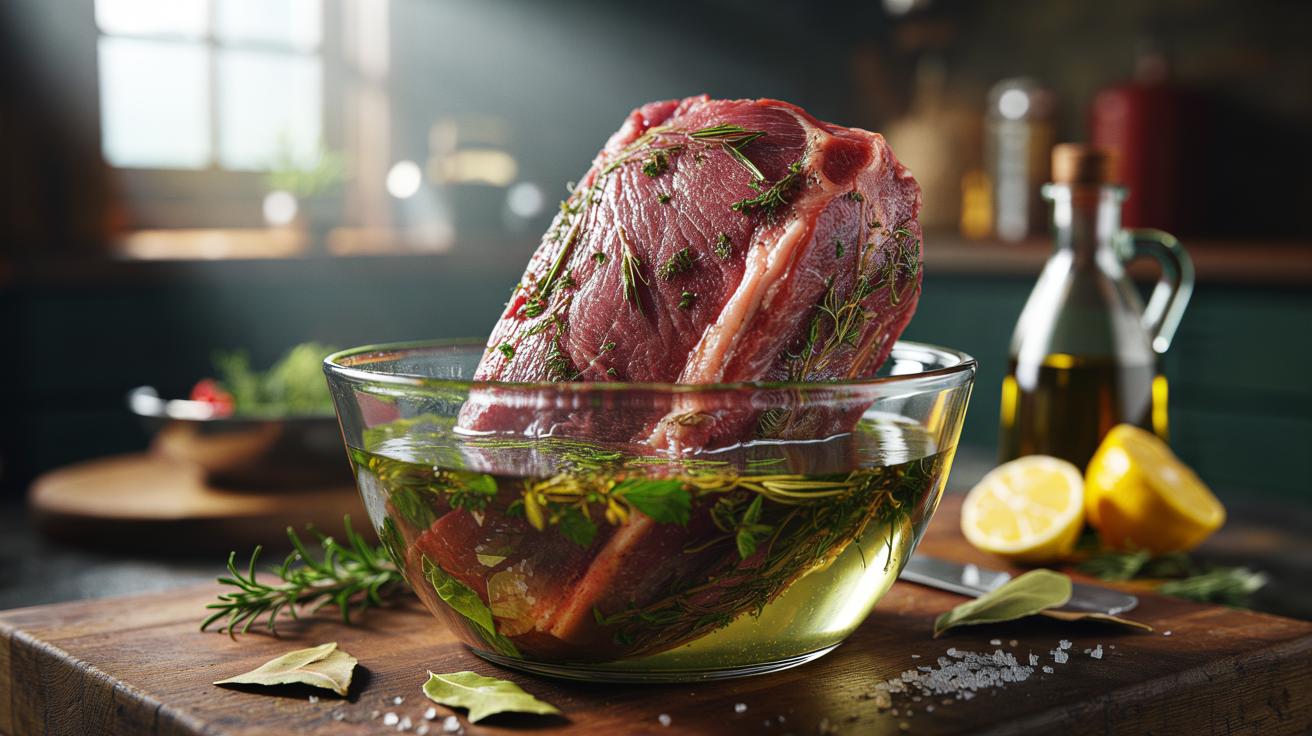
- 🌿 Build a herb infusion with a 2:1 oil:acid base, crushed herbs (rosemary, thyme, bay, parsley), and a touch of sugar; steep herbs in the acid first, bag the meat evenly coated, and use 150–200 ml per 500 g.
- ⏱️ Match timing to acid: yoghurt/buttermilk 3–12 h, vinegar 1–4 h, lemon 30–90 min; marinate chilled in non-reactive containers, and boil or discard used marinade to ensure food safety.
- 🔬 Remember the surface effect: marinades don’t penetrate deeply; scoring or needle-tenderising helps, drying ensures a strong sear, resting redistributes juices, and small pH/time tweaks yield big texture gains.
In British kitchens, the toughest cuts often hide the best flavour—if you know how to coax it out. A carefully balanced herb infusion soak uses gentle acids to loosen the structure of tough meat, allowing heat to finish the job and deliver a succulent payoff. The chemistry is simple yet powerful: tweak the pH, nudge proteins out of shape, and you unlock tenderness without losing character. Think brisket that carves like butter, or leg of lamb with bite yet bounce. Get the acid-salt-herb triad right, and your grill, oven, or pan works with you rather than against you. Here’s how the science and the seasoning meet for juicier results every time.
Why Acids Make Meat Juicier
Acids such as vinegar, lemon juice, and cultured dairy shift a meat’s surface pH, nudging muscle proteins to denature—they unwind, exposing charged sites that change how fibres hold together. This loosening makes the outer layers less resistant to heat and allows seasoning to cling. At cooking temperatures, partially denatured proteins coagulate into a finer matrix that traps moisture more evenly, rather than squeezing it out in a rush. Collagen in tougher cuts still needs heat and time to melt into gelatine, but an acidic head start lowers the threshold and improves the texture of the outer few millimetres.
The trick is balance. Push acidity too far and you reduce water retention, leading to a mealy or chalky bite. Add a pinch of salt (about 1–2% relative to the meat’s weight) and you solubilise myosin, improving juiciness and seasoning all the way through. A well-judged acidic marinade tenderises the surface while salt safeguards succulence during cooking.
Building a Herb Infusion Soak
Start with a base: combine 2 parts oil with 1 part acid (wine vinegar, cider vinegar, lemon, or cultured dairy like yoghurt or buttermilk). For every 500 g of meat, use 150–200 ml total marinade and add 8–10 g fine salt. Fold in a generous handful of herbs: rosemary and thyme for lamb, bay and parsley for beef, sage and marjoram for pork, dill and tarragon for poultry. Whole spices—cracked black pepper, coriander seed, juniper—lend depth without harshness. A touch of honey or brown sugar softens acidity and aids browning.
Crush herbs lightly to release oils, then steep them in the acidic element for 10 minutes before adding oil; this intensifies the herb infusion. Bag the meat with the soak, pressing out air so the surface is evenly coated. Refrigerate and turn once or twice. Keep the liquid cool and the timing measured: you’re guiding chemistry, not drowning the cut. Before cooking, pat dry for better sear; brush on a thin film of fresh oil and finish with a last-minute scatter of chopped herbs to refresh aroma.
Timing, Cuts, and Safety
Marinades don’t penetrate deeply; diffusion is slow and the effect is concentrated near the surface. Use time to suit structure: tender cuts need minimal soaking to avoid softening into mush, while dense, connective cuts benefit from longer exposure. Always marinate in the fridge in glass or food-safe plastic, never in reactive metals. Discard used marinade or boil it hard for at least three minutes if you intend to baste. Dry the meat before heat to prevent steaming and encourage a robust crust. Let chemistry prime the surface, then let heat transform the core.
As a rule of thumb, dairy-based acids are gentler and can run longer, while citrus and vinegar act faster. Needle tenderising or scoring increases effect, as does slicing thicker joints into steaks. Resting after cooking matters: redistributed juices redeem any marginal moisture loss during searing, leaving a plumper bite.
| Acid Choice | Flavour Profile | Best For | Typical Time |
|---|---|---|---|
| Yoghurt/Buttermilk | Mild, creamy tang | Chicken, lamb shoulder | 3–12 hours |
| Cider/Wine Vinegar | Bright, fruity acid | Pork chops, beef flank | 1–4 hours |
| Lemon Juice | Clean, citrus lift | Seafood, chicken breasts | 30–90 minutes |
| Verjus/Apple Juice | Soft acidity, subtle | Game birds, pork | 2–6 hours |
Here’s a dependable template: 120 ml yoghurt, 60 ml lemon juice, 30 ml olive oil, 10 g salt, 2 tsp honey, 2 crushed garlic cloves, 1 tsp cracked pepper, 2 sprigs rosemary, 2 sprigs thyme. For 1 kg lamb shoulder steaks, marinate 6 hours; for chicken thighs, 3 hours. Swap in cider vinegar and bay for pork; add juniper and parsley for beef; fold in dill and a pinch of mustard for poultry. Salt stays constant; tweak the acid to taste and tenderness needs. Small adjustments to pH and time shift texture dramatically, so keep notes as you cook.
Did you like it?4.5/5 (29)