In a nutshell
- 🔬 Crushing ruptures cells so alliinase converts alliin into allicin, delivering deeper flavour that binds to fat and amplifies umami in soups.
- 🧄 Technique matters: whole is mild, sliced/chopped are balanced, and garlic paste (crushed with a pinch of salt) gives maximum intensity; choose the cut to match the soup’s style.
- 🔥 Manage heat: gently bloom crushed garlic in oil or butter for 30–60 seconds without browning, and use a two-stage addition to preserve bright top notes.
- 🛒 Buy and store smart: pick firm bulbs, avoid sprouted cloves, keep them cool and dry; remove the green germ if sensitive, and consider punchier UK hardneck varieties.
- ⏱️ Prep for potency: let crushed garlic rest 5–10 minutes to build thiosulfinates, aim for 8–12 g per litre of soup, and whisk a little paste into hot fat or cream to finish.
In kitchens across the UK, cooks swear by the small but mighty ritual of crushing garlic before it meets the pot. This simple action unlocks an outsized depth, turning ordinary broth into a layered, lingering bowl. The secret lies in chemistry as much as craft: when you break the clove’s cells, enzymes spark a chain reaction that produces potent flavour molecules. Crushing is not just about texture; it is the switch that turns mild garlic into a soup-boosting powerhouse. With a little timing and the right technique, you can capture those fleeting aromatics and carry them through every spoonful, from velvety tomato to restorative chicken stock.
Why Crushing Garlic Transforms Soup
Crushing ruptures garlic’s cell walls and allows the enzyme alliinase to convert the odourless precursor alliin into allicin, the headline compound behind garlic’s bite. Allicin then cascades into other thiosulfinates and sulphur volatiles that bloom in fat and perfume your stock. The deeper taste you perceive is a chemical chorus that doesn’t happen when cloves are left whole or merely bruised. In soup, those compounds bind to fats in butter, oil, or chicken schmaltz, travelling evenly through the liquid so every sip tastes integrated rather than spiky.
There’s also synergy at play. Garlic’s sulphur notes amplify natural umami from bones, tomatoes, mushrooms, and aged cheese rinds. A crushed clove gently sweated with onions and celery creates a base that tastes rounded from the outset, requiring less salt later. Think of crushing as preloading flavour: you create an aromatic concentrate that stands up to dilution when stock and vegetables go in.
Techniques: From Whole Cloves to Paste
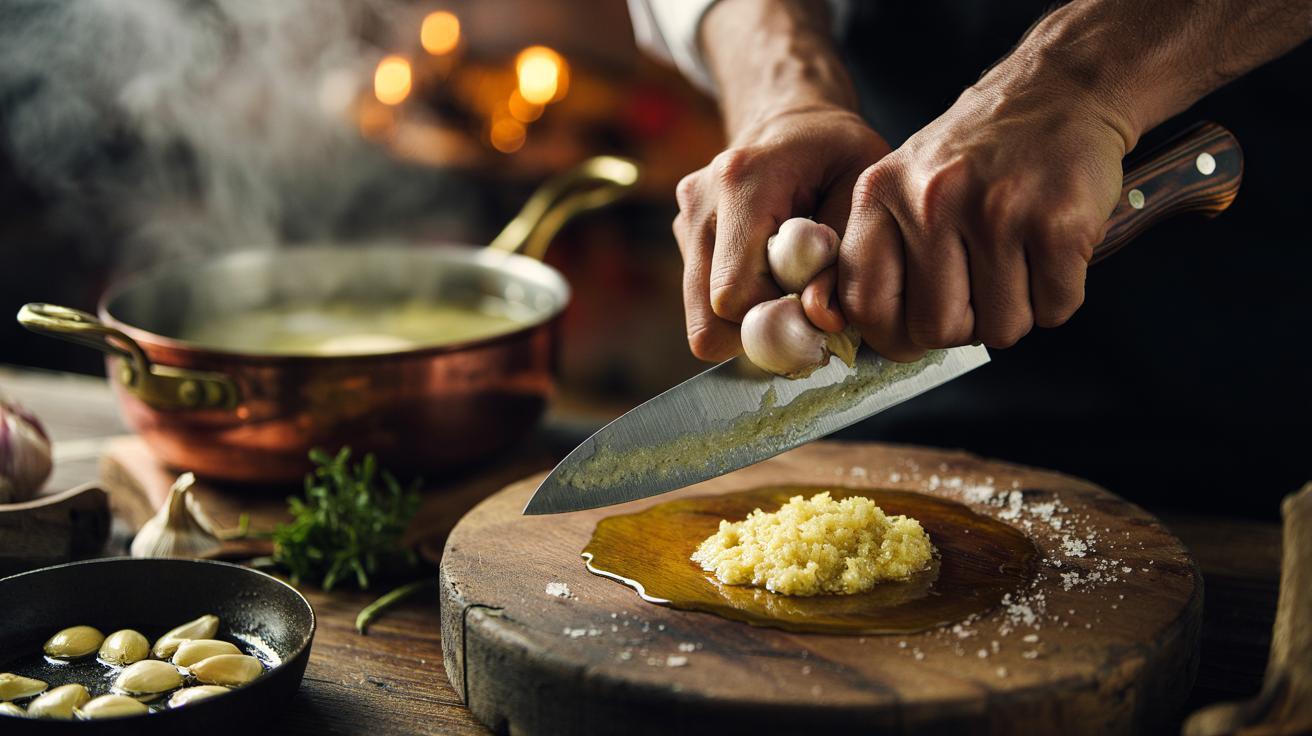
How you cut garlic determines how much enzyme action you trigger. Whole cloves release little; thin slices offer fragrance; a firm knife crush or mortar-and-pestle paste unleashes the most. Sprinkle a pinch of salt, then mash the clove with the flat of a chef’s knife to form a glossy garlic paste—the salt acts as an abrasive and draws out juices. A garlic press or microplane also works, though the result can run hotter; temper it in fat. For soup, aim for a smooth paste when you want breadth and a fine mince when you want sparkle.
| Preparation | Compound Release | Flavour Intensity | Best Use in Soup |
|---|---|---|---|
| Whole | Minimal alliinase | Mild, sweet | Long simmers; infused broths |
| Sliced | Moderate | Fragrant, delicate | Clear soups; light vegetable bases |
| Chopped | Good | Balanced garlic note | Everyday soups, chowders |
| Crushed/Paste | Maximal allicin | Deep, robust | Tomato, lentil, chicken, miso blends |
| Pressed/Microplaned | Very high | Sharp if undercooked | Brief bloom in fat; finishers |
Choose the method to match the mood: crushed for a velvety leek-and-potato; sliced for a clear chicken consommé; pressed to finish a tomato basil bowl. Texture dictates intensity as surely as seasoning.
Timing and Heat: Protecting the Aromatics
Allicin is volatile. Left to roar on high heat, it degrades into harsher notes and can scorch, turning bitter. The answer is to bloom crushed garlic gently. Warm oil or butter over medium-low heat, then stir in the paste for 30–60 seconds until the scent rises—no browning. Follow with onions and carrots or immediately dilute with stock to disperse the aromatics. Add crushed garlic early enough to infuse, but not so early that it burns or fades.
For a two-stage flavour, bloom a little at the start and a touch more near the end, stirred in off the heat and rested for a minute. This preserves top notes that cooking would otherwise mute. In rich soups—say, creamy mushroom or beef broth—finish with a tiny spoon of paste whisked into hot fat or cream so the volatile compounds hitch a ride and integrate without raw harshness.
Buying, Storing, and Prepping for Peak Potency
Choose firm, heavy bulbs with tight, papery skins. Avoid sprouted cloves; they’re not unsafe, but the green germ can taste grassy. UK-grown hardneck styles often have punchy character, while softneck supermarket bulbs offer consistency. Store in a cool, dry, airy spot—not the fridge—to protect alliinase activity. Fresh, well-kept garlic delivers more aroma with less quantity, so your soup tastes clean rather than overloaded.
Before cooking, crush and let the paste rest for 5–10 minutes. This pause allows alliinase time to create a full suite of thiosulfinates, which heat then stabilises in fat. If you’re sensitive to garlic’s heat, remove the green germ, or mellow the paste with a pinch of salt and a splash of olive oil. For consistency in recipes, measure by weight: 6–8 g per medium clove. In a litre of soup, 8–12 g of crushed garlic sets a confident baseline without overpowering the broth.
Handled with care, crushed garlic can turn humble soup into a story: a warming leek-and-potato with scented lift, a tomato bowl with backbone, a miso broth carrying quiet warmth. Treat the clove like a spice—crush to wake it, bloom to tame it, and time its arrival so the best notes survive to the table. The method is simple, the effect striking. What soup will you transform first, and how will you tailor the crush, timing, and heat to match the character you want in the final spoonful?
Did you like it?4.5/5 (22)