In a nutshell
- 🧈 Add cold butter cubes (5–8 mm) in stages to slow coagulation, releasing steam and fat that lift curds for fluffier, creamier eggs.
- 🍳 Use low heat, stir gently with a silicone spatula, and finish off heat while still glossy to let carryover heat set perfectly.
- 🔬 The science: butter’s water-in-fat emulsion cools hot spots, adds emulsifiers, and creates micro-bubbles that keep curds tender and moist.
- 🥄 Kit and ingredients: a small, heavy-based non-stick pan, fresh eggs, and unsalted butter give control and even texture.
- 🌿 Add-ins strategy: fold in warm, gentle extras (chives, soft cheese) off heat; pre-cook stronger ingredients to protect the emulsion.
Everyone knows scrambled eggs can be generous or joyless depending on how you treat heat and fat. The quiet upgrade chefs swear by is simple: add cold butter in tiny cubes to the pan as the eggs begin to thicken. Those chilled nuggets melt in waves, slowing coagulation and leaving pockets of steam and fat that turn curds plush. This method gives you control and a cushion against overcooking. It works with supermarket eggs, a modest non-stick pan, and five minutes. If you’ve ever chased café-style fluffiness at home, this is the one habit that changes your weekday scramble into a soft, luxurious plate.
Why Cold Butter Changes the Texture
Butter isn’t just flavour; it’s a water-in-fat emulsion. When added as cold, small cubes, it releases moisture and fat gradually. The water flashes into tiny bursts of steam, lifting the curds, while the fat coats egg proteins, spacing them out so they don’t tighten into rubber. Each chilled piece acts like a brake on heat, gently cooling hot spots in the pan. The result is a slower set and a softer, custard-like finish. Think of it as building micro-layers of richness through managed melting, rather than dumping all the butter in at once and watching it vanish before it can help.
There’s also a timing trick at play. Eggs set across a narrow temperature range; overshoot by a few degrees and the curds toughen. Cold butter buys you seconds of safety with every cube. Those seconds are where the magic happens—new curds form while old ones relax, keeping the texture tender. Add three or four cubes in stages and you’ll taste the difference: fluffier, glossier, gently set eggs.
Step-by-Step: Mastering the Cold Butter Method
Start with 3 large eggs, a pinch of sea salt, and 10–15 g of cold, unsalted butter cut into 5–8 mm cubes. Beat the eggs just until streaks disappear; over-whisking packs in air that later collapses into dryness. Warm a small non-stick pan over low heat. Add a pea-sized knob of butter and, as it just starts to slip, pour in the eggs. Stir slowly with a silicone spatula, sweeping the base and folding the edges toward the centre to form soft curds.
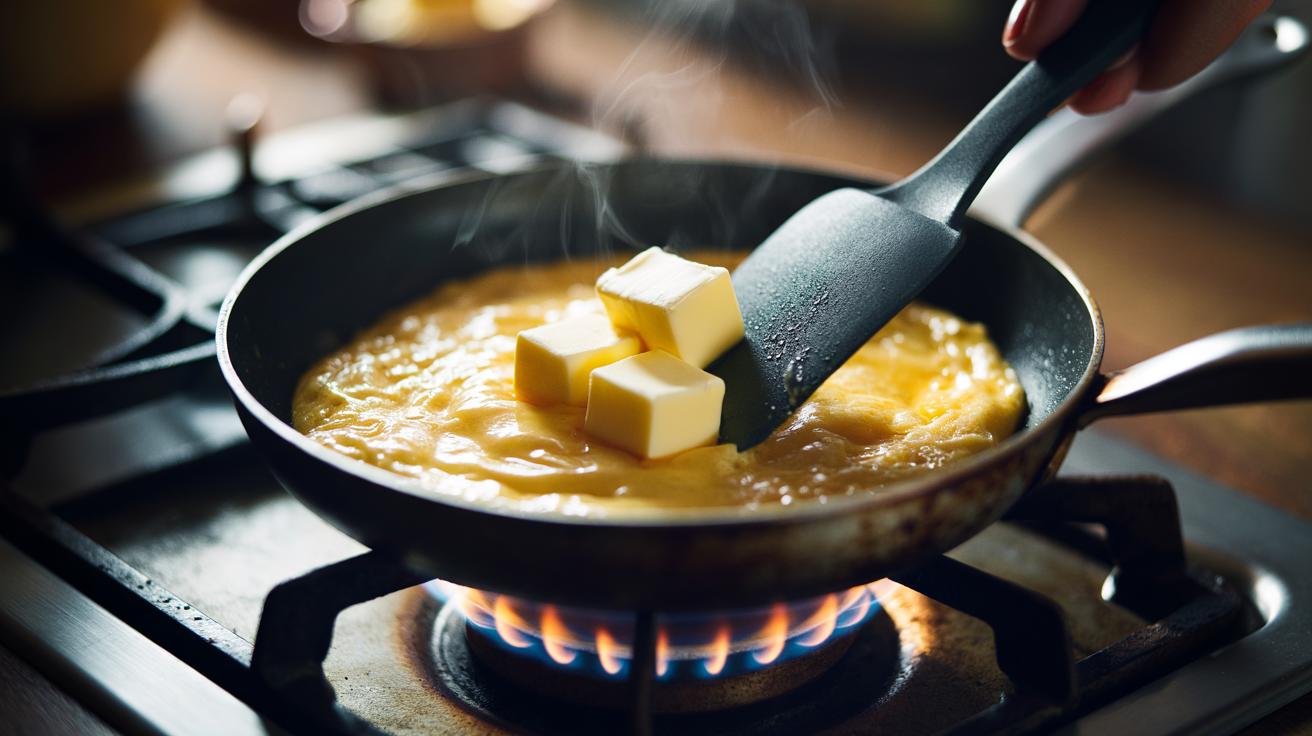
When the mixture looks like thick custard with visible softness, drop in a few tiny cubes. Stir and fold; as they melt, the eggs loosen slightly, then resume thickening. Repeat with the remaining cubes in two or three additions. Pull the pan off the heat while the eggs are still a touch runny; carryover heat finishes the set in 10–20 seconds. Finish with a teaspoon of crème fraîche, herbs, or a grind of pepper. Serve on warm toast to preserve that cloud-light texture.
Science at the Stove: Emulsions and Temperature
Eggs thicken when proteins unfurl and link together. Too hot, and those links tighten into a squeaky network. The cold butter method tempers this process three ways. First, chilled fat physically cools the mixture, preventing sudden spikes. Second, melted butter adds emulsifiers like phospholipids that help water and fat hold together, so the curds stay moist. Third, the extra water in butter—about 15–20%—steams into micro-bubbles, lifting the structure. The result is a delicate set with shine, not a dry scramble.
Temperature is your north star. Aim for gentle heat so the curds form slowly, giving each butter cube time to melt and mingle. If you hear aggressive sizzling, you’re too hot. A steady, lazy burble is ideal. You’re building an emulsion in motion: fat coating protein, moisture trapped within, and minimal evaporation. That’s why a final off-heat rest matters—flavours settle, and the texture stabilises into creaminess.
Choosing Eggs, Pans, and Heat
Good kit makes the trick easier. Use a small, heavy-based non-stick pan so heat stays even and the spatula can sweep every corner. Medium-low heat beats speed: you want control, not drama. Fresh eggs bind better and taste fuller, and unsalted butter lets you season precisely. If you’re dairy-averse, a touch of neutral oil plus a final spoon of plant crème can mimic the effect, though cold butter remains the gold standard for flavour and mouthfeel. Keep portions modest to avoid overcrowding, which cools the pan and muddles the curds.
| Variable | Recommendation | Why It Matters |
|---|---|---|
| Butter Size | 5–8 mm cubes, very cold | Melts in stages, controls heat and texture |
| Pan | Small non-stick, heavy base | Even heating, easy folding, fewer hotspots |
| Heat | Low to medium-low | Prevents tough curds, supports emulsion |
| Finish | Off-heat, still glossy | Carryover heat completes the set |
If you like add-ins, keep them gentle and warm: chives, soft cheese, or smoked salmon off-heat. Strong veg or meats should be pre-cooked and cooled slightly; otherwise, they leak water and break the emulsion. Season early with salt so proteins relax and hold moisture.
The cold butter trick isn’t theatrical; it’s thoughtful. By staging tiny, chilled cubes into the pan, you turn a rushed breakfast into a considered ritual with outsized payoff. It’s forgiving enough for busy mornings yet precise enough to please a chef. Once you feel the moment to pull the pan, you’ll never overcook scrambled eggs again. From there, you can riff: a hint of miso, a shower of chives, or a spoon of crème fraîche. How will you tailor this silky, slow-melt method to your own kitchen rhythm?
Did you like it?4.4/5 (23)