In a nutshell
- 🍲 Slow extraction unlocks umami by pairing glutamates with nucleotides and converting collagen to gelatin, delivering layered flavour and body.
- 🦴 Build the base cold: ~1 kg bones to 2–2.5 L water, add mirepoix plus kombu/shiitake, skim diligently, keep salt until the end; roast bones for darker stews.
- 🔥 Technique matters: maintain a bare simmer (≈85–92°C), avoid a rolling boil, strain without pressing, and chill overnight to lift fat and refine texture.
- 🧂 Smart boosters: use restrained tomato paste, fish sauce, miso, Parmesan rinds, or Marmite; a touch of acid brightens; inosinate + guanylate amplifies savour.
- 🥕 Versatile results: vegetarian stocks shine with kombu, dried mushrooms, and roasted onions, while natural gelatin thickens stews for a silky, satisfying finish.
British kitchens have long trusted a quiet simmer to turn thrift into comfort. What separates a forgettable stew from a memorable one is not the garnish or the garnish but the broth simmer base that underpins every bite. When time does the work, proteins loosen, minerals leach, and umami compounds unfurl into the pot. The result is a broth that feels rounded, not merely salty; layered, not busy. Slow extraction builds a canvas that welcomes root vegetables, grains, and inexpensive cuts, transforming them into a spoon-coating, savoury whole. Here is how to construct that base, control the simmer, and draw out the deep flavours that make simple stews taste like they have been tended by generations.
Why Slow Extraction Unlocks Umami
The science behind a great base starts with glutamates and nucleotides. Meat introduces inosinate, dried mushrooms bring guanylate, and seaweeds such as kombu are rich in glutamate. When these molecules meet, their flavours amplify each other, intensifying umami without excess salt. A slow simmer also melts collagen into gelatin, giving broth its prized body and “lip-smacking” finish. Patience is flavour: time lets water infiltrate dense tissues and extract soluble goodness without harshness. The payoff is a base that supports herbs, spices, and acids rather than fighting them.
Heat management protects those gains. High heat emulsifies fats and drives off delicate aromatics, making stock muddy and aggressive. A gentle simmer keeps particles from shearing, preserving clarity and finesse. Use enough time to leach minerals from bones and to coax sweetness from onions, carrots, and leeks. The aim is harmony: rounded savour, faint sweetness, and balanced minerality—an elegant stage for any stew, from barley and beef to celeriac and chickpea.
Building a Broth Simmer Base: Bones, Aromatics, and Water
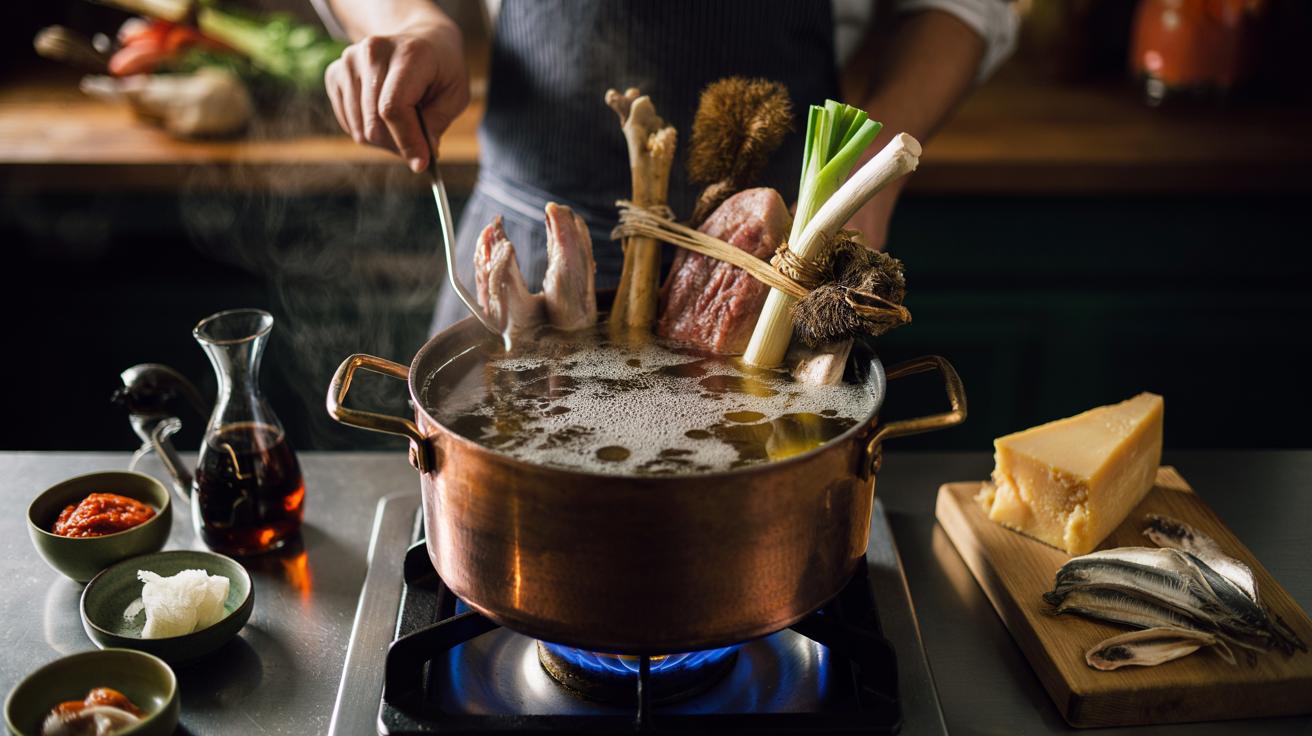
Start cold. Cover meaty bones—chicken wings, feet, backs, or beef shin—with fresh water, add a splash of cider vinegar to aid extraction, then bring to a whisper of movement. Add a gentle mirepoix of onion, celery, and carrot, plus leek tops, garlic, and a restrained bouquet garni. A piece of kombu or a dried shiitake introduces glutamate and guanylate early. Keep salt out until the end; salinity masks nuance and tightens proteins. Skim diligently in the first hour to remove grey foam and keep flavours clean. For a white, delicate base, skip roasting; for darker stews, roasted bones add complexity.
Proportion matters. Aim for roughly 1 kg bones to 2–2.5 litres water, adjusting for desired body. Chicken yields a supple gel more quickly than beef; trotters and feet turbocharge gelatin. Aromatics should whisper, not shout. Too much celery turns bitter; star anise and clove are potent—use sparingly. Once the broth is clear and aromatic, strain without pressing solids, which can cloud the liquid and add harshness.
| Base Component | Approx. Simmer Time | Key Compounds | Notes |
|---|---|---|---|
| Chicken wings/feet | 3–4 hours | Gelatin, inosinate | Quick body; clean flavour |
| Beef shin/marrow bones | 6–8 hours | Minerals, collagen | Deeper savour; skim well |
| Kombu strip | 20–45 minutes | Glutamate | Remove before boil to avoid bitterness |
| Dried shiitake | 1–2 hours | Guanylate | Add to meat or veg stocks |
Temperature, Time, and Technique for Silky Clarity
Keep the pot at a bare simmer—never a rolling boil. You’re looking for an occasional lazy bubble and a shimmer across the surface, roughly 85–92°C. Boiling shreds proteins, clouds broth, and disperses fat into the liquid, dulling definition. Use a heavy pot, lid ajar, to control evaporation without trapping scum. Skim during the first 45 minutes, then intermittently. If you have a thermometer, treat it as insurance; if not, your eyes and ears are enough. Clarity in the pot becomes clarity in the stew’s finish.
Patience rewards texture as much as taste. Long, gentle heat dissolves connective tissue into gelatin, lending a velvety mouthfeel that thickens sauces naturally. Rest the strained broth overnight; chilled fat lifts off in a single layer, and flavours knit. Pressure cookers extract fast but risk muddiness; they’re excellent for weekday speed, yet a weekend stockpot gives finesse. Season only when the stock becomes the stew, after reduction and ingredient additions, to avoid oversalting as liquid concentrates.
Smart Umami Boosters You Already Own
Strategic pantry additions deepen the simmer base without crowding it. A spoon of tomato paste adds subtle sweetness and glutamates; brown it with onions for a darker stew. A splash of fish sauce vanishes into the pot, lifting savour in meat and veg dishes alike. Miso enriches body when stirred in off the boil to preserve its aromas. Parmesan rinds, anchovy, or a dab of Marmite provide concentrated glutamates that integrate beautifully when used with restraint. Small amounts create lift; large amounts create noise.
Vegetarian bases shine with kombu, dried shiitake, and roasted onions. Toasted buckwheat, barley, or charred leek greens add husky depth, while soy sauce or tamari supplies clean salinity. For gentle brightness, finish with lemon zest, a dash of vinegar, or a spoon of mustard to wake the palate without eclipsing the broth. Think synergy: inosinate from a chicken base plus guanylate from mushrooms yields a result bigger than either alone, letting carrots, beans, and grains taste remarkably complete.
A great stew begins days earlier, in the quiet hour when bones, aromatics, and water learn each other’s language. Slow extraction is not about fuss; it is about control, restraint, and respect for the ingredients’ chemistry. When the base is right, everything added later tastes truer. With a pot at a gentle tremble, a skimmer at hand, and a few clever boosters nearby, you can turn modest shopping into memorable dinners all week. What combination will you try next to build your own layered, gentlemanly broth that turns simple stews into something you’ll remember?
Did you like it?4.4/5 (25)