In a nutshell
- 🧪 Pectin offers weak ionic binding to sodium while apple tissue absorbs briny liquid; it softens saltiness but isn’t a magic desalination fix.
- 🍏 Use firm, tart apples like Granny Smith or Bramley, peel on, cut thick wedges, simmer 5–10 minutes, stir, remove before mush, and repeat with fresh slices as needed.
- 🧭 For major oversalting, prioritise dilution, add unsalted bulk (beans/grains), or split-and-blend; adjust perception with acid and fat, and avoid re-concentrating through hard boils.
- 🎯 Match to the dish: apple complements tomato or cider braises; tame sweetness with lemon or vinegar; use under-ripe fruit for higher pectin and better structure, and remove pieces before serving.
- ✅ Practical takeaway: treat the apple slice as a fine-tuning tool alongside steady tasting, gentle heat, and balancing tactics to rescue a salty stew without losing body or character.
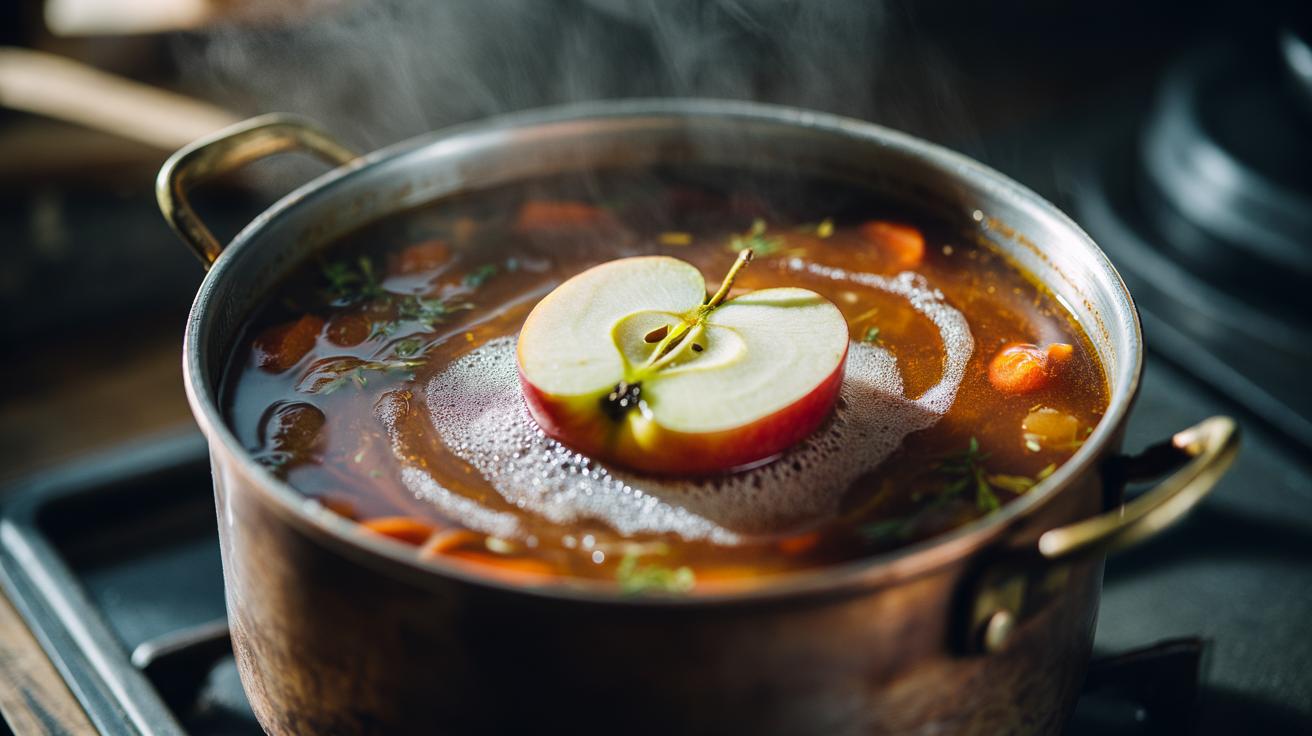
Every cook has felt that pang of regret after a heavy-handed pinch of salt. Among the gentler fixes doing the rounds is the apple trick: drop a slice into your simmering stew and watch the salinity soften. Behind the kitchen lore lies an intriguing bit of food chemistry. Apples carry pectin, a plant fibre with negatively charged sites that can interact with dissolved sodium. They also soak up some briny liquid, taking a little seasoning with them when removed. It’s not a magic eraser for saline disasters, but it can nudge a dish back into balance, especially when paired with sensible dilution and smart flavour adjustments.
The Science Behind Apple Pectin
At its core, pectin is a network of galacturonic acid units; each unit presents a carboxyl group that, in hot aqueous conditions, can carry a negative charge. These sites interact with positively charged ions in broth. With calcium and magnesium, the attraction is strong; with sodium ions, it’s notably weaker yet still present. In a stew, two things happen at once: a bit of ionic association between pectin’s carboxylates and sodium, and simple physical absorption as the apple’s porous tissues take up seasoned liquid. This combination is why an apple slice can seem to “calm” saltiness without truly desalinating the pot.
Heat and pH matter. Slightly acidic environments (common in tomato-based or wine-enriched stews) keep pectin soluble but structured, increasing the effective surface for interaction. High-pectin varieties and peel-on pieces raise the available binding sites. Still, the capacity is modest: a slice won’t sequester teaspoons of salt. The benefit is real but incremental, often enough to turn a borderline dish into a comfortable one. That’s why professional kitchens pair the apple tactic with dilution and flavour balancing rather than relying on it alone.
How to Use an Apple Slice in Stew
Choose a firm, tart apple such as a Granny Smith or a cooking apple. Cut thick wedges, 1–2 cm across, and keep the peel on for additional pectin. Slide two or three pieces into a litre of too-salty stew and simmer gently for 5–10 minutes. Stir occasionally to maximise surface area contact. Lift the pieces out before they soften to mush, taste, and decide whether to repeat with fresh slices. Add in stages and taste between additions; chasing perfection in one leap usually overshoots.
If the stew remains brashly salty, add a measured splash of unsalted stock or hot water to dilute, then restore body with a few vegetables or lentils. A pat of butter or a spoon of olive oil can round edges; a hint of vinegar or lemon brightens perception and reduces the impression of salinity. Avoid prolonged boils, which concentrate salt again through evaporation. The aim is gentle correction, not a flavour tug-of-war.
Evidence, Limits, and Better Fixes
Food science suggests pectin binds divalent ions like calcium far more strongly than monovalent sodium. In practice, an apple slice yields a modest improvement via weak ionic association and liquid uptake. That’s helpful for slight over-seasoning, not for a misfire measured in tablespoons. Think of the apple as a fine-tuning tool, not a rescue raft. Taste perception also plays a role: apple contributes subtle acidity and aroma, which can make salt feel less aggressive without removing much of it.
When the pot is truly overboard, proven methods work best: controlled dilution, splitting the stew and recombining with an unsalted batch, or bulking with unsalted beans or grains that absorb salty liquid and then remain in the dish. Acidity and fat adjust perception; starch adds body after dilution. The table below summarises practical options and their strengths.
| Method | Main Mechanism | Pros | Watch-outs | Typical Impact |
|---|---|---|---|---|
| Apple Slice | Pectin interaction + liquid absorption | Gentle; adds aroma | Modest effect; slight sweetness | Small reduction; better balance |
| Dilution | Lower salt concentration | Predictable | Thins flavour; needs re-bodying | Reliable, scalable |
| Add Unsalted Bulk | Absorb salty liquid (beans, grains) | Hearty texture | Alters proportions | Moderate reduction |
| Acid/Fat Balance | Perception management | Polishes flavour | Doesn’t remove salt | Softens salinity |
| Split and Blend | Combine with unsalted batch | Precise control | Requires extra cooking | Large reduction |
Choosing the Right Apple and Flavor Effects
For savoury dishes, lean towards tart, firm apples—Granny Smith, Bramley, or other cookers—because their higher pectin and acidity work in your favour. Leave the peel on; it contains valuable pectin and phenolics. Cut generous wedges rather than thin slices to prevent disintegration. Under-ripe fruit often carries more pectin and holds structure better in heat. If sweetness is a concern, temper it with a squeeze of lemon or a splash of cider vinegar during tasting.
Consider the stew’s personality. Tomato-based braises and cider-laced pork dishes welcome apple’s lift; delicate stocks and clear broths may turn cloudy and pick up fruit notes you didn’t intend. Spices like cumin, bay, and thyme play nicely; star anise or cinnamon may accentuate apple’s character, for better or worse. Remove the fruit before service to keep texture clean. If you want apple flavour without presence, infuse briefly, taste, then strain—letting the chemistry help while the character stays in the background.
Used wisely, an apple slice is a nimble tool: its pectin offers mild ionic binding while its tissues quietly sop up briny liquid, helping a slightly salty stew taste balanced again. Pair it with measured dilution, a steady tasting routine, and the judicious use of acid and fat, and you’ll rarely lose a pot. The trick’s strength lies in restraint and timing. Next time salinity slips from sparkle to shout, will you reach for an apple first—or design a rescue that blends science, seasoning, and your own signature style?
Did you like it?4.5/5 (26)