In a nutshell
- 🍺 A beer rinse deposits lightweight proteins and sugars on hair; its slightly acidic pH smooths the cuticle, creating the look of instant shine and body.
- 🔧 How to: use flat beer with a 1:1 dilution, apply from mid-lengths to ends, leave for 2–5 minutes, rinse cool, and condition lightly; repeat once every 1–2 weeks.
- ✨ Benefits vs limits: expect frizz reduction, better slip, and soft hold, but it’s cosmetic—beer won’t repair split ends or reverse bleach damage.
- 🧪 Choose smart: Light Lager for fine hair, Amber for medium textures, Stout for coarse/frizzy; alcohol-free is gentler and low-scent—always let it go flat.
- ⚠️ Precautions: avoid protein overload, do a patch test on color-treated hair, limit scalp contact if sensitive, and balance with a hydrating mask for a healthy moisture–protein balance.
Parisians have a reputation for turning everyday pantry items into polished beauty rituals, and the beer-on-hair trend is a perfect example. Stylists whisper that a quick beer rinse can revive dull lengths before a night out, giving glossy swing without a salon appointment. The secret lies in proteins and sugars from malted barley and yeast that cling to the hair shaft, along with a naturally slightly acidic pH that smooths frayed cuticles. Used correctly, beer can create the impression of instant repair by filling microscopic gaps and boosting shine. Here is why the trick works, who benefits, and the smartest way to try it at home without wrecking your blow-dry.
From Bistro to Bathroom: The Science Behind Beer Rinses
Beer carries a cocktail of peptides, amino acids, B vitamins, and trace minerals derived from barley, hops, and yeast. Hair is made of keratin, a protein; when hair is damaged, its outer cuticle lifts and the shaft becomes porous. The small proteins in beer can adhere to these rough spots, forming a light film that makes strands feel stronger and smoother. Sugars from malt deliver subtle hold, enhancing body without stiffness. Just as crucial is beer’s slightly acidic pH, which encourages the cuticle to lie flatter, reflecting more light for a quicker shine payoff.
This isn’t a miracle cure: the effect is cosmetic and temporary, but immediate. Alcohol content evaporates fast, helping the mixture spread, while carbonation dissipates, leaving behind the useful residues. French stylists often reach for a light lager backstage to perk up tired ends between shows because the rinse adds slip and luminosity without weighing hair down. Think of it as a quick, inexpensive protein glaze—one that rinses out cleanly with your next wash.
How to Do a Beer Rinse the French Way
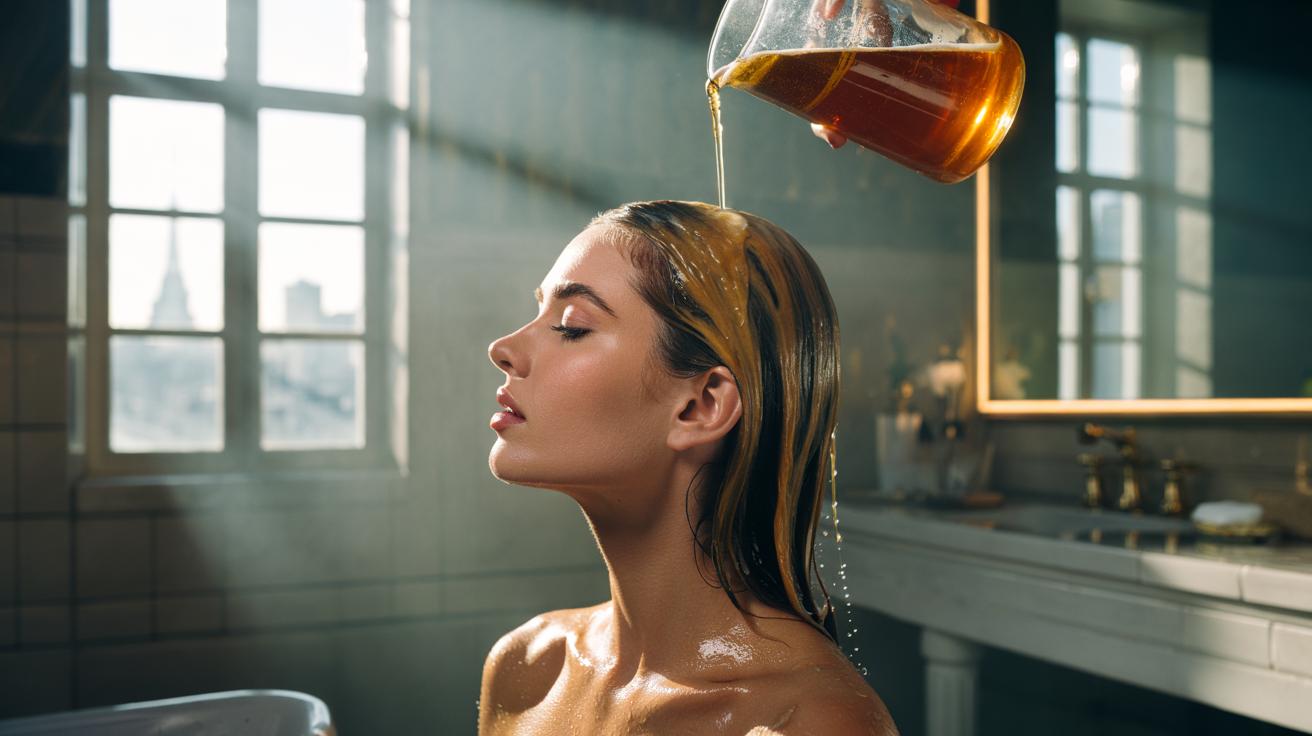
Start with one cup of flat beer—open it in advance to release bubbles—then dilute 1:1 with cool water to soften any drying effect. After shampooing, gently squeeze out excess moisture. Pour the beer mixture slowly over lengths, lifting sections with your fingers so every strand is coated. Work from mid-lengths to ends if your scalp runs oily; include the roots only if you need maximum lift. Massage for 30 seconds, then leave it on for two to five minutes while the proteins settle along the cuticle.
Rinse thoroughly with cool water to seal the surface. If your hair tangles easily, follow with a light, silicone-free conditioner on the ends only. Style as usual. For fine or limp hair, the rinse doubles as a volumizer before a blow-dry. Curly textures may prefer to air-dry to keep definition. Use this treatment no more than once every week or two, alternating with a moisturizing mask to keep the protein–moisture balance in check and avoid stiffness.
What It Fixes—and What It Doesn’t
A beer rinse can make damaged hair look revived by reducing frizz, boosting shine, and increasing apparent thickness. The light protein film fills in rough areas, so brushes glide and styles hold. It’s a quick rescue for heat-frayed ends and a clever pre-event trick for limp, day-two hair. Expect immediate cosmetic polish, not structural change. The finish is clean and touchable, especially for straight to wavy types that crave movement without residue.
There are limits. It will not mend split ends or reverse bleach-induced breakage; only trims and deep repair treatments address that. Overuse can create protein overload, leaving hair brittle or squeaky. If your hair is coarse, very dry, or high-porosity from repeated lightening, cushion the rinse with a hydrating mask afterward. Color-treated hair is generally safe, but test first—some beers carry a stronger scent that lingers. Sensitive scalps should avoid scrubbing and keep contact brief.
Choosing the Right Beer for Your Hair
The best results come from simple formulas. Reach for a light lager if you have fine or easily weighed-down hair; it leaves a whisper of protein and sugar without heaviness. Amber ales offer a bit more body for medium textures. A stout brings richer residues that can tame coarse hair but may be too much for the roots. Alcohol-free beers can be gentler for dry scalps, though they may leave slightly more sugar. Fragrance matters: pick a brew with a mild hop profile and let it go flat to avoid fizzy chaos in the shower.
To simplify selection, here’s a quick guide. Treat it as directional, not dogma—brands differ. If in doubt, dilute more and keep contact short on your first try. The goal is a light, flexible coating—not a sticky, beer-scented helmet.
| Beer Type | Residue Weight | Scent Intensity | Best For | Notes |
|---|---|---|---|---|
| Light Lager | Low | Low | Fine, oily roots | Max shine, minimal buildup |
| Amber Ale | Medium | Medium | Normal to slightly dry | Good balance of body and smoothness |
| Stout/Porter | Higher | Medium–High | Coarse, frizzy | Tames flyaways; rinse very well |
| Alcohol-Free | Low–Medium | Low | Sensitive scalp | Gentler; may feel slightly tacky if undiluted |
French women love beauty that looks effortless, and beer rinses capture that spirit: simple, inexpensive, and disarmingly effective when hair needs instant sheen. The protein trick creates the look of repaired lengths by laying a smoothing veil over rough cuticles, while the light acidity enhances reflection for a camera-ready finish. Think of it as a fast gloss, not a substitute for trims, heat protection, or deep-conditioning care. With a measured hand and the right brew, your hair can borrow a little Left Bank luminosity in minutes. Will you try the rinse straight from the fridge—or adapt the ritual into your own weekly routine?
Did you like it?4.5/5 (28)