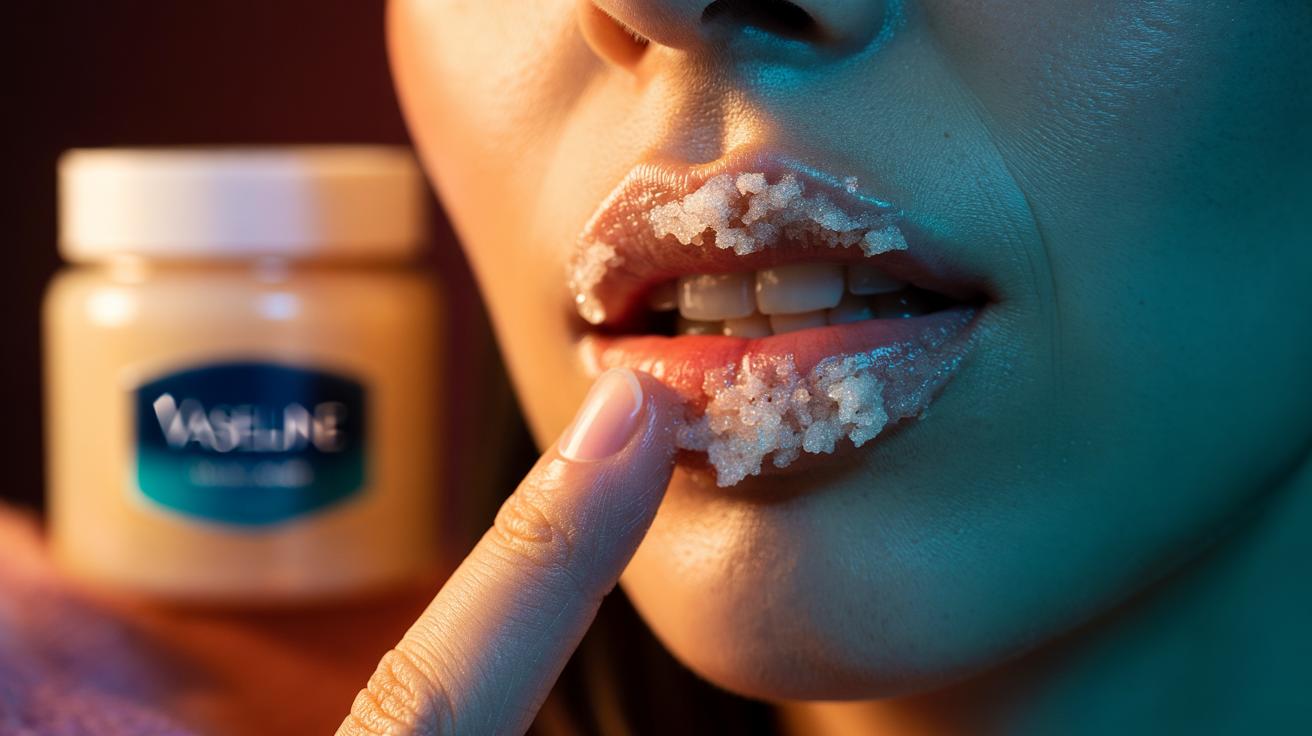
In a nutshell
- 💄 The Vaseline + sugar combo pairs gentle exfoliation with deep occlusion: sugar lifts flakes as a water‑soluble physical scrub, while Vaseline reduces TEWL and softens lips.
- 🧪 Minimal irritation comes from slip and melting crystals: use fine granules, apply gentle pressure, and let the sugar dissolve to avoid microtears.
- 🧂 Method matters: mix a pea-sized, 1:1 ratio of Vaseline to sugar, massage for 20–40 seconds, rinse, then seal with a fresh thin layer of Vaseline.
- ⚠️ Safety first: limit to 1–3 times weekly, skip if lips are cracked, bleeding, or during cold sores/eczema flares, and practice clean, single-use mixing to protect the barrier.
- 🗓️ Smart timing: try night-time use for a lasting occlusive layer; support results with steady hydration, no lip-licking, and enjoy smoother lipstick payoff.
Chapped lips can turn any lipstick into sandpaper and make a winter commute feel harsher than it is. A simple kitchen fix—mixing Vaseline (petroleum jelly) with sugar—has earned cult status because it pairs gentle exfoliation with deep occlusion. The sugar lifts flaky skin without shredding the delicate lip surface, while the jelly traps water and softens. The beauty of this duo is its speed: in a minute you can buff, soothe, and seal. Below, a clear look at why it works, the safest method, and when to skip it. Used thoughtfully, this tiny ritual can restore comfort, revive colour payoff, and make your £7 lipstick look like a £30 one.
Why Vaseline and Sugar Is a Smart Duo
Lip skin lacks oil glands and is thinner than facial skin, so it sheds unevenly and dries fast. Granulated sugar functions as a water-soluble physical exfoliant; its rounded crystals are less jagged than salt, and they melt as you massage, naturally limiting over-scrubbing. This “self-limiting” quality reduces the risk of microtears. Meanwhile, Vaseline acts as an occlusive that forms a protective film over the lips, slowing transepidermal water loss (TEWL) and softening rough patches so they detach more cleanly.
There’s chemistry behind the comfort. Sugar’s hydroxyl groups make it mildly humectant, drawing in surface moisture as it partially dissolves. The jelly’s semi-solid hydrocarbon matrix sits on top, sealing that water in. Used together, they create a two-step repair: loosen dead cells with glide, then lock moisture under a breathable shield. The result is smoother texture without the sting or redness common with aggressive scrubs and acids on the lips.
How the Scrub Exfoliates Without Irritation
The trick is low pressure and timing. Sugar gives mechanical grip; petroleum jelly supplies slip so the crystals skate rather than gouge. As you massage, the crystals dissolve, reducing abrasiveness in real time. If your lips feel heat or sharp scratchiness, you are pressing too hard or using sugar that’s too coarse. Choose fine, regular granulated sugar over demerara or large crystals.
Occlusion completes the job. After a brief buff, leaving a thin layer of Vaseline on allows water to equilibrate through the upper lip layers, softening the stratum corneum and calming any post-buff tightness. This helps lipstick apply evenly and reduces the temptation to pick at peeling edges later in the day. A gentle routine like this respects the lip barrier, which is vital if you face brisk UK winds, central heating, or frequent mask wear that disrupts hydration balance.
Step-by-Step Method, Ratios, and Safety
Start with clean lips. Blend 1 pea-sized dab of Vaseline with an equal amount of fine sugar in the palm of your hand until it forms a paste. Warm the mix between fingertips for a second. Massage on lips in small circles for 20–40 seconds, keeping pressure feather-light. Rinse with lukewarm water or wipe with a damp flannel. Finish by pressing on a fresh, thin layer of Vaseline to seal. Limit to 1–3 times weekly, depending on how flaky you are; daily scrubbing can backfire.
| Component | Role | Suggested Ratio | Notes |
|---|---|---|---|
| Vaseline (petroleum jelly) | Occlusion; glide; barrier support | 1 part | Apply a fresh layer after rinsing to lock in moisture. |
| Fine white sugar | Gentle physical exfoliant | 1 part | Avoid coarse crystals; they can cause microtears. |
| Optional honey | Extra slip; mild humectant | ½ part | Skip if allergic; makes mixture stickier. |
For hygiene, mix small batches you’ll use immediately and avoid dipping fingers back into multi-use pots. If lips are cracked or bleeding, stop. Switch to plain occlusion with Vaseline until healed.
When to Use It, and When to Skip It
Deploy this scrub when winter air, sun, or matte lip colour has left a visible film of flakes. Night-time is ideal; the post-scrub occlusive layer works well while you sleep. Keep frequency low if you already use retinoids or acids elsewhere, as lips can become reactive by association. If you feel lasting sting or see redness that lingers for hours, shelve the scrub and revert to sealing only.
Some situations call for caution. Avoid scrubbing during a cold sore, lip eczema flare, or after in-clinic treatments and fillers. People sensitive to fragrance should use plain petroleum jelly, not flavoured balms, to minimise irritants. Hydration habits matter too: sip water regularly and avoid constant lip-licking, which worsens dryness. For daily maintenance between scrubs, apply a rice-grain amount of Vaseline after brushing teeth, then before heading into the cold; that rhythm keeps flakes from returning.
Used with a light hand, a Vaseline and sugar scrub delivers a quick rescue: it loosens roughness, restores softness, and seals in water so lipstick glides rather than drags. Think of it as a reset button for weather-beaten lips, especially when central heating kicks on and coastal winds bite. Keep sessions brief, keep crystals fine, and let occlusion do the heavy lifting after the buff. What’s your ideal routine—do you prefer a once-a-week polish or tiny top-ups before big nights out, and what tweaks would make this ritual work best for your lips?
Did you like it?4.4/5 (23)