In a nutshell
- 🧪 Why patches happen: DHA bonds in the outer skin layer; uneven shedding and dry zones (knees, elbows, ankles) trap pigment, so a gentle lift—not harsh scrubbing—is the fix.
- 🫒 The science of the scrub: Olive oil softens and plasticises the stratum corneum; sugar provides controlled mechanical exfoliation with a mild humectant boost; choose grain size to match skin area.
- ⚖️ Mix and method: Use a 2:1 sugar-to-olive-oil ratio on damp skin; massage lightly in circles for 60–90 seconds, rinse lukewarm, then moisturise; protect areas you want to keep by pre-applying lotion.
- 🛡️ Safety first: Patch test; avoid use on sunburn or eczema flares; pick finer sugar for sensitive or KP-prone skin; apply gentle pressure; mind slippery surfaces.
- ✨ Aftercare and re-tan: Seal with ceramide or urea moisturiser; wait 12–24 hours before reapplying tan; exfoliate lightly the day before and use targeted spot fixes on stubborn areas.
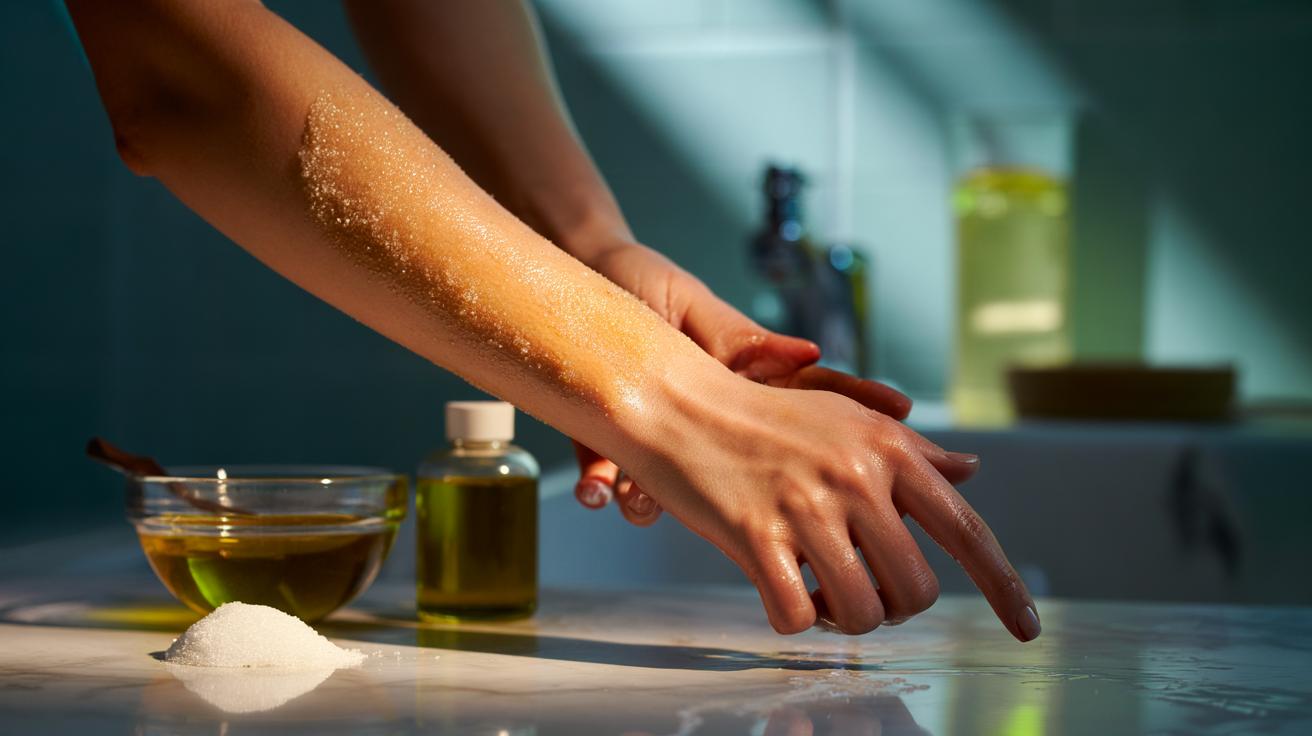
When a golden glow slips into streaks and patches, you don’t need a cabinet full of specialist removers. A humble kitchen duo—olive oil and sugar—can reset your bronze with surprising finesse. The method works because it softens, lifts, and then buffs away uneven build-up without scratching or stripping. This quick kitchen remedy can lift old colour while leaving skin supple and comfortable. With a few mindful tweaks—choosing the right grain size, timing your massage, and respecting your skin’s barrier—you can fade stubborn areas on knees, ankles, wrists, and the neck in minutes. Here’s how this simple scrub lifts colour cleanly, why it’s so effective, and the exact way to mix and use it for a seamless finish.
Why Fake-Tan Patches Happen
Fake tan develops when dihydroxyacetone (DHA) reacts with amino acids in the outermost layer of skin, creating temporary pigment. As that layer naturally sheds, anything that accelerates or interrupts shedding—tight clothing, hot showers, gym sessions, or uneven moisturising—can leave colour clinging in islands. Areas with thicker or drier stratum corneum, such as elbows, knees, and ankles, tend to trap more pigment, so they fade darker and slower. Patches aren’t a bad tan; they’re a sign of uneven skin turnover and hydration.
Because DHA sits in the dead cell layer, the most reliable way to fix patchiness is to loosen and remove that layer gently. Aggressive scrubbing risks micro-tears and redness that make patches look worse once you reapply tan. The goal is a controlled lift: soften first, then buff lightly. That’s where the olive oil + sugar combination excels, pairing slip with precision.
The Science Behind Olive Oil and Sugar
Olive oil is an emollient rich in squalene and fatty acids. It cushions friction, reduces water loss, and helps plasticise the stratum corneum so pigmented cells release more evenly. By softening the bonds between corneocytes, oil makes exfoliation easier at lower pressure. Softening before scrubbing is the difference between a clean fade and an irritated, blotchy outcome. Meanwhile, sugar acts as a mechanical exfoliant. Its rounded crystals polish away dead cells without cutting the skin, and it dissolves gradually in water, giving you built-in control over intensity.
There’s a mild humectant benefit here too: sugar draws water, helping skin feel hydrated post-rinse. Choose the grain to suit the job: caster sugar for softer areas like the chest and inner arms; granulated or a touch of demerara for resilient spots such as knees and heels. Olive oil’s weight adds glide and keeps the scrub from feeling scratchy, crucial when working over colour that’s mid-fade.
How to Mix and Use the Scrub
Start with a simple 2:1 ratio—two parts sugar to one part olive oil. Work on slightly damp skin after a warm shower so the outer layer is softened. Scoop a small amount into your palm and massage in slow, circular motions for 60–90 seconds per area, using light pressure. Rinse with lukewarm water; avoid very hot water, which can inflame skin and worsen patchiness. If needed, repeat once more on stubborn spots like the ankles. Stop at the point where skin feels smooth, not squeaky or tight. Pat dry and apply a fragrance-free moisturiser to lock in hydration.
| Ingredient | Amount | Role | Swap |
|---|---|---|---|
| Olive oil | 1 tbsp | Emollient slip; softens bonds | Sweet almond, grapeseed |
| Sugar | 2 tbsp | Gentle mechanical exfoliation | Caster for fine, demerara for coarse |
| Optional lemon juice | 1 tsp | Brightening; mild chelation | Skip if sensitive |
To preserve remaining tan on areas you like, shield them with a thin layer of moisturiser before scrubbing neighbouring patches. Rinse the shower floor thoroughly—oil is slippery—and keep sessions to two or three times per week until the colour evens out.
Safety, Skin Types, and Aftercare
Patch test first if you’re sensitive or acne-prone on the body. While olive oil is generally well-tolerated, richer oils can feel occlusive for some back and chest skins. Avoid using the scrub on sunburn, eczema flares, or open nicks. If you have keratosis pilaris, stick to finer sugar and minimal pressure to prevent inflammation. GENTLE pressure and short sessions protect your barrier while lifting colour effectively. For hands and feet, pre-soak for five minutes to soften thicker skin, then scrub briefly and rinse.
After scrubbing, apply a ceramide or urea-based moisturiser to calm and smooth. Wait at least 12–24 hours before reapplying tan so your skin rehydrates evenly. When you do re-tan, prep with a light, non-oily exfoliation the day before and spot-prime dry zones with moisturiser to prevent over-absorption. For quick local fixes—like darker knuckles—massage a drop of oil, buff with a pinch of caster sugar for 20 seconds, then rinse and moisturise.
Used thoughtfully, the olive oil + sugar scrub bridges the gap between harsh removers and doing nothing, giving you a low-cost, high-control way to lift old colour and reset your glow. It softens first, polishes second, and leaves skin comfortable enough to tan again without drama. If you keep the grain size gentle and the massage brief, you’ll preserve your barrier while smoothing away the tell-tale tide marks of a fading faux glow. The smartest tan fix is the one that respects your skin’s rhythm as much as its radiance. What trick will you add to this routine to make your next fade even cleaner?
Did you like it?4.4/5 (27)