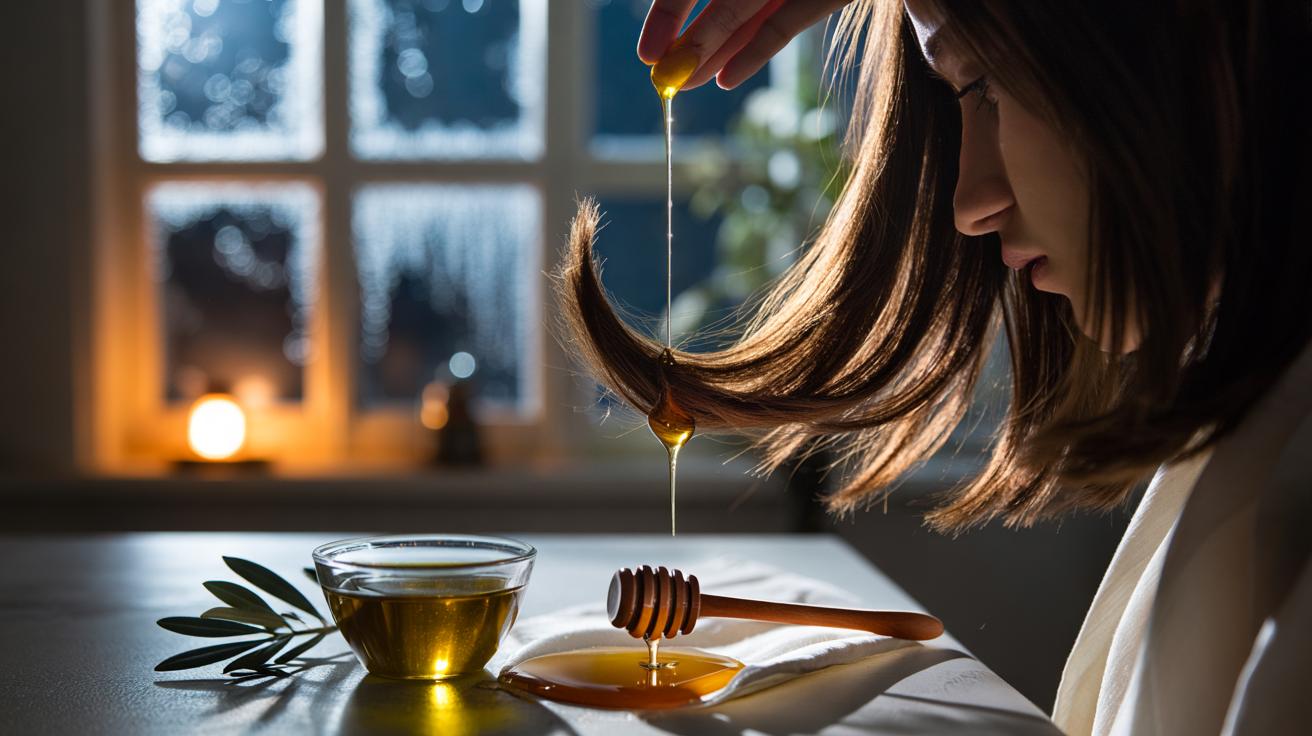
In a nutshell
- 🧪 Why it works: olive oil (oleic acid, squalene) fills lipid gaps while honey (a humectant, low pH) attracts moisture and smooths the cuticle, creating a light occlusive veil for shine.
- 🥄 Recipe and method: Mix 2:1 EVOO:honey, apply to damp lengths, cap for 30–60 minutes or overnight, then emulsify with conditioner before shampoo; tweak to 3:1 for fine hair or 1:1 for coily/high-porosity strands.
- ✨ Overnight benefits: Reduced friction, fewer tangles and static, flatter cuticles for higher light reflectance, and softer ends without a heavy silicone-like coating.
- 👤 Who should use it: Best for high-porosity hair, curls/coils, and colour/heat-treated lengths; apply from mid-lengths down, avoid scalp if oily or acne-prone, and trial briefly on fresh highlights.
- 🛡️ Safety and sustainability: Patch test for bee-product sensitivity, protect linens with silk bonnet/towel, choose cold-pressed EVOO and responsibly sourced honey—consistency beats intensity with weekly use.
Winter in the UK is unforgiving on hair: central heating wicks moisture from the air, icy winds rough up cuticles, and hats create static and frizz. The quick fix isn’t another silicone-heavy serum. It’s a kitchen classic that replenishes what cold weather strips away: fat and sugar. When blended, olive oil and honey create a treatment that mimics the lipids and humectants healthy hair naturally holds. Overnight, this duo can reduce surface friction, smooth raised scales, and revive lost gloss. Here’s why the recipe works, how to mix it, and the small adjustments that make a big difference for every hair type—from brittle ends to thirsty coils.
Why Fats Rescue Winter-Dry Hair
When hair looks dull, it’s usually because the cuticle—the shingled outer layer—has lifted. Central heating depletes sebum, wind scuffs the surface, and harsh shampoos dissolve helpful lipids. Shine is a reflection phenomenon: flatter cuticles bounce light; ragged ones scatter it. Olive oil is rich in oleic acid and squalene, emollients that slip between lifted scales, reducing friction and sealing split-prone tips. Honey brings the moisture logic: it’s a humectant, pulling water into the fibre and holding it there. Together, they answer dryness on two fronts—lipid replenishment and water retention—without a heavy silicone film.
Honey’s acidity (typically pH 3.5–4.5) helps lay the cuticle flatter, while antioxidants in extra virgin olive oil shield against environmental stress. The pair also creates a soft occlusive layer that slows water loss overnight. This matters most in winter, when low humidity encourages hair to give up its remaining moisture. By morning, the combination can improve slip, tame frizz, and restore a supple feel. Think of the mask as a stand-in for the natural lipid envelope your strands crave when the mercury drops.
The Olive Oil + Honey Mask: Ratios, Method, and Timing
For mid-length hair, start with a 2:1 ratio: two tablespoons of extra virgin olive oil to one tablespoon of runny honey. Warm the mixture gently between your palms or over a warm water bath; avoid microwaving, which can overheat hotspots. Apply to damp, not dripping, hair so the humectant can capture water already in the fibre. Focus on the last third of your hair and any porous sections. Comb through with a wide-tooth comb, twist into a loose bun, and cover with a shower cap. Leave for 30–60 minutes in the evening or, for maximum softening, overnight with a towel over your pillowcase.
| Component | Role | Quantity | Notes |
|---|---|---|---|
| Olive Oil (EVOO) | Emollient, lipid replenisher | 2 tbsp | Choose cold-pressed; rich in oleic acid and squalene |
| Honey | Humectant, pH-smoothing | 1 tbsp | Use runny honey for easy blending |
| Warm Water | Activates slip | A few drops | Loosens the mixture if too thick |
Rinse with lukewarm water, then emulsify with a small amount of conditioner before shampooing; this helps lift excess oil. Fine hair may prefer a lighter 3:1 ratio and a shorter contact time. Coily or high-porosity hair can lean into 1:1 for deeper conditioning. Always patch test on the inner arm if you have pollen or bee-product sensitivities. Keep application off the scalp if you’re prone to oiliness or breakouts.
Science-Backed Benefits You Can Feel Overnight
Hair feels soft after this mask because emollient fats reduce the coefficient of friction between fibres, cutting snagging and static. Honey’s low pH supports cuticle closure, which increases light reflectance—what we read as “shine.” A smoother cuticle means less tangling and fewer mechanical breaks during brushing. Extra virgin olive oil brings tocopherols (vitamin E) and plant polyphenols that help buffer environmental stress, handy when winter swings from damp drizzle to biting wind. The humectant-oil pairing also moderates the moisture gradient along the strand, so ends don’t feel brittle by morning.
Crucially, the result is not a slick, waxy coating. It’s a flexible finish that moves. Honey retains water without making hair limp because it binds to the fibre rather than laying a thick film. The oil fills gaps in weathered areas, improving slip where you need it most. Expect softer ends, calmer halo frizz, and a subtle, glassy sheen under daylight. If your hair flushes with static after hats, this treatment can shorten the flyaway phase dramatically.
Who Should Use It—and When to Skip It
Ideal candidates include high-porosity hair, curls and coils craving slip, and mid-to-long lengths with dry, frayed tips. Those with heat-styled or colour-treated hair often see the greatest jump in gloss because the mask backfills lipid loss. Fine or very straight hair should apply sparingly from ear level down and rinse thoroughly to avoid flatness. If you love volume, use a lighter ratio or follow with a root-lifting spray. As with any oil treatment, placement matters: treat the fibre, not the scalp. That’s where shine lives and where winter damage shows first.
Skip or adapt the mask if your scalp is acne-prone, if you have active dermatitis, or if you’re allergic to bee products. Very fresh highlights can be sensitive; try a short 15-minute trial. Honey’s trace peroxide activity is minimal but worth noting for very porous, pale blonde ends. Use a silk bonnet or old towel overnight to protect linens. Sustainability counts, too—choose responsibly sourced honey and quality olive oil. Consistency beats intensity: a weekly mask maintains gloss without build-up.
Used thoughtfully, the olive oil and honey mask delivers what winter steals: pliable length, quieted frizz, and light-catching polish without a salon bill. Its power lies in chemistry that mirrors hair’s own needs—lipids to smooth, humectants to hydrate, and an occlusive veil to keep it all in. After one night, the difference is tactile as well as visible. Keep a note of your ratio, timing, and rinse routine to refine future applications. What will your winter hair ritual look like if you swap a bottle of serum for a spoon and a jar—will you try it tonight?
Did you like it?4.6/5 (22)