In a nutshell
- 🍋 The lemon-in-sock hack leverages citric acid—an AHA—to lower skin pH, loosen bonds between dead cells, and soften keratin, while occlusion from socks boosts hydration for pliable heels.
- 🧦 Method: do a patch test, place pith-side lemon peel on calluses, secure with cotton socks for 30–90 minutes (up to overnight if tolerated), then rinse, gently file, and apply a rich moisturiser.
- ⚖️ Results and limits: helpful for mild calluses with gradual smoothing over weeks; effectiveness varies due to unstandardised acid strength and it won’t fix deep fissures or infections.
- ⚠️ Safety first: avoid if you have diabetes, neuropathy, poor circulation, eczema, fragrance allergy, open cracks, or athlete’s foot; when in doubt, consult a podiatrist.
- ✅ Smarter alternatives: nightly creams with urea (10–25%) or lactic acid (5–12%), and targeted salicylic acid for corns, paired with gentle filing and consistent moisturising.
The internet loves a kitchen-cupboard cure, but few hacks have spread as quickly as slipping a lemon peel into your socks to soften hard soles. The appeal is obvious: a natural dose of citric acid working quietly while you sleep, no devices or pedicures required. Dermatology does offer a rationale. Acids loosen dead skin and socks trap moisture, a one-two punch for stubborn calluses. Still, it pays to understand the chemistry, the limits, and the risks before you tuck a citrus rind into your nightwear. Used thoughtfully, this trick can complement a sensible foot-care routine without replacing it.
How Citric Acid Works on Callused Heels
The thickened, yellowed patches on heels are layers of compacted keratin known as calluses, formed to protect skin from pressure and friction. Citric acid, the dominant alpha-hydroxy acid (AHA) in lemons, lowers the skin’s surface pH and helps loosen the “glue” between dead skin cells, encouraging gentle shedding. It also has mild chelating properties, which can disrupt ionic links in the outermost layer, softening texture. Meanwhile, the rind contains essential oils such as limonene that may offer a light antimicrobial effect, though they can irritate sensitive skin.
Pulling on socks over the peel creates occlusion, increasing hydration in the stratum corneum and making hardened skin more pliable by morning. Think of it as priming the heel so that subsequent filing or moisturising is more effective. Acid alone will not dissolve healthy skin or erase long-standing calluses in one night. It is a nudge toward normal desquamation, not a dramatic peel. Do not apply on broken, cracked, or infected skin, where sting and inflammation can escalate.
The Overnight Sock Method: Step-by-Step and What to Expect
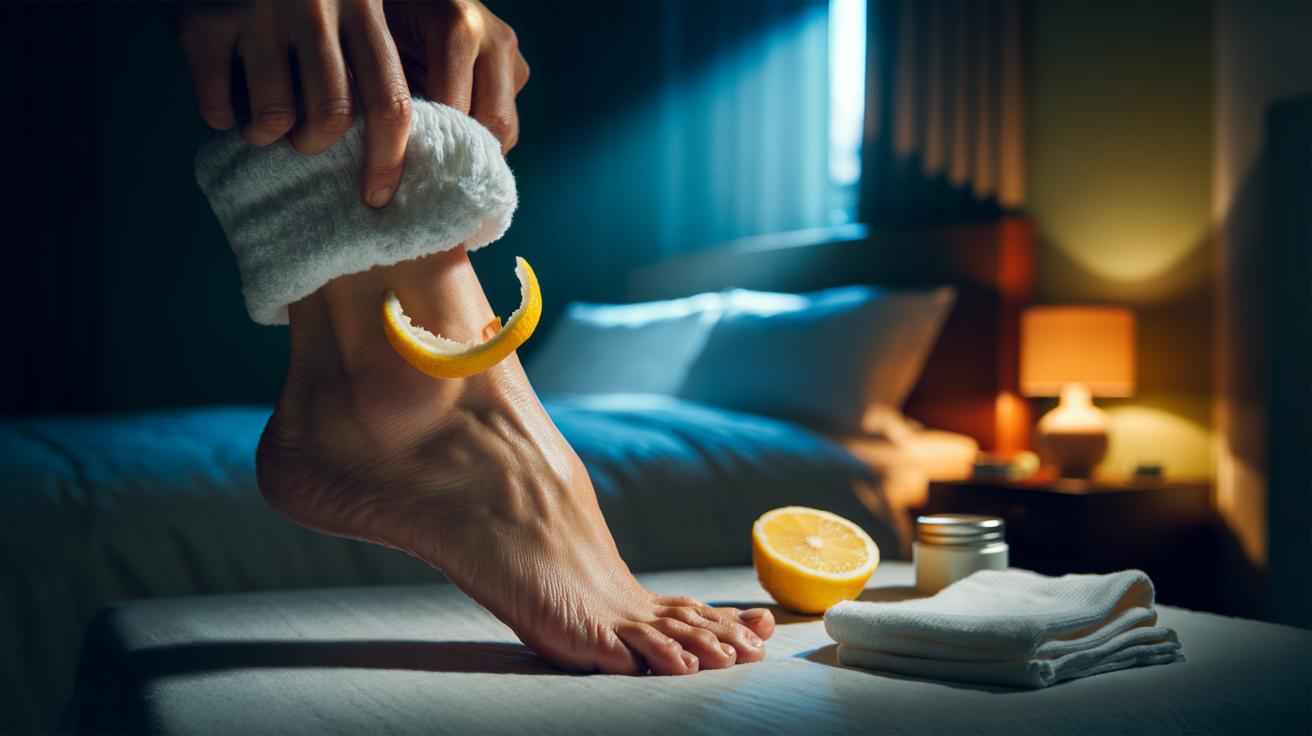
First, perform a quick patch test on the inner forearm using a small piece of lemon peel for 10 minutes. If there is no persistent redness or burning, proceed. Before bed, wash feet with warm water and dry thoroughly. Cut a fresh lemon peel into heel-sized crescents, pith side toward the skin. Lightly squeeze to release a trace of juice, then place the peel directly over the callused area. Pull on a clean, snug cotton sock to secure. Stop immediately if stinging is intense or redness lasts beyond 10 minutes.
Sleep with the peel in place for 30–90 minutes the first time, extending up to overnight if well tolerated. In the morning, remove the peel, rinse, and gently use a pumice or soft foot file—no sawing—followed by a rich moisturiser containing urea or lactic acid. Expect subtle softening after one night and more noticeable smoothness after two to three sessions per week over several weeks. If heels are deeply fissured, seek podiatry care rather than persisting with DIY acids.
Benefits and Limits: What the Science Suggests
AHAs like citric acid are established keratolytics in cosmetic science, improving texture by encouraging orderly shedding of dead cells. The lemon-in-sock approach adds occlusion, boosting hydration and pliability. It is low-cost, widely available, and can dovetail with nightly routines. The downsides: variable acid strength, potential irritant dermatitis or fragrance allergy (notably to limonene and citral), and no precise dosing. Evidence is extrapolated from AHA research rather than trials on citrus rinds. In short, it’s plausible, modestly effective for mild calluses, and imperfectly controlled.
| Agent | Typical Use for Feet | Common Strength | Notes |
|---|---|---|---|
| Citric acid (lemon peel) | DIY occlusion in sock | Unstandardised | Natural but variable; risk of irritation/allergy |
| Lactic acid | Creams applied nightly | 5–12% | Gentle AHA; hydrates and smooths |
| Urea | Moisturiser or ointment | 10–25% | Humectant and softener; well tolerated |
| Salicylic acid | Corn plasters/targeted gels | 6–40% | Potent keratolytic; avoid wide-area use if sensitive |
Safety, Skin Types, and Better Alternatives
Some feet should avoid citrus altogether. If you have diabetes, peripheral neuropathy, poor circulation, or deep heel cracks, skip home acids and consult a podiatrist. Those with eczema, psoriasis, or a history of fragrance allergy may flare from lemon oils. Athlete’s foot, open fissures, or recent shaving increase sting and barrier damage. For safer, repeatable results, consider urea 10–25% cream under cotton socks at night, lactic acid lotions, or occasional salicylic acid used only on discrete corns with pharmacist guidance.
Pair chemistry with mechanics: brief warm soaks, a gentle foot file once or twice weekly, and consistent moisturising. Lock in hydration with a petrolatum-based ointment when the weather is cold and drying. If you love the ritual feel of the lemon hack, limit sessions to one or two nights a week and rotate with proven formulas. Consistency beats intensity, and comfort trumps novelty.
There is a certain charm to the idea of a citrus-scented remedy working while you sleep, and the chemistry does lend it credibility for light calluses. Still, the smartest approach blends gentle acids, occlusion, and good habits, reserving heavy-duty interventions for professionals. Used sparingly and safely, a lemon peel in your sock can be a seasonal nudge toward sandal-ready heels. Would you try the peel-on-heel routine for a week, or will you opt for a measured urea or lactic acid cream to keep your soles soft through winter and beyond?
Did you like it?4.5/5 (22)