In a nutshell
- 🥥 Coconut oil shields hair by its high lauric acid content, penetrating the shaft, reducing hygral fatigue, and protecting keratin during bleaching.
- 🧪 The “70%” figure refers to reduced protein loss seen in lab tests—not a universal damage score—delivering meaningful mitigation without blocking lift.
- 📋 Method: apply a thin film of virgin, cold‑pressed coconut oil 1–8 hours before bleaching, do not rinse, avoid heavy roots coating, and distribute evenly.
- 🧯 Aftercare and pairing: proceed with bleach as usual, then use a bond builder and an acidic conditioner to smooth cuticles and reinforce integrity.
- ⚠️ Limits: over‑application can slow or uneven lift; patch test if sensitive; for fragile hair, combine a light oil layer with lower developer and strand testing.
Bleaching is brutal: the cocktail of persulfates and peroxide lifts pigment but also strips lipids, fractures bonds, and roughens the cuticle. Yet there is a simple, kitchen‑cupboard pre‑treatment that consistently softens the blow. A light layer of coconut oil applied before you mix the lightener can make a measurable difference to resilience, slip, and post‑rinse feel. Science points to the oil’s unusual composition, particularly its high lauric acid content, which penetrates the hair shaft. Used properly, coconut oil can block a remarkable share of damage without sabotaging lift. Here is how it works, what the much‑quoted “70%” really means, and a precise method colourists are quietly relying on.
How Coconut Oil Shields Hair During Bleaching
Hair damage from bleaching happens via two routes: oxidative attack on keratin and repeated swelling‑drying cycles that loosen the cuticle. Coconut oil helps on both fronts. Its dominant fatty acid, lauric acid, is a small, straight‑chain molecule with high affinity for hair proteins. It can slip into the cortex and bind along the keratin matrix, occupying sites that would otherwise be leached. At the surface, the oil creates a thin hydrophobic film, lowering water uptake and reducing hygral fatigue as the lightener works. That film slows damage‑causing diffusion without acting like a waterproof shield that blocks bleaching altogether.
Crucially, coconut oil’s triglycerides are stable enough to sit on the fibre through the service. Unlike heavier, purely occlusive oils, a modest application does not cause patchy lift or excessive foil slip when you keep it to a thin film. The result is smoother cuticles after rinse‑out, less protein loss, and fewer snapped ends when you detangle. Think of it as a microscopic shock absorber that softens the chemical blow rather than a force field that stops it.
Where the 70% Claim Comes From
The oft‑quoted figure stems from laboratory work showing that pre‑treating hair with coconut oil markedly reduces protein loss compared with untreated strands. In studies published in the Journal of Cosmetic Science, coconut oil outperformed mineral and sunflower oils thanks to lauric acid’s protein affinity. While protocols vary, the best results appear when the oil is applied before exposure to stress and left on long enough to penetrate. In favourable test conditions, reductions in measured protein loss have approached the 60–70% range. That number describes protein retention, not a universal “damage score”, and real‑world mileage will vary.
It is vital to separate myths from mechanisms. Coconut oil does not “neutralise” peroxide, nor does it rebuild broken disulfide bonds. For that, professionals use dedicated bond builders. What the oil does is reduce the amount of keratin that bleeds out and keep the cuticle flatter, so hair combs better and frays less. Expect meaningful mitigation, not magic—especially on already compromised, highly porous hair where baselines are worse.
Step-By-Step: Using Coconut Oil Before Bleach
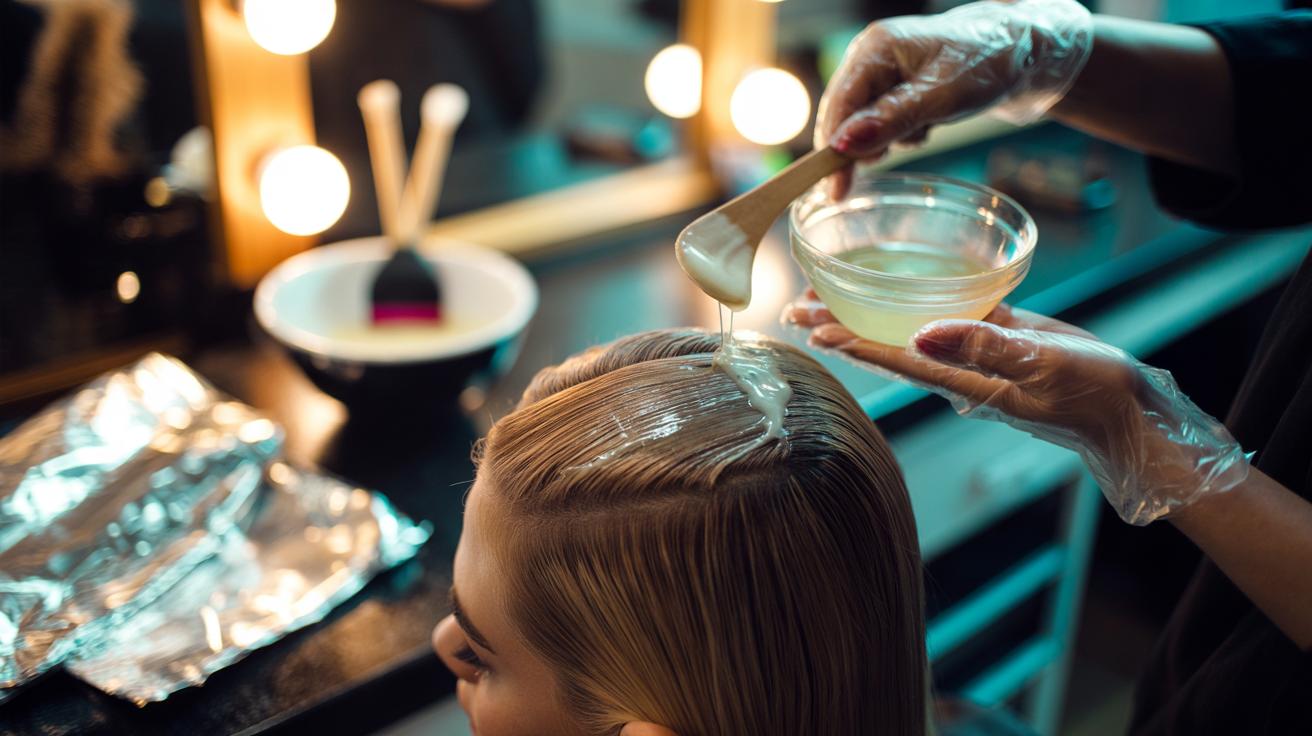
Success is all in the dosing and timing. Use virgin, cold‑pressed coconut oil, warmed between palms to liquefy. The goal is a whisper‑thin film on mid‑lengths and ends—enough to shine lightly without looking wet. Apply the evening before your appointment or at least one hour prior, then gently top up dry areas. Do not rinse it out. Apply a thin film of coconut oil and do not rinse before you bleach—this is the critical step that underpins the benefit. Keep oil off freshly washed roots if you need fast regrowth lift, and comb through with a wide‑tooth comb to distribute evenly.
Proceed with your usual powder lightener and developer. Foils may glide slightly more, so fold firmly. Most colourists report negligible impact on lift when the oil layer is conservative; at worst, lift can be a fraction slower, which is offset by better hair integrity. After rinsing, follow with a bond builder if using, then an acidic conditioner to close the cuticle. Handle hair gently while wet; reduced protein loss still isn’t immunity from mechanical breakage.
| Hair Condition | Amount (Shoulder-Length) | Pre-Treatment Time | Notes |
|---|---|---|---|
| Virgin, healthy | 1 tsp, very thin film | 1–2 hours | Avoid roots for fastest lift |
| Coloured, moderately porous | 1–1.5 tsp | 4–8 hours | Top up dry ends lightly pre‑mix |
| Bleached, highly porous | 2 tsp, focus on ends | Overnight | Consider bond builder and lower developer |
Limits, Risks, and Smart Pairings
No topical oil is a silver bullet. Heavy application can slow lifting, cause slipping foils, or leave patchy results on fine hair. Start light and adjust. Coconut is classed as a fruit, but sensitivities exist; patch test if you’re prone to reactions. Keep it off acne‑prone skin. Coconut oil does not replace professional bond‑building chemistry or strand testing. If your aim is significant level jumps on fragile hair, pair a conservative oil film with a bond builder and lower developer volume, extending processing time under close watch.
Quality matters. Choose virgin, cold‑pressed oil with a clean, faint coconut scent; adulterated blends won’t penetrate as predictably. Warmth aids spread but avoid heat styling over oil before bleaching. Post‑service, lock in gains with gentle cleansing, protein‑balanced masks, and an acidic rinse to re‑tighten the cuticle. Used judiciously, coconut oil functions as an elegant, inexpensive safety net that improves feel today and resilience tomorrow.
Bleach will always be a high‑stakes chemistry lesson, but a measured layer of coconut oil can tilt the odds towards silkier lengths, less shedding in the shower, and a brighter finish that looks and feels healthier. The key is restraint: a thin film, sensible processing, and aftercare that respects the fibre. Think of it as insurance you apply the night before. Have you tried pre‑oiling ahead of a lift—what amounts, timings, and pairings with bond builders gave you the best balance of lift and hair feel, and what will you tweak next time?
Did you like it?4.6/5 (20)