In a nutshell
- 🧪 The science: cornstarch dry shampoo tackles sebum via adsorption and micro-capillary uptake, with particle geometry optimised to cling to oil without building a chalky film.
- 🪄 Application mastery: apply to dry roots in sections, use a light dusting, wait 60–90 seconds, then massage, brush through, and finish with a cool blow-dry; less is more and night-use prevents morning oil.
- 🌾 Smart blends: pair cornstarch with rice starch for speed or arrowroot for silkiness; reserve silica for very oily roots when extra grip is needed.
- 🌍 Safe and sustainable: typically talc-free and low-VOC when non-aerosol; avoid build-up with regular scalp cleansing, patch-test sensitive skin, and choose biodegradable, airtight packaging.
The dream is simple: hair that looks freshly washed without stepping into the shower. For commuters, parents, and gym-goers, a smart cornstarch dry shampoo delivers that reset without the tell-tale chalky veil. The secret lies in how a well-chosen powder handles sebum—capturing oil while staying invisible on the fibre. Get the science right, and the result is airy volume, clean roots, and zero residue. This piece unpacks why cornstarch excels, the physics that keep powder discreet, and the practical moves that stop white cast in its tracks. Consider it a toolkit for confidently stretching wash days without compromising scalp comfort or style.
The Science of Powder and Sebum
Greasy hair begins at the follicle, where natural sebum—a blend of triglycerides, wax esters, and squalene—migrates along the cuticle. Dry shampoo works through adsorption, not just absorption: fine particles present a huge surface area for oil to cling to via van der Waals forces, while micro-capillaries wick fluid into internal pores. The most effective powder acts like a sponge and a magnet at once. Particle geometry matters. Plate-like or porous grains anchor to oil films without forming a heavy layer, preventing that dull “powdered” look. Surface chemistry matters too: starch granules are naturally lipophilic enough to capture oils, yet light enough to brush away cleanly.
Optical behaviour decides whether anyone sees it. Hair has a high refractive index; if a powder’s index is close, scattered light is minimised and the residue blends with the fibre. Particle size also controls visibility: too large and you see specks; too small and static clumping makes greyish patches. Cornstarch hits a practical middle ground, distributing across the scalp without obvious build-up and creating lift by slightly increasing root friction without grit.
Why Cornstarch Stays Invisible
Cornstarch granules consist of amylose and amylopectin, forming semi-crystalline spheres with natural pores. That microstructure offers strong oil uptake with modest weight. Critically, starch’s refractive index sits close to that of human hair, limiting the contrast that produces white cast. Typical cornstarch granules measure in the several-micrometre range, an easy match for combing and blow-dry removal. When it’s finely milled and evenly dispersed, cornstarch lifts sebum while vanishing under normal lighting. Subtle tinting—think cocoa for brunettes or mineral iron oxides—can further blur contrast on dark hair without masking performance.
Compared with boutique silica spheres or modified clays, cornstarch offers a gentler feel and a soft-focus finish, especially on medium to thick strands. It can be blended with rice starch for speed or a touch of arrowroot for silkiness. Silicone-free formulas often rely on this trio to balance oil capture with a clean brush-out. If your complaint is stiffness or a dusty look, the culprit is usually particle overload or an aggressive propellant, not the starch itself.
| Absorbent | Typical Particle Size | Oil Uptake | Residue Risk | Best For |
|---|---|---|---|---|
| Cornstarch | Small–medium granules | High | Low when brushed | Everyday refresh, natural finish |
| Rice starch | Very fine | High | Moderate on dark hair | Fast oil pick-up, quick touch-ups |
| Arrowroot | Fine, silky | Medium–high | Low | Softer feel, wavy hair |
| Silica | Ultra-fine | Very high | Can look matte/grey | Very oily roots, styling grip |
How to Apply for a No-Show Finish
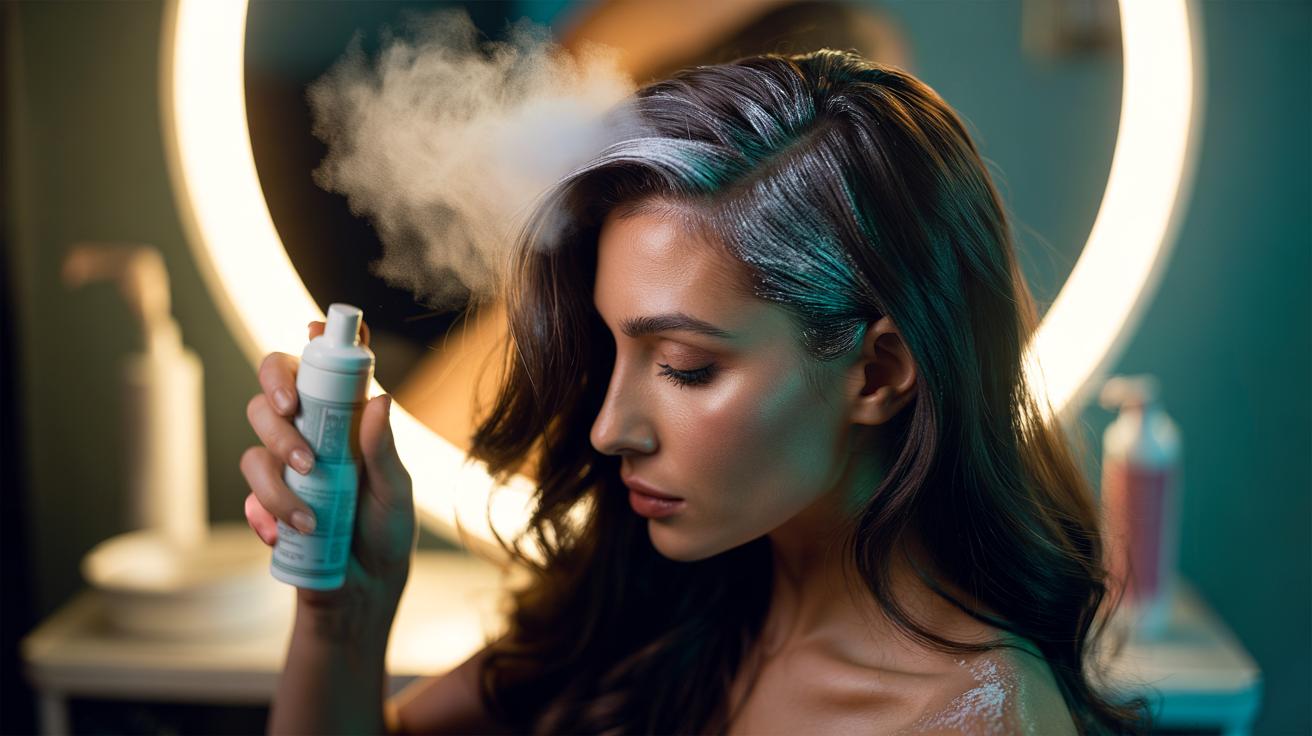
Start with completely dry hair. Part in clean, horizontal sections across the oily zone—usually crown to temples. Dust a light amount of cornstarch-based powder with a puff or fluffy brush, holding it 10–15 cm from the scalp. Less is more; you can always add, but excess is harder to hide. Wait 60–90 seconds for adsorption. Massage gently with fingertips to spread the powder along the root, then brush from root to tip to lift residue away from the scalp. A cool shot from a hairdryer helps disperse any lingering veil, especially on dark hair.
Time of day matters. Use at night before oil peaks and you’ll wake up fresher, with less product needed. For fringes, sprinkle on the underside to avoid a dull hairline. Curly or coily textures benefit from targeted scalp application, leaving lengths alone to preserve definition. Opt for tinted starch if your hair is almost black. Keep application away from a visibly flaky scalp; flakes plus powder exaggerate contrast. If using an aerosol, short bursts at a distance reduce wet spotting and clumps.
Safety, Scalp Health, and Sustainability
A cornstarch dry shampoo is typically talc-free and propellant-free when sold as a shaker or brush-on, trimming inhalation risk and reducing VOCs. Take care not to create a visible cloud; apply in short, controlled puffs and ventilate the room. Dry shampoo should extend time between washes, not replace cleansing entirely. Build-up can mix with sweat and urban dust, dulling sheen and stressing the scalp. A gentle wash routine—ideally a scalp-focused cleanse after heavy use—keeps follicles clear and comfort high.
Those with very sensitive skin should patch-test, especially if fragrance or essential oils are included. Some scalps dislike heavy powders during humid weather; dial back the dose and use a cool blow-dry to lift residues. On sustainability, cornstarch is plant-derived and biodegradable, with simple paper or aluminium packaging markedly lowering footprint compared with aerosols. Store it airtight to avoid clumping. If you need odour control, look for light zinc ricinoleate or charcoal blends rather than aggressive masking scents.
Used with intention, cornstarch dry shampoo can be almost invisible—lifting roots, breaking up oil films, and reviving shape without the chalk. The trick is understanding how powders engage with sebum and adjusting technique to your hair’s density and colour. That means minimal product, smart timing, and the right brush-out. When dosage and particle choice are right, the clean effect looks effortless. What combination—pure cornstarch, a rice starch blend, or a tinted option—works best on your hair type, and how would you tweak your routine to keep it looking fresh on day three?
Did you like it?4.6/5 (28)